Picking the right CRM isn’t as straightforward as it sounds. Ask ten business owners what they use and why, and you’ll get ten completely different answers most of them based on what a friend recommended or whatever showed up first on Google.
The real issue is that choosing sales CRM software in India is a decision that will affect how your team works every single day. A wrong pick means frustrated salespeople, wasted money, and leads slipping through the cracks. A good one? Your entire pipeline becomes something you can actually trust.
This guide is written for Indian businesses specifically the small and mid-sized ones that don’t have a dedicated IT department and need something that just works.
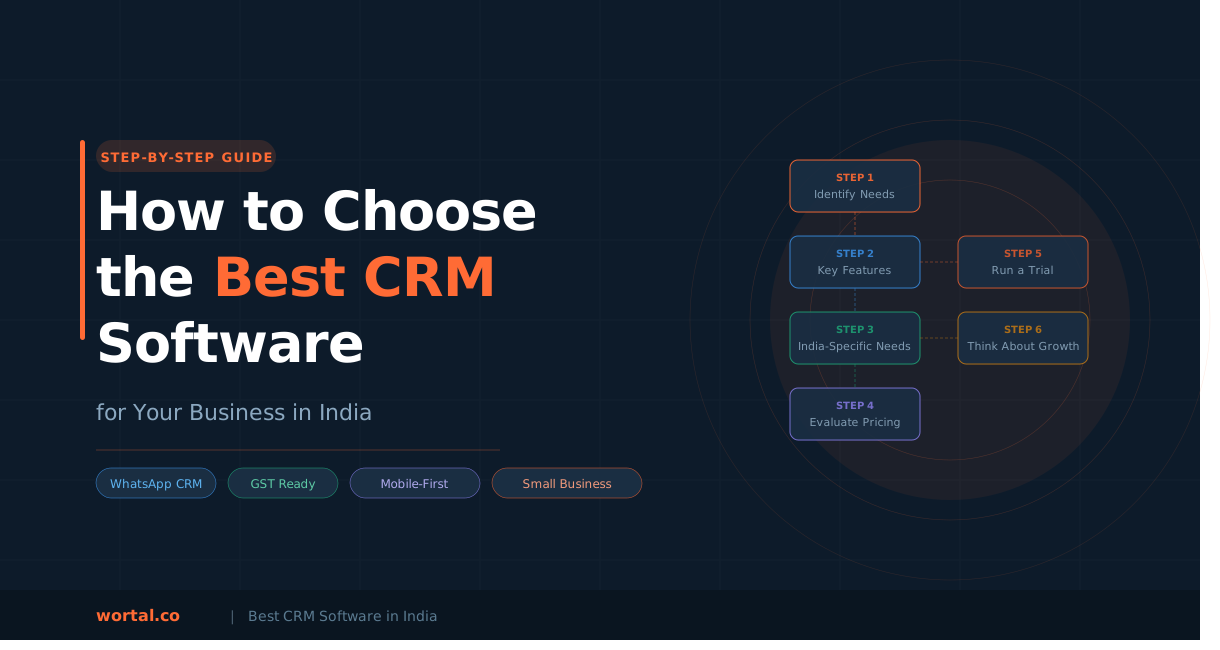
Step 1: Get Clear on What Your Business Actually Needs
Most people skip this part and jump straight to comparing features. That’s where things usually go wrong.
Before you search for sales CRM software for small business, sit down and answer a few honest questions:
- How many people will actually use it daily?
- Where do most of your leads come from calls, WhatsApp, walk-ins, websites?
- Do you need inventory or billing features bundled in?
- What’s your monthly budget per user?
A real estate firm in Surat has completely different CRM needs than a manufacturing unit in Pune. The software that works brilliantly for one can create daily headaches for the other.
Step 2: Understand What CRM Features Actually Matter for Indian SMBs
Lead and Contact Management
This is the core. Any sales CRM software in India worth using should let you capture leads from multiple channels website forms, calls, WhatsApp and organize them without manual copy-pasting.
Look for features like:
- Lead status tracking (New, Follow-up, Negotiation, Closed)
- Assigning leads to specific team members
- Notes and activity history on each contact
Sales Pipeline Visibility
A visual deal pipeline isn’t just a nice feature it’s how your sales manager actually knows what’s happening without calling every rep. A good sales CRM software for small business makes this simple, not complicated.
WhatsApp and Email Automation
In India, WhatsApp is everything. If your CRM doesn’t integrate with WhatsApp for follow-ups and reminders, you’re essentially running two systems simultaneously. That’s time and money wasted.
Mobile App
Your field sales team isn’t sitting at a desk. A CRM that doesn’t have a solid mobile app is a CRM your field reps won’t use plain and simple. Read more on the power of Mobile CRM.
Step 3: Check for India-Specific Requirements
This is something global CRM tools often miss entirely.
GST and Invoice Compatibility If you’re running a business in India and using CRM alongside billing, you need software that understands GST multi-rate tax, e-invoicing, the whole setup. Many international tools require expensive customizations just to get this working. Wortal’s Sales Management and Quotation Automation features are built with this in mind.
Regional Language Support Not every sales executive is equally comfortable in English. Regional language support even just for the mobile app can make a big difference in actual adoption.
Local Customer Support When something breaks on a Monday morning, you want support that picks up the phone during Indian business hours. Many global vendors don’t offer this without a premium plan. Contact the Wortal team for support during Indian business hours.
Step 4: Evaluate Pricing Honestly
Sales CRM software for small business in India typically ranges from free (feature-limited) to Rs. 200–Rs. 500 per user per month for proper functionality. The trap most small businesses fall into is paying for a Rs. 2,000/user/month enterprise tool when they need maybe 30% of its features.
A few things to watch for:
- Per-user pricing adds up fast once your team grows
- “Free forever” plans often lack automation, reporting, or API access
- Check whether onboarding, training, and data migration cost extra
In practical terms, a team of five salespeople spending Rs. 350/user/month is paying Rs. 21,000/year which is very reasonable if the tool is actually driving more sales. If your team isn’t using it, even Rs. 50/month is too expensive.
Step 5: Always Run a Trial Before You Commit
Most sales CRM software in India providers offer a free trial. Use it seriously don’t just click around for ten minutes.
During the trial:
- Add actual leads from your pipeline
- Have your team log real follow-ups
- Try generating a report you’d actually need
- Test the mobile app on different phones
If your team finds workarounds during the trial period, that’s a signal. It means the tool doesn’t fit how you actually work. Book a free Wortal demo to test it with your real pipeline.
Step 6: Think About Growth, Not Just Right Now
The CRM that fits a 5-person team should ideally still work when you’re at 20. Check whether the software supports:
- Multiple branches or locations
- Role-based access (so not everyone sees everything)
- Integration with accounting or ERP tools you might use later
Sales CRM software for small business that scales well saves you from the painful (and expensive) process of switching platforms a year later.
A Quick Story: How One Surat Trading Firm Got It Right

Last year, a friend of mine running a textile trading business in Surat let’s call him Rakesh bhai was stuck with a CRM he’d bought because his cousin used it for a hardware business in Delhi.
His team of 8 sales reps were tracking buyer follow-ups on WhatsApp, then manually copying details into the CRM at the end of the day (if they remembered). Half the leads from IndiaMART weren’t even getting into the system. By the time someone followed up with a buyer about a fabric order, the buyer had already placed it elsewhere.
When he finally listed out what his business actually needed WhatsApp-first communication, lead capture from IndiaMART and TradeIndia directly, and a mobile app his reps would actually open — the picture became a lot clearer.
He ran a two-week trial with his actual team, not just himself. Two reps tried logging real client calls using the Calling App, one tried generating a follow-up report for a buyer who’d gone quiet for three weeks. The report alone helped them recover an order worth close to Rs. 4 lakh that had simply been forgotten in the pile.
The switch wasn’t dramatic. No magic happened overnight. But within six weeks, his team stopped maintaining two separate systems the CRM became the one place where leads, follow-ups, and contact conversations lived together.
His advice to other traders in the market? “Don’t ask what software is popular. Ask what your reps will actually open every morning.”
Key Takeaways
- Don’t choose a CRM based on features alone match it to your actual workflow
- WhatsApp integration and mobile apps aren’t optional for most Indian businesses
- India-specific needs like GST support matter more than you think
- Run a real trial with your actual team before paying anything start Wortal’s free trial
- Think beyond today pick something that grows with you