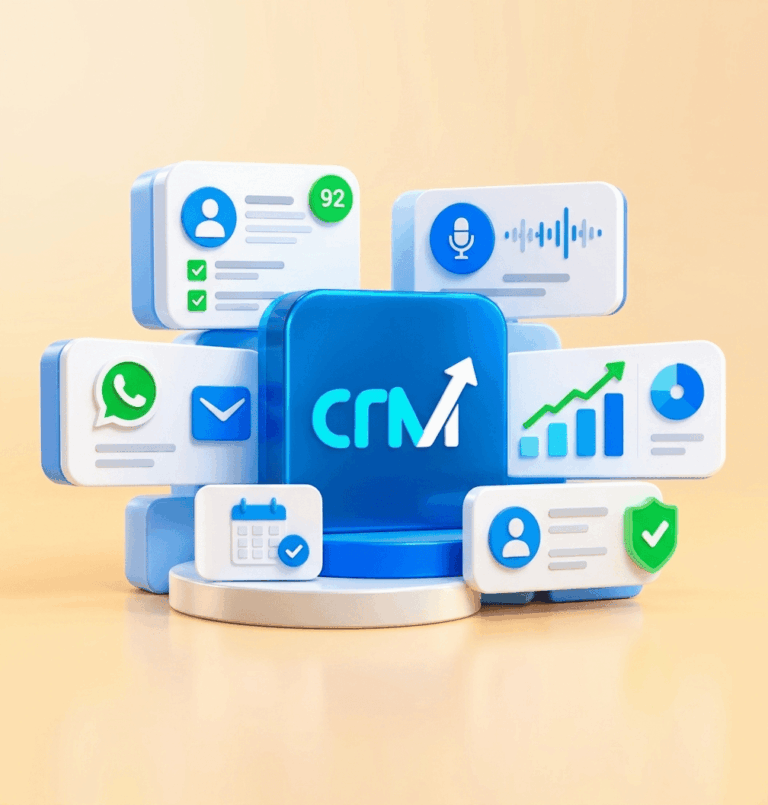


In today’s fast-paced business world, staying ahead of the competition needs more than hard work; it requires smart strategies. If you want to increase your sales, simplify your processes, and close more deals, consider using smart CRM software.
Customer Relationship Management (CRM) systems are no longer just reserved for large corporations. It is now a must-have for businesses of any size that are looking to establish stronger relationships with customers, enhance their sales capabilities, and expand their revenue. But what exactly is a “smart” CRM, and how can you use it to boost your sales? Let’s look at this in more detail.
Understand the Advantages of a Smart CRM
A smart CRM is like a robust weapon for your sales team. It assists you in organising, automating, and analysing all the interactions with your prospects and customers. A smart CRM is unlike using basic spreadsheets or notes. It provides you with an entire picture of your customer journey. This assists your sales team in working more effectively, adapting their approach, and getting better outcomes.
The “smart” refers to its capacity to leverage data and automation to enhance your sales processes. That is, you get to spend less time on repetitive tasks, lose fewer opportunities, and have a clearer way to achieve your sales targets.
The Cornerstones of Sales Success: How a Smart CRM Helps
A smart CRM can significantly enhance your sales process and yield tangible results. Here are some of the main advantages:
1. Increasing Efficiency with Sales Automation
One of the greatest advantages of a smart CRM is that it can automate sales activities. Through automating the same old tedious work, your salespeople have more time to do what counts most – selling and closing business.
Some examples of how sales automation can increase efficiency include:
Lead Management: Automatically capture leads from various sources, such as website forms and social media, and route them to the appropriate sales representatives. That is, no more data entry or tracking down missed prospects.
Email Marketing: Automate personalised email drips based on lead behavior or where they are within the sales process. This enables you to build prospects without your team having to manually send each email.
Task Management: Automate follow-up, call, and meeting reminders to prevent any opportunity from being lost.
Reporting: Create automated sales reports and dashboards which provide real-time access to key performance indicators (KPIs) without having to manually compile the data.
Meeting Scheduling: Integrate with calendar tools to allow prospects to schedule meetings themselves, eliminating the inconvenience of determining a convenient time.
By streamlining these processes, your sales team could focus less on administrative tasks and more on interacting with prospects, getting to know their needs, and developing successful solutions. This enhanced productivity results in more substantial relationships and more successful deals.
2. Enabling Deeper Relationships with a Holistic Customer View
An intelligent CRM serves as a centralised location for all customer interactions, providing a holistic view of every prospect and customer. This comprises:
- Contact details and communication history (emails, calls, meetings).
- Previous purchases and interactions with your business.
- Specific needs, pain points, and preferences.
- The current point in their journey through your sales pipeline.
This precise information enables your salespeople to have knowledgeable and personalised discussions. Rather than resorting to blanket pitches, they can adapt according to the customer’s specific context, establishing stronger rapport and credibility. Having the customer’s background and requirements makes it possible to follow up with relevant and targeted offers, which raises the possibility of closing deals.
Additionally, this unified view ensures that everyone on your team is informed. If a customer has spoken with customer support or marketing, the sales representative will have that background, leading to a smoother and more positive experience for the customer.
3. Optimising Your Sales Process with Effective Sales Tracking
Tracking sales is essential to understanding what is working in your sales process and where you can make improvements. A good CRM assists by offering robust sales tracking capabilities that provide you with valuable insights into your sales pipeline and team performance.
Here’s how a CRM enhances sales tracking:
Pipeline Visualisation: You have a clear view of your sales pipeline. This displays various stages of each deal and where they are at, and you can see where problems exist and address them early.
Progress Monitoring: Monitor deals in real-time, from initial contact through to close. You can see how many deals are at every stage, their estimated value, and the likelihood of closing.
Performance Analysis: Track individual and team performance against critical metrics such as conversion rates, average deal size, and time to close. This allows you to identify top performers and determine who may need additional training.
Forecasting Accuracy: Use historical data and pipeline visibility to generate more accurate sales forecasts, which assists in resource planning and management.
Identifying Trends: Examine sales history to discover trends, such as which lead sources are most effective, which opportunities have the best chance of closing, and which stages in your pipeline require additional focus.
With proper sales tracking, you are able to make educated decisions to optimise your sales tactics and boost your overall effectiveness in your CRM.
4. Empowering Your Team with Collaboration and Communication
An intelligent CRM makes your sales team collaborate and communicate more efficiently with other functions such as marketing and customer care.
Shared Data: All users can view associated customer information at one location, eliminating silos and making it possible for everyone to have what they need.
Internal Communication Features: Some CRMs incorporate features such as chat or activity streams, where team members can work on deals together and communicate easily.
Cross-Departmental Alignment: By syncing your CRM with marketing and customer support software, you build an overall customer experience. Sales are able to view marketing campaigns the lead has responded to, and support can view the customer’s purchase history.
This alignment enables your sales activities to be better coordinated and productive, resulting in more closed deals and improved customer relationships.
5. Making Data-Driven Decisions with Analytics and Reporting
An intelligent CRM gathers a significant amount of data, but it won’t do you any good unless you can convert it into useful insights. Intelligent CRMs have robust analytics and reporting capabilities that transform raw data into actionable insights.
Customisable Dashboards: You can create dashboards that reflect the KPIs you care about, providing an instantaneous snapshot of your sales performance.
Pre-built Reports: Use pre-designed reports on different segments of your sales process, such as lead conversion rates, sales cycle duration, and win/loss analysis.
Custom Report Generation: Generate reports that are specific to your own needs, which enables you to closely analyse data and discover vital trends.
Data Visualisation: Displaying information in clear and easy-to-view charts and graphs enables you to comprehend complicated data and present it clearly.
By using these analytics and reporting tools, you will be able to identify areas of improvement, optimise sales strategies, and make intelligent decisions that increase revenue growth. Being aware of the essential metrics in your CRM for sales is central to continuous improvement.
Selecting the Right Smart CRM for Your Business
Selecting the correct CRM solution is crucial. Here are some important things to consider:
Your Business Requirements: What sales issues do you have? What are your sales objectives? Do you require features such as sales automation, tracking of sales, or integration with other tools?
Scalability: Does the CRM scale with your growing business? Ensure it can accommodate more data and users in the future.
Ease of Use: Is the CRM simple enough for your sales team to use? A complex system might not get used to its full potential.
Integration Capabilities: Does the CRM integrate easily with your existing tools, such as email marketing, accounting software, and customer support systems?
Budget: CRM costs can be very different. Establish a budget and get a solution that provides you with good value for your money.
Mobile Accessibility: Ensure the CRM has a robust mobile app so your team can access critical information on the move.
Customer Support: What type of support does the vendor offer? Review their documentation, training, and response time to questions.
Spending time thoroughly reviewing your options and selecting a CRM that meets your needs will help you achieve long-term sales success.
Getting Your Smart CRM Up and Running with Maximum Benefit
Implementation is key to choosing your CRM. Follow these best practices:
Define Your Sales Process: Sketch out your current sales process prior to implementing your CRM. This will enable you to tailor the CRM to your workflow.
Data Migration: Carefully plan your data migration to make a seamless transition from your previous systems to the CRM. Clean and organise your data before importing it.
Team Training: Properly train your sales team on how to utilise the CRM. Educate them on the advantages and how it can simplify their work and make them more successful.
Customise and Configure: Tailor the CRM to suit your particular requirements. Define your sales pipeline stages, build custom fields, and set up automation rules.
Start Small and Iterate: Start with the basic features and build in more advanced functions step by step as your team becomes comfortable. Collect feedback and adjust accordingly.
Regularly Review and Optimise: As your sales process evolves, regularly review your CRM configuration and see how you can optimise it.
By doing so, you can ensure your smart CRM is an effective tool that enhances your sales performance.
Conclusion
In summary, intelligent CRM software is what today’s businesses need to thrive. Through the use of sales automation, having an end-to-end view of your customers, monitoring sales efficiently, promoting collaboration, and making data-driven decisions, you can enable your sales force to close more deals and increase revenue.
Investing in the appropriate CRM and utilising it judiciously is an investment in the future success of your business. It’s a matter of working smarter, not harder, to develop improved customer relationships and release your complete sales potential. So go ahead and tap into the power of a smart CRM to see your sales skyrocket.
Confused about getting started with a Smart CRM? Switch to Wortal CRM today and explore Smart and Customised features according to your requirements. Sign up and book a free demo today to know more about Wortal CRM.