
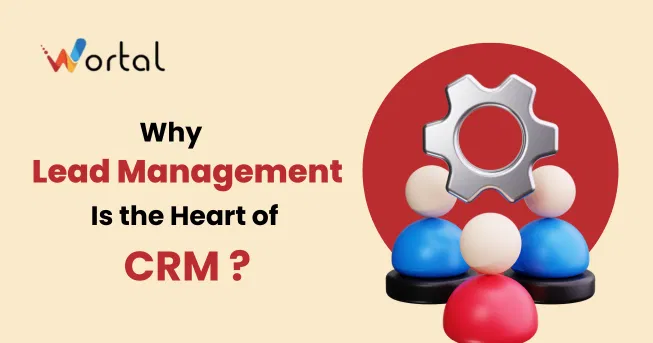

In the competitive world of business, meeting customer needs is crucial for growth. One key aspect of this is Customer Relationship Management (CRM), with lead management being its most important part.
Think of your business as a living organism. Your products or services are its food; your marketing efforts are its blood flow, and your sales team is its muscles and bones. But what keeps everything alive? It’s the steady flow and careful nurturing of leads.
Without effective lead management, your CRM system is like a powerful engine without fuel – it has potential, but it can’t progress. At Wortal CRM, we believe lead management isn’t just a CRM feature; it is the heart of CRM.
Understanding CRM Leads
Let’s clarify what we mean by a “lead” in CRM. A CRM lead is someone or some organization that has shown interest in your products or services. They might have filled out a form on your website, downloaded an ebook, attended a webinar, or interacted with your social media. Essentially, they are potential customers.
These leads are vital for your business. They represent future revenue and growth, helping you expand your customer base. However, not all leads are equally valuable. Some are ready to buy, while others may only be casually interested. This is where lead management comes into picture and becomes important.
Managing prospects is not just about collecting names and contact details. It is essential to understand who your potential customers are, what they need, and how you can help them.
Think of a doctor who can’t treat a patient without knowing their symptoms or history. Similarly, trying to convert a lead without understanding their needs can waste time and lead to missed chances.
A good lead management system helps you:
1. Capture Leads from Various Sources: Whether from your website, social media, email campaigns, or events, a strong CRM can gather leads from all your marketing efforts.
2. Centralize Lead Information: Instead of scattered spreadsheets or sticky notes, all the details about a lead—like contact info, interactions, interests, and history—are stored in one easy-to-access place. This gives you a complete view of your potential customer.
3. Qualify and Score Leads: Not every lead is ready to buy. Lead qualification will help you identify which leads are more likely to become paying customers. Lead scoring, often automated, gives a numerical value to leads based on engagement and demographics, helping the sales team focus on the potential leads.
4. Segment Leads for Targeted Communication: Sending an email about advanced features to someone who just signed up for a basic trial won’t work. Lead segmentation will allow you to group leads based on interests, demographics, or behavior, enabling personalised communication.
5. Nurture Leads Over Time: Many leads are not ready to buy right away. They need nurturing through relevant content, emails, and interactions to help them make a purchase decision. This will help build trust and position your brand as a valuable resource.
Without these key elements, converting prospects will be random and ineffective.
The Compass and Map: Mastering Lead Tracking
After you capture and qualify your leads, the next important step is lead tracking. Lead tracking helps you watch how each lead progresses through your sales process.
Good lead tracking answers key questions such as:
- Where did this lead come from?
- What interactions have they had with our brand?
- Which marketing campaigns attracted them?
- What content have they engaged with?
- What stage are they at in the sales cycle?
- What are the next steps to move them forward?
Without effective lead tracking, your sales team risks working without clear direction. They won’t know which leads to focus on, what conversations have happened, or what specific needs a lead may have.
This can lead to:
- Duplicated Efforts: Multiple sales reps might contact the same lead, causing confusion and wasting resources.
- Missed Opportunities: Warm leads may go unnoticed and slip away due to lack of tracking.
- Ineffective Follow-ups: Generic follow-ups that don’t address where a lead is in the buying process are less likely to succeed.
- Poor Performance Analysis: Without tracking, it’s hard to identify problems in your sales process or see which marketing efforts attract the best leads.
Wortal CRM’s lead management features help you get a clear view of your leads. You can see their entire history, from their first interaction to each follow-up. This would allow your sales team to engage with leads effectively and at the right time.
Guiding Your Prospects: Navigating the Sales Funnel
Let’s discuss the sales funnel. This funnel shows the journey of a future customer , i.e. which takes from being a lead to making a purchase. It usually has several stages:
- Awareness: The lead learns about your brand or solution.
- Interest: The lead becomes interested in what you offer.
- Consideration: The lead compares your solutions with competitors.
- Intent: The lead clearly intends to buy.
- Evaluation: The lead looks at final details and makes a choice.
- Purchase: The lead becomes a customer.
Managing leads is crucial for moving them through this funnel. Each stage requires specific actions and communication.
Here’s how effective lead management supports each stage of the sales funnel:
- Top of the Funnel (Awareness & Interest): It’s important to capture and qualify leads early. Your CRM helps collect information from different sources to find potential customers.
- Middle of the Funnel (Consideration & Intent): Lead nurturing, segmentation, and targeted communication are essential here. You provide helpful content, address concerns, and build trust to move leads forward. Lead tracking shows the status of each lead.
- Bottom of the Funnel (Evaluation & Purchase): At this point, your sales team takes over with personalized outreach, demos, and closing strategies. Data from your lead management system gives them the information they need to successfully close deals.
Without a clear lead management strategy, leads can get stuck, drop off, or get lost, which can lead to significant revenue loss.
Wortal CRM: Your Partner in Intelligent Lead Management
At Wortal CRM, we know that effective lead management means having the right tool to help your business succeed. Our CRM’s lead management features are designed to tackle the challenges of modern lead nurturing and conversion.
We offer solutions that allow you to:
- Automate Lead Capture: Collect leads from your website forms, landing pages, and other digital channels directly into your CRM.
- Streamline Lead Qualification: Use customizable criteria and scoring to quickly find your most promising leads.
- Centralize Lead Data: Get a complete view of each lead, including their interactions, preferences, and journey.
- Intelligent Lead Routing: Automatically it will assign leads to the right sales representatives based on set rules for quick follow-up.
- Visual Sales Pipelines: Easily track the progress of each lead in your customized sales funnel, identifying bottlenecks and opportunities.
- Activity Tracking: Monitor every interaction with a lead—emails, calls, meetings, and notes—so no detail is missed.
- Reporting and Analytics: Gain insights into your lead generation and conversion rates to improve your strategies for better results.
We focus on making complex things simple. Our easy-to-use interface helps your team adopt and use lead management without needing extensive training.
How Strong Lead Management Impacts Your Entire Business
Good lead management has benefits that go beyond simply converting more prospects. It creates positive effects throughout your organization:
- Increased Sales & Revenue: Efficiently nurturing and converting leads boosts your bottom line.
- Improved Sales Team Productivity: A Sales representative spends less time on administrative tasks and more time engaging with qualified leads, leading to better morale and results.
- Enhanced Customer Experience: Personalized communication and timely follow-ups make potential customers feel valued, laying the groundwork for strong customer relationships.
- Smarter Marketing Strategies: By tracking lead sources and conversion rates, you can find which marketing channels work best, allowing you to optimize your spending and achieve a higher ROI.
- Accurate Forecasting: Clear visibility into your sales pipeline allows for more accurate revenue predictions and business planning.
- Sustainable Growth: A continuous flow of well-managed leads ensures a healthy pipeline for future growth, making your business more resilient and adaptable.Read More: How to Convert Leads Faster with Sales CRM
Conclusion
In today’s busy business world, every lead is valuable. If you let them go cold, lose track of them, or handle them poorly, you lose out on potential sales.
Lead management is not a one-time job; it’s an ongoing process that takes commitment and the right tools. It drives your CRM, directs your sales team, and keeps your business growing.
If you want to improve your lead management and make the most of your CRM, check out Wortal CRM’s lead management features. We could help you turn prospects into loyal customers.
Visit Wortal CRM to learn more and start improving your lead conversion todayv