

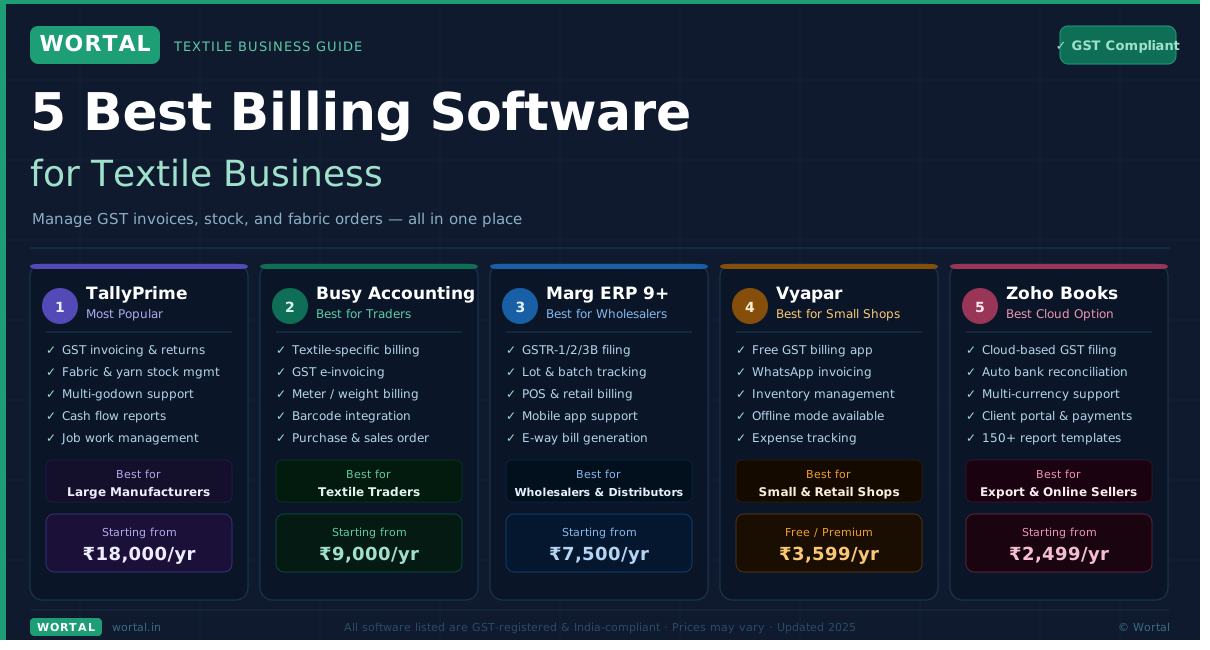

If you’ve ever manually typed out 40 invoices at the end of the month, you already know the problem. Textile businesses deal with multiple GST rates, varying fabric categories, bulk orders, credit customers – and somehow all of that has to land correctly on a GST-compliant invoice. Miss one HSN code, and your whole GSTR-1 is off.
Most textile shop owners either stick with Excel for too long or grab whatever billing app shows up first on Google. Neither works well. What actually helps is finding billing software for textile business that’s built around how textile transactions really work – meters, rolls, multiple tax slabs, party-wise outstanding.
Here are five options that are genuinely worth looking at.
1. Wortal – Best for Textile Businesses That Want Sales + Billing Together
Most people treat billing and sales tracking as separate problems. Wortal fixes that. It’s CRM-first billing software for textile business owners who are tired of switching between apps to check which orders are pending, which invoices are overdue, and which customer hasn’t paid in 45 days.
Wortal sends invoices directly over WhatsApp and email – automatically, once an order is marked closed. That alone saves a lot of back-and-forth. You also get a visual pipeline showing where each deal or order sits, a task dashboard, and WCaller for tracking phone-based orders.
For any textile business managing a sales team alongside billing, this is the only tool on this list that handles both properly. Textile invoice software that doubles as a CRM is actually rare.
Pricing: Free trial available. Standard plan at Rs.200/user/month, Premium at Rs.350/user/month.
2. Tally Prime – Best for Businesses That Need Full Accounting
Tally has been the go-to textile accounting and billing software in India for decades, and that reputation holds. It handles HSN codes, multi-rate GST, credit ledgers, and GSTR reports without you having to do much setup once it’s configured.
Where Tally really earns its place is in party management. Textile wholesalers dealing with 200+ buyers, 60-day credit cycles, and bulk return orders know how quickly ledgers get complicated. Tally handles that without breaking a sweat.
The honest downside – it’s not cheap, and there is a learning curve. If you’re a small shop doing straightforward retail billing, Tally might be overkill. But for anyone running a serious textile operation with full accounting needs, this is reliable billing software for textile industry use.
3. Vyapar – Best for Small Textile Retail Shops
Vyapar is what most small fabric retailers should probably start with. It’s light, affordable, and the mobile app actually works well – which matters when you’re billing from the counter and don’t have time for complicated software.
It covers GST invoicing, basic inventory, UPI QR codes on invoices, and payment reminders. As textile invoice software, it won’t handle deep wholesaler-level complexity, but for a shop doing retail fabric sales day to day, it’s more than enough.
Vyapar won’t impress anyone in a boardroom, but it gets the job done at a price that doesn’t sting. Around Rs.3,199/year for the basic plan.
4. Marg ERP – Best for Textile Wholesalers and Distributors
Marg is where you go when your textile business is distributing to retailers across multiple cities, managing godowns, and running agent-based sales. It’s built for that scale.
As textile accounting and billing software, Marg handles scheme management, godown-wise stock, distributor margins, and e-way bill generation natively. GSTR-1 and GSTR-3B exports are clean, which saves real time every filing cycle.
Setup is the sticking point. You’ll almost certainly need help from a Marg dealer to configure it properly. Once it’s running though, it’s solid billing software for textile industry businesses that have outgrown simpler tools.
5. Busy Accounting Software – The Middle Ground Option
Busy sits comfortably between Vyapar and Tally – more capable than the former, less intimidating than the latter. For mid-sized textile businesses that want billing software for textile business use without the Tally learning curve, it’s a practical choice.
It supports multi-currency billing (useful if you import fabric), batch-wise stock tracking for fabric lots, party-wise outstanding reports, and direct GSTN integration. As textile invoice software, it generates clean GST invoices and handles different tax rates across product categories without issues.
Pricing is around Rs.9,000/year for a single-user license.
Book a Free Demo
See how Wortal can simplify your business and help you close more deals.


What to Actually Check Before Picking One
Here’s what most people ignore until it’s too late:
- HSN code database – Textile has dozens of fabric-specific HSN codes. Does the software have them pre-loaded, or do you enter every single one manually?
- Multi-rate GST on one invoice – Cotton at 5%, synthetic at 12%, accessories at 18% – can the software handle all three on the same bill?
- GSTR export quality – If the export needs heavy editing before filing, you haven’t saved any time.
- Outstanding/credit tracking – Textile runs on credit. Your billing software for textile industry work must track who owes what and since when.
- Inventory linkage – Billing that doesn’t talk to your stock leads to overselling and awkward customer conversations.
Quick Side-by-Side Comparison
| Software | Best For | Approx. Price |
|---|---|---|
| Wortal | SMB Textile + CRM + Sales Pipeline | ₹200/user/month |
| TallyPrime | Full Accounting & Large Operations | ₹18,000/year |
| Vyapar | Small Retail Fabric Shops | ₹3,199/year |
| Marg ERP | Wholesalers & Multi-Godown Setups | Dealer-Based Pricing |
| Busy | Mid-Market Growing Businesses | ₹9,000/year |
Frequently Asked Questions
Everything you need to know about billing software for textile business
Can I use regular billing software for my textile shop, or do I need something specific? +
You can use general billing software, but you’ll feel the gaps quickly. Textile-specific billing software handles HSN codes, fabric-based GST rates, and roll/meter-based stock — none of which general tools do well out of the box. It’s not that regular software is wrong, it’s just not built for how textile billing actually flows.
Which is the best billing software for the textile industry if I also want to manage my sales team? +
Wortal is the strongest answer here. Most textile invoice software handles billing but ignores the sales side entirely. Wortal combines both — invoice automation with WhatsApp delivery, a visual sales pipeline, and team-level task tracking.
Does billing software actually help with GST filing for textile businesses? +
Yes, significantly. Good textile accounting and billing software auto-applies GST rates based on HSN codes and generates GSTR-1 and GSTR-3B summaries directly. Without that, you’re manually compiling invoice data before every filing, which takes hours every month.
I run a small fabric shop. Is Tally worth it for me? +
Probably not to start. Tally is powerful textile accounting and billing software, but it’s priced and designed for businesses that need the full accounting depth. For a smaller setup, Vyapar or even Wortal’s entry plan will cover your billing needs without the cost or the complexity.
What if I have multiple branches? +
Look at Wortal for CRM + billing across teams, or Marg if your focus is godown-wise inventory across locations. Both handle multi-user setups. For strictly accounting across branches, Tally Multi-User is the traditional answer. The right choice really depends on whether inventory, billing, or sales tracking matters more to you.