

If you’re running a textile business – whether it’s a fabric trading unit, a garment manufacturer, or a yarn distributor – you’ve probably been using Tally for years. It’s familiar, it’s everywhere, and your accountant loves it. But here’s the thing: Tally was built for accounting, not for managing a textile business end-to-end.
That’s exactly where the Wortal vs Tally textile conversation becomes worth having.
What Tally Does Well (and Where It Stops)
Tally is solid for what it was designed to do – bookkeeping, GST filing, ledger management. No arguments there. For most small businesses, it handles the finances cleanly.
But when you’re in textiles, the challenges go beyond balance sheets. You’re managing multiple product variants (color, fabric type, weight), tracking inventory across warehouses, chasing leads from buyers in three different states, and keeping tabs on your sales team’s performance. Tally doesn’t cover any of that.
Most people ignore this part when doing a textile software comparison. They focus only on accounting features and forget that running a textile business is as much about sales operations as it is about numbers.
Wortal vs Tally Textile: The Core Difference
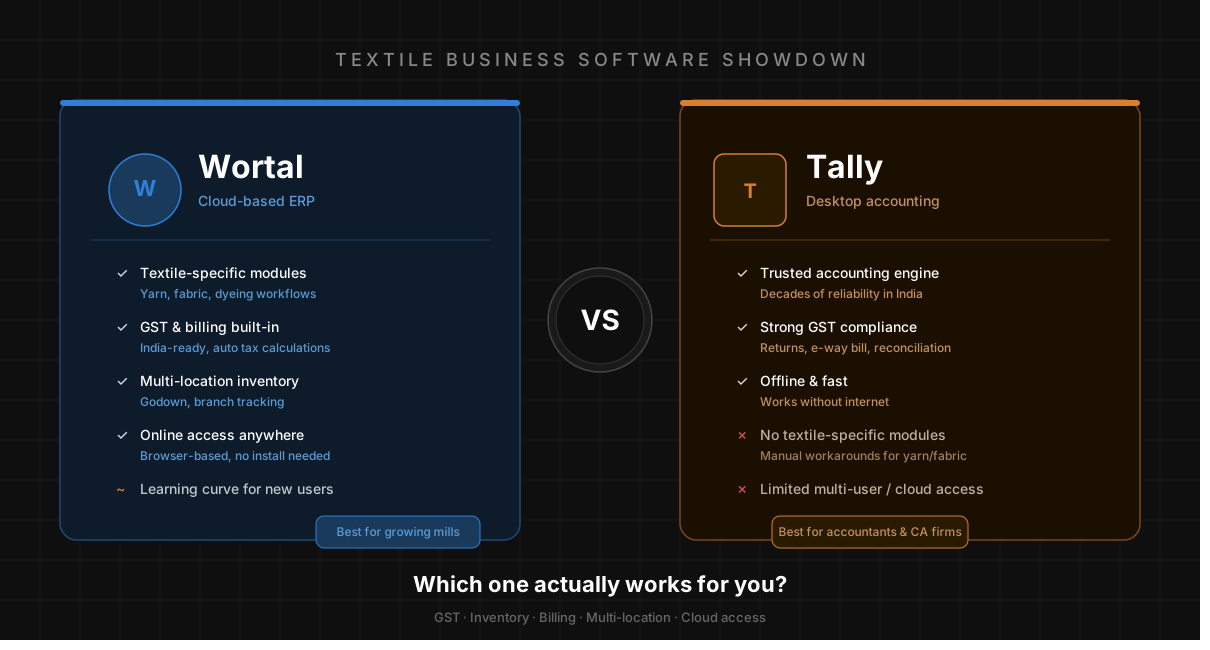
Wortal is a CRM and business management platform built specifically for SMBs – including textile businesses. The Wortal vs Tally textile comparison isn’t really apples to apples. It’s more like comparing a calculator to a full business dashboard.
Here’s what that looks like in practice:
Lead and Sales Management In a textile business, your sales cycle involves distributors, retailers, and bulk buyers – each at a different stage. Wortal’s lead management lets you track every inquiry, follow-up, and deal stage visually. With Tally, none of this exists. Your sales team is probably managing this on Excel sheets or WhatsApp groups.
Inventory with Variants Textile inventory is complex. One product can have 30 SKUs based on color and size. Wortal handles multi-variant inventory tracking. Tally can record stock entries but isn’t built for the operational complexity of textile ERP vs Tally scenarios where you need real-time inventory across multiple locations.
WhatsApp and Email Automation Wortal lets you send automated follow-ups and payment reminders through WhatsApp and email. For a textile business chasing payments from 50+ buyers, that’s not a luxury – it’s a necessity. Tally has no such feature.
Textile ERP vs Tally: What Does Your Business Actually Need?
The textile ERP vs Tally debate often comes down to business size and complexity. If your business is purely about managing accounts and GST returns, Tally might be enough. But if you have a sales team, manage buyer relationships, and want visibility into your pipeline and inventory simultaneously – Tally becomes a partial solution.
The real issue is that many textile businesses are running three or four tools side by side – Tally for accounts, Excel for inventory, WhatsApp for customer communication, and some other tools for HR. That fragmentation costs time and creates errors.
Wortal brings most of this under one roof.
Book a Free Demo
See how Wortal can simplify your business and help you close more deals.


Tally Alternative for Textile Business: What to Look For
When searching for a Tally alternative for textile business, here are the things that actually matter:
- GST-ready billing and invoicing – non-negotiable
- Inventory management with variants – essential for fabrics and garments
- Lead and sales pipeline tracking – critical if you have a sales team
- WhatsApp/Email communication tools – for follow-ups and reminders
- Employee and task management – especially for larger operations
- Affordable pricing – Wortal starts at Rs.200/user/month, which is practical for SMBs
Wortal checks all of these. It’s built for Indian businesses, understands the SMB context, and doesn’t require a month-long implementation like most ERP solutions.
A Realistic Scenario
Say you run a fabric wholesale business in Surat. You have 8 salespeople, 200+ active buyers, and a warehouse with 500+ SKUs. Every month, you’re reconciling inventory manually, sending payment reminders on WhatsApp personally, and asking your team to update a shared Excel sheet.
With Wortal, your team logs every lead and deal in the CRM. Inventory updates happen in real time. Automated reminders go out to buyers before due dates. Your manager gets a dashboard view of all open deals and outstanding payments.
With Tally alone? You’d still need three other tools – and someone to manage all of them.
Key Takeaways
- The Wortal vs Tally textile comparison isn’t about which is better at accounting – it’s about which fits the full scope of your business.
- Tally remains strong for pure financial management and GST compliance.
- Wortal is the better Tally alternative for textile business owners who need sales, inventory, and operations managed together.
- For businesses doing textile ERP vs Tally evaluations, the decision comes down to whether you need accounting software or a complete business management tool.
- If you’re doing a textile software comparison for the first time, prioritize operational fit over familiarity.
Frequently Asked Questions
It depends on what’s frustrating you today. If Tally handles your accounting perfectly and your sales process runs smoothly, switching may not be urgent. However, if you’re managing leads in Excel, following up manually on WhatsApp, and struggling to track your sales team’s activities, those inefficiencies cost time every day. Wortal isn’t designed to replace Tally—it complements it. Many textile businesses continue using Tally for accounting while relying on Wortal for sales, lead management, and customer follow-ups.
Not at all. Your accountant is correct when it comes to accounting and compliance. However, accounting software doesn’t manage sales opportunities, monitor follow-ups, or help your team convert more buyers. Tally shows what has already happened financially, while Wortal helps manage the operational side of your business, ensuring leads are followed up and sales activities stay organized.
Absolutely. Small businesses often benefit the most because every team member handles multiple responsibilities. Wortal centralizes lead tracking, customer communication, billing reminders, and sales management in one place, reducing manual work and improving productivity. Its affordable pricing also makes it accessible without requiring a large software investment.
That’s a common concern. Wortal is built with a clean, visual interface that matches the way sales teams naturally work. The pipeline clearly displays every stage of the sales process, making it easy to understand and use. Most teams become comfortable with the platform within the first week without extensive training.
Wortal offers a free trial, allowing you to evaluate the software before making any commitment. Start with one department or a small group of users, test it with your existing workflow, and expand only if it delivers measurable improvements. This approach helps ensure the platform is the right fit for your business.