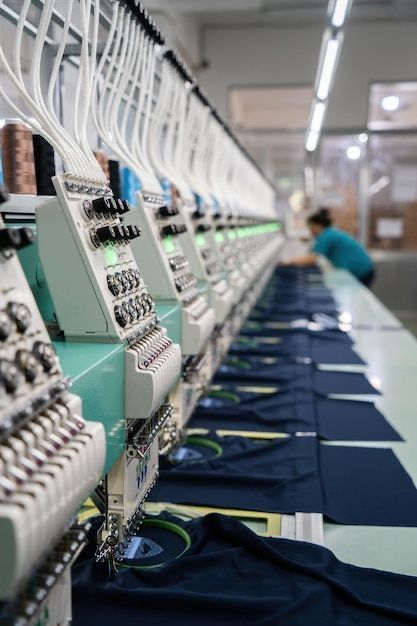

Walk into any major textile hub in Surat, Ludhiana, or Tirupur. You will see millions of meters of fabric moving through the production lines. The looms are spinning, the processing houses are running, and the design rooms are preparing for the next seasonal collection. Yet, if you sit in the owner’s cabin, the story changes completely.
The real issue is not the cost of yarn or the availability of skilled labor. The actual problem hides inside the sales pipeline.
A buyer from a major export house requests a fabric sample. Your sales rep notes it down on a pad. Three days later, the buyer calls to ask for the status. The rep is out in the market, the design team has no record of the request, and the sample is still sitting in a cardboard bin. By the time you ship it, the buyer has already closed a deal with a competitor from Bangladesh or another local mill.
Managing buyers, distributors, and bulk orders on paper or basic spreadsheets no longer cuts it. To survive in the competitive market, you need a system built for your workflows. This piece breaks down the best lead management software for textile business operations, how to implement a dedicated CRM software for textile business growth, and why choosing the right platform determines whether you scale up or get left behind.
Why Generic Software Fails the Indian Textile Industry
Most generic business tools are built for modern software companies or simple retail shops. They assume a simple sales cycle: a lead enters the system, a sales rep speaks to them, and a deal is won or lost.
In practical terms, the textile market does not operate this way. Your sales cycle involves deep layers of physical dependencies, fluctuating raw material prices, and distinct distribution channels.
- The Sampling Mess: A single buyer rarely places an order immediately. They demand lookbooks, feelers, and physical swatches. A regular system treats a sample request like a standard note, meaning you cannot track whether a swatch was sent, approved, or rejected.
- The Multi-Channel Chaos: Your leads come from disparate sources. You have inquiries from B2B platforms like IndiaMART, walk-ins at your wholesale market shop, wholesale distributors calling your field agents, and international buyers visiting your booth at trade shows like Bharat Tex.
- Production Blindsides: If your sales agents do not have real-time visibility into the loom schedules or current yarn stock, they will secure orders you cannot deliver on time.
Without a tailored tool, your sales team spends more time chasing internal updates than talking to actual buyers.
Book a Free Demo
See how Wortal can simplify your business and help you close more deals.


What Actually Matters in a Textile Lead Management System
When you evaluate a lead management software for textile business India deployment, look past generic features like calendar alerts. Focus instead on the operational capabilities that directly influence your daily production and order volumes.
1. Unified Pipeline for Agents, Wholesalers, and Brands
Your software must aggregate leads from all channels into a singular interface. Field agents working the markets of Ahmedabad or Mumbai must be able to log conversations instantly via mobile, while your corporate desk logs emails from global brands.
2. Built-in Sample Tracking Lifecycle
The lifeblood of fabric sales is the sampling stage. Your platform must treat the sample as a milestone within the sales funnel, complete with specific trackable statuses:
- Sample Requested
- Sourcing from Production Floor
- Dispatched via Courier (with Tracking ID)
- Customer Review/Feedback Received
- Quote Finalization
3. Deep ERP and MRP Compatibility
A customer relationship system should never function in isolation from your factory floor. It needs to draw data from your Enterprise Resource Planning (ERP) or Material Requirements Planning (MRP) systems. If yarn prices spike by 8% overnight, your system should automatically flag pending quotes to protect your margins.
The Landscape: Best Lead Management Software for Textile Business Operations
Finding the right balance between robust capability and simple usability is tricky. Let’s evaluate the leading options active in the Indian market.
Software Comparison
Core strengths, ideal business fit, and key limitations at a glance.
Deep Dive: Wortal (The Industry Benchmark)
Wortal stands out because it avoids treating fabric sales like software sales. It recognizes that Indian textile owners need clear, practical data without navigating dense menus.
The application allows field representatives to drop geotagged updates right from the market floor. It structures sales pipelines around seasonal collections, allowing you to track which prints or fabric blends are driving the highest inquiry volumes. Because it aligns naturally with production realities, it ensures that your sales goals stay anchored to your actual loom capacities.
Rapitek CRM
For large-scale operations focused heavily on global exports, Rapitek provides clear utility. It organizes workflows around collection periods and includes native multi-currency support to track shifting values across USD, EUR, and INR seamlessly. It also features built-in WhatsApp API capabilities, ensuring all buyer communications remain visible on a centralized dashboard.
Zoho CRM & Bigin
Zoho offers incredible flexibility. If you have an internal IT manager capable of building custom fields for fabric weight (GSM), weave styles, and colorways, Zoho can be customized into a solid solution. However, out of the box, it requires significant configuration before it fits standard textile industry workflows.
Real Life Case Study: From Production Delays to Predictable Orders

Let’s look at a practical scenario based on real market shifts in Surat.
The Challenge
A mid-sized synthetic fabric manufacturer operating 120 high-speed water jet looms was struggling with flat revenues. The factory floor was productive, but they faced a constant issue:
they missed their production delivery windows for specialized winter fabric variants.
Their sales process relied completely on a traditional notebook system. Agents took orders in the field, called the office assistant, and the assistant logged the details into a basic spreadsheet.
Most people ignore this part: lead leakage usually happens during verbal handoffs. The field team promised a delivery date of 20 days based on historical patterns. However, they did not realize the looms were already booked solid with a massive run of uniform fabric. The result? Broken delivery timelines, unhappy regular buyers, and an estimated Rs.18 Lakhs lost annually due to cancelled orders and unreturned sample follow-ups.
The Transformation
The company deployed Wortal across their internal desk teams and field representatives. They integrated the new platform directly with their basic loom scheduling system.
Here is what actually matters about how they set it up:
Lead-to-Delivery Workflow
When an inquiry arrived from IndiaMART or a distributor, it was instantly assigned to a specific field agent’s phone. If a customer requested a fabric quality sample, the agent logged it directly into the mobile interface. The system set an automated rule: if no response was registered within 4 days, the agent received a high-priority alert to call the buyer.
More importantly, before final pricing was sent out, the system checked the production database to calculate an accurate delivery window based on actual loom availability.
The Concrete Results
Within 90 days of adopting a specialized CRM software for textile business framework, the numbers shifted clearly:
- Sample-to-Order Conversion Rate: Rose from 22% to 38% because they stopped forgetting to follow up on sent swatches.
- Order Delivery Accuracy: Reached 96% on-time fulfillment, completely eliminating late-delivery penalties.
- Revenue Growth: A measurable 14% increase in total revenue within the first two quarters, driven entirely by recovering leaked leads.
Actionable Steps: Transitioning Without Disrupting Your Operations
That’s where things usually go wrong for most owners. They buy a software license, hand it down to their team, and expect instant results. A week later, everyone goes right back to using their old notebooks and personal WhatsApp chats.
If you want the migration to stick, follow this clear roadmap.
Step 1: Clean and Standardize Your Fabric Data
Before you touch any software, organize your core catalog. Standardize how you label your products across your team. Pick a consistent format for your variables:
- Material Composition (e.g., 100% Cotton, Poly-Viscose)
- Weave Type (e.g., Twill, Satin, Plain)
- Weight Metric (GSM)
- Width Dimensions (e.g., 44 inches, 58 inches)
Step 2: Establish the “Single Source of Truth” Rule
Make a firm operational rule: If a lead or sample status is not updated in the software, it does not exist. If an agent closes a major order over a phone call but fails to record it in the pipeline, do not issue the production ticket until it is properly logged.
Step 3: Tie Software Usage Directly to Field Incentives
The fastest way to get your market representatives to use a new system is to link it to their pockets. Use the reporting dashboard to track agent activity, total outreach volume, and deal closing speeds. Calculate their monthly performance bonuses directly from the app data. When visibility connects to compensation, field adoption happens naturally.
Practical Takeaways for Textile Executives
The Indian textile landscape is modernizing at an incredible pace. Relying on memory, personal messaging accounts, and paper logs creates an invisible ceiling on how large your business can grow.
Investing in a high-quality lead management software for textile business India deployment provides a clear competitive edge. It gives you absolute visibility into your field operations, plugs the leaks in your sample distribution network, and aligns your sales pipelines with your actual factory capacity.
Stop letting valuable buyer inquiries get lost in unread text threads or forgotten notebooks. Look at specialized platforms like Wortal, empower your team with the right tools, and build a structured, predictable sales engine for your mill.