


A client texts you asking for a quote. You say give me an hour. That hour becomes three because you’re digging through old files, fixing last month’s rates, double checking whether GST is 12% or 18% on this particular item, and by the time you hit send, your competitor already got the order.
I’ve watched this happen to at least a dozen small business owners I know personally. Not because their pricing was off. Because they were slow, and slow reads as unserious.
So let’s actually get into this – what it takes to create quotation online without losing half your day, what genuinely goes into how to make a quotation for a client that gets a yes instead of silence, and at what point a spreadsheet stops cutting it and you need real quotation management software.
A Quotation Says More Than the Price Does
Here’s something most people miss. A quotation is the first proper business document a new client sees from you. Not your shop, not your factory floor – the quote.
If it’s clean, arrives fast, and has everything spelled out, the client assumes you run a tight ship. If it’s a blurry photo of handwritten numbers sent two days late, they assume the opposite – even if your price was the best one they got.
I know a machine parts dealer near Sachin GIDC who lost a fairly large order last year. Turned out his quote had the wrong HSN code on one line item. The buyer’s accounts team flagged it, asked for a corrected copy, and by the time it came back, the order had already gone elsewhere. The price was fine. The paperwork wasn’t.
Where Most People Still Get Quoting Wrong
Most small and mid-size businesses I’ve worked with are still doing one of these things:
Copying an old Word file and swapping numbers. Typing rates straight into WhatsApp. Using a basic invoicing app that was never really designed for the back-and-forth of quote negotiation. Or worse, waiting on an accountant to type it up, which adds a whole day nobody had.
None of this is wrong exactly. It just doesn’t hold up once volume increases. Somewhere around 15-20 enquiries a week, the cracks show up – usually in the form of two staff quoting different prices to the same client, or a follow-up that just never happens because nobody remembered.
That’s usually where things fall apart. Not the pricing strategy. The process holding it together.
Book a Free Demo
See how Wortal can simplify your business and help you close more deals.


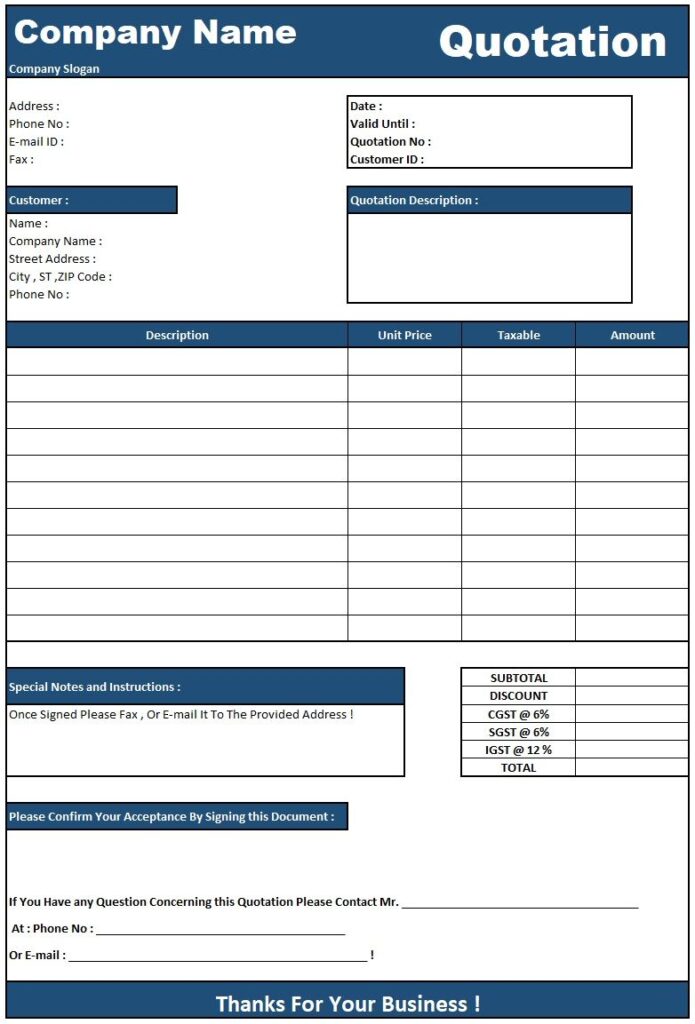
What Actually Belongs in a Client Quotation
Let’s get practical. If you’re wondering how to make a quotation for a client that doesn’t come back with ten questions, here’s what needs to be there.
Your business details up top – name, GSTIN, address. Not tucked in a footer nobody reads. Buyers’ accounts teams check this before anything moves forward internally.
Line-by-line pricing, not one bundled number. If you’re quoting fabric plus dyeing plus transport, split it. A single lump figure invites a single lump negotiation – “just cut it by 10%” – and you’ve got nothing to point to when defending your margin.
A validity date. This one gets skipped constantly and it causes real problems. Raw material costs move, especially in textiles and metals, and an undated quote from three weeks ago becomes an argument when the client expects the old number.
Payment terms and delivery timeline, spelled out plainly. Advance percentage, credit days, expected dispatch date. Skip this and you’ll be having the same conversation over the phone a week later, except now it’s tense.
A quotation number. Small detail, big payoff – especially once revisions start happening, which they always do.
Here’s a rough breakdown of what actually swings a buyer’s decision, based on what I’ve seen across dozens of B2B deals:
Feedback Breakdown
What Matters Most
Priorities ranked by weight — scroll to reveal
Total weighted score · 100%
Price is barely more than a third. Everything else on that chart is process, not product. That’s the part almost every small business ignores while obsessing over the last two rupees of margin.
Why Excel Works Until It Suddenly Doesn’t
At low volume, a spreadsheet is genuinely fine. Nothing wrong with it. The problem is it doesn’t slow down gradually as your business grows – it just stops working one day, usually without warning.
Picture a small unit sending five quotes a week. Manageable. Now they’re growing, three sales guys, forty quotes a week. Suddenly two of them are quoting different rates for the same product because the master rate sheet on someone’s laptop is a version behind. Nobody knows which quotes actually converted. Follow-ups get forgotten because there’s no system reminding anyone. And the owner has no real idea how much business is sitting in the pipeline right now, today.
This is usually the exact moment businesses start Googling quotation management software – not because Excel is bad software, but because Excel has zero memory of its own. It doesn’t remind you, doesn’t track anything, doesn’t connect the dots between a quote and what happened after.
What Proper Quotation Software Actually Does For You
The obvious benefit is that you can create quotations online in minutes using saved product rates and your branding already built in. You just tweak the quantity and discount, and it’s ready to send.
But honestly, that’s not even the main win. The real value shows up after you hit send:
- You know whether the client actually opened the quote
- You get nudged to follow up instead of trusting your own memory, which – let’s be honest – forgets things
- Every quote automatically attaches to a lead record, so nothing gets buried in old chats
- Your whole sales team pulls from one shared rate list, so nobody’s quoting two different prices for the same item
This is roughly where Wortal comes in for smaller Indian businesses trying to get organized without hiring a full ops team. It’s not a billing tool with a quote feature stapled on – the quotation lives inside the lead’s history, tied to whatever stage that deal is at. For someone juggling fifteen enquiries at once, that connection matters more than the PDF looking nice.
Key Takeaways
Treat a quotation like a trust signal, because that’s what it functions as before any money moves. Speed usually matters as much as the actual number you quote. Break pricing into line items – buyers negotiate specifics, not totals. Never skip validity, payment terms, and delivery dates; these three prevent most disputes down the line. Manual quoting is fine at low volume and breaks quietly, without warning, once you scale. And once you’re past roughly fifteen to twenty quotes a week, it’s genuinely worth looking at proper software instead of another Excel template.
Case Study · Ring Road, Surat
Two Brothers, One Price List
A small hardware and fittings trading business, and the quiet fix that stopped good clients from walking away.
The Setup
A friend runs a hardware and fittings trading business near Ring Road. It’s a small team — him, his brother, and two sales staff. For years, quotes went out over WhatsApp: a photo of a handwritten rate card, or a rushed typed message with numbers thrown in.
The Problem
His brother and he sometimes quoted slightly different rates for the same bulk order — simply because neither knew what the other had recently negotiated with that exact client.
“Two different prices within two days, for the same product.”
— The buyer who noticedThat client left, and never came back.
The Fix
After that, they switched to a shared setup — every quote pulled from one common price list, logged automatically against the client’s record. Within two months, both brothers could see exactly what had been quoted, to whom, and when.
Follow-ups actually started happening, instead of disappearing in a WhatsApp thread buried under fifty other conversations.
What Changed
Shared price list, no more guesswork
To full visibility on every quote
Follow-ups lost in chat threads
Their conversion didn’t improve because prices changed. It improved because clients stopped catching inconsistencies, and nothing got forgotten anymore.
Quotation Basics
Frequently Asked Questions
Quick, straight answers on sending quotes, validity, GST, and keeping small teams in sync.
Have a different question? Ask your quote or admin lead directly.