

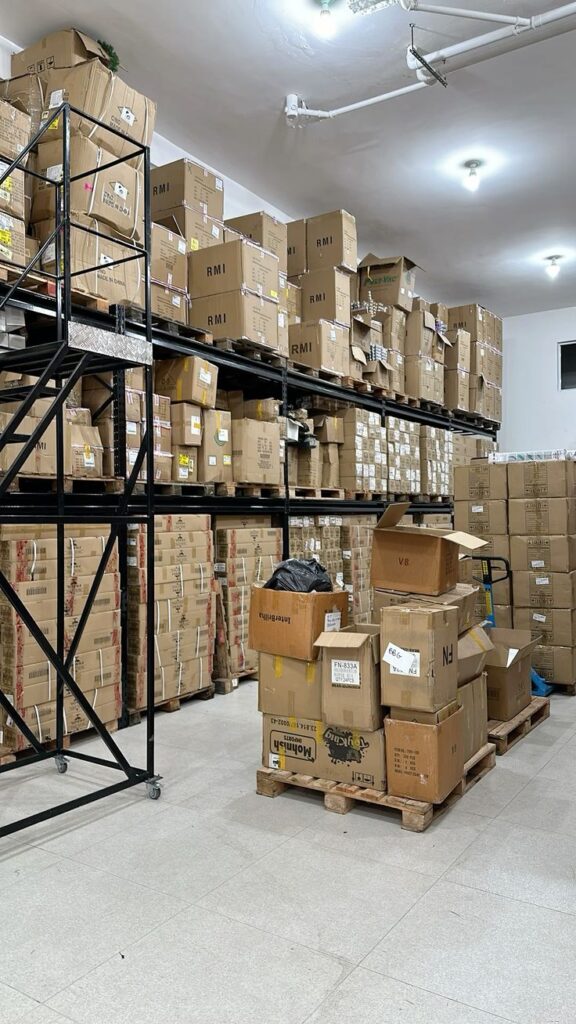

Running a textile godown without proper software is like stitching fabric in the dark. You know things are going wrong – fabric rolls going missing, shade-wise stock mismatches, chaotic dispatch records – but you can’t quite see where. And by the time you figure it out, you’ve already sent the wrong lot to a customer in Ludhiana or double-ordered grey fabric your Surat unit didn’t need.
That’s the reality for hundreds of textile businesses across India. And that’s exactly why choosing the right godown management software for textile operations has become less of an upgrade and more of a necessity.
Why Textile Godowns Are a Different Beast Entirely
Most generic warehouse tools are built for boxes and SKUs. Textiles don’t work that way.
A fabric roll has shade variation. A saree has weight, count, and design number. A lot of suiting material might have three different widths in the same shade. When you’re managing 500+ such items across a godown in Bhiwandi or Erode, a regular spreadsheet – or even basic inventory software – starts to fall apart.
The real issue is that textile stock management software needs to understand your product structure. Shade cards, roll numbers, open and packed stock – these aren’t optional fields, they’re the core of how textile inventory actually works.
That’s where most businesses get stuck. They either use generic warehouse management software that doesn’t account for textile-specific attributes, or they cobble together Excel files that no one fully trusts.
Book a Free Demo
See how Wortal can simplify your business and help you close more deals.


What Good Textile Godown Management Software Actually Does
Before comparing tools, it’s worth being clear about what the software needs to handle. Here’s what textile businesses actually require from a godown management system:
- Roll/batch-level tracking – not just product-level stock counts
- Shade and quality-wise segregation – especially for dyeing and processing units
- Multi-location support – for businesses with godowns in more than one city
- Inward and outward entries – with supporting documents like challan and GRN
- Stock movement history – who moved what, when, and where
- Low-stock alerts – before you run out of a running shade mid-season
- Integration with billing and sales – so godown stock updates automatically when an invoice is raised
Most people ignore this part: the integration with billing is what actually saves time. Without it, you’re maintaining two separate records, and sooner or later they won’t match.
Wortal CRM: A Practical Option for Textile Businesses in India
If you’re running a textile trading or manufacturing business and need warehouse management software for the textile industry that connects your godown with your sales and customer management, Wortal CRM is worth a serious look.
Wortal is a CRM-first platform but it’s built for Indian SMBs – including textile businesses – and comes with features that actually map to how godown and sales operations work on the ground.
Here’s what makes it relevant for textile godown management:
Inventory Management – Wortal lets you manage product-wise stock with structured entries. For textile businesses, this means you can track fabric types, quantities, and movement without switching between tools.
Lead and Sales Management – When a dealer from Jaipur calls asking about availability of a particular shade of cotton dress material, your sales team can check live stock and confirm immediately. No back-and-forth with the godown person.
WhatsApp and Email Automation – Dispatch confirmations, payment reminders, stock alerts – Wortal’s automation handles these without manual follow-up. For high-volume textile businesses, this cuts down a lot of daily communication work.
Visual Deal Pipeline – Helps your sales team track where each order stands: inquiry, quotation sent, confirmed, dispatched. Especially useful for businesses handling large institutional buyers or export orders.
WCaller Integration – Tracks all customer calls, so if a buyer calls with a complaint about fabric quality or a short shipment, there’s a proper record of what was discussed.
Wortal’s pricing is straightforward: Standard plan at Rs.200/user/month, Premium at Rs.350/user/month, with a free trial to start. For a textile business with 5-10 team members, that’s a manageable cost.
How a Mid-Size Textile Trader Could Use Wortal
Imagine a fabric trader in Surat managing three product categories – polyester, cotton blends, and embroidered fabric. Earlier they used WhatsApp groups to coordinate godown stock with their sales team.
After setting up Wortal, they configured their product inventory, linked it to their sales pipeline, and set up automated WhatsApp messages for dispatch and payment follow-up. Their godown staff now updates stock entries after each inward receipt, and the sales team can see real-time availability without calling anyone.
The result: fewer errors on outward dispatches, faster response to dealer inquiries, and no more “I thought we had stock” conversations.
That’s in practical terms what textile godown management software is supposed to do.
Key Things to Check Before Buying Any Textile Stock Management Software
A few things worth verifying before you commit:
1. Does it support your product structure? Textile items aren’t simple. If the software can’t handle shade-wise or roll-wise entries, it’ll create more problems than it solves.
2. Is it mobile-friendly? Your godown supervisor probably isn’t sitting at a desktop. The software needs to work on a phone, especially for inward and outward entries.
3. Does it integrate with your billing system? Standalone godown software that doesn’t talk to your invoicing creates duplicate work and reconciliation headaches.
4. What does support look like? For Indian SMBs, local-language support and quick response times matter. Ask directly before signing up.
5. Can it scale? If you’re planning to add a second godown in the next year, check whether the software supports multi-location management from the start.
FAQs
Wortal works well for small and mid-size textile businesses. Even a 3-4 person team can use it without any technical background.
Yes, you can set up your inventory with custom product attributes including shade, quality, and quantity. It’s not overly complicated to configure.
Yes. Your godown staff can update entries, check stock, and view dispatch status directly from their phone.
Wortal supports multi-location management. You can track stock at each location separately and still get a combined view.
Yes, Wortal offers a free trial. Worth testing with your actual product data before committing.
Most businesses are up and running within a day or two. Nothing that requires weeks of training.
That’s actually one of Wortal’s stronger points. Sales and godown teams work from the same system, so no more calling the godown person to confirm availability.
Standard plan is Rs.200/user/month and Premium is Rs.350/user/month. Reasonable for what you get, especially if you’re replacing multiple disconnected tools.
Yes. You can set up WhatsApp and email automation for dispatch confirmations, payment reminders, and more.
Wortal is built for Indian SMBs, not enterprises. The interface is straightforward, and the learning curve is short for most users.
Wrapping Up
Textile businesses in India have been managing godowns with informal systems for decades. And while experience matters, it only goes so far when you’re dealing with hundreds of product variants, multiple buyers, and pressure to dispatch on time.
The right godown management software for textile business gives you visibility, reduces errors, and – most importantly – keeps your sales and godown teams working with the same information.
Wortal is a strong option if you want a connected system for sales, customer management, and inventory. Start with the free trial and see how it fits your workflow.