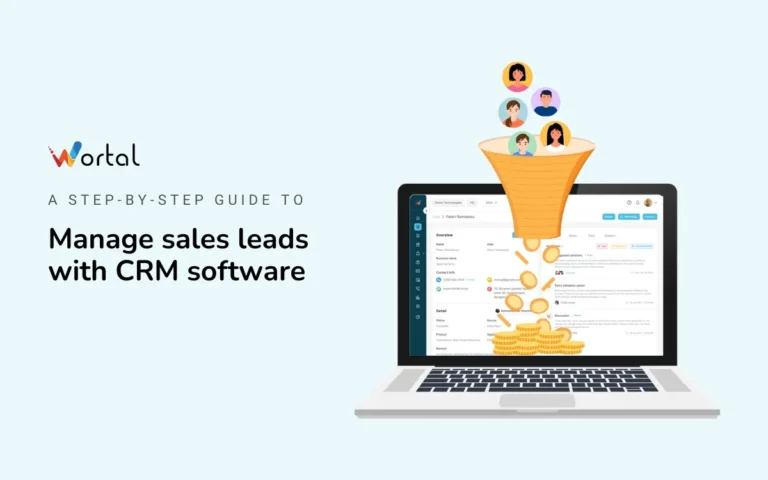



Customer relationship management (CRM) technology in the current business era is an essential part of organisations of every size. Though mostly thought to be a means of intelligent customer interactions and better sales, CRM systems also significantly affect employees’ productivity. Efficient workflow, teamwork, and data-driven insight offered by CRM software allow employees to work smarter, not harder. This blog post discusses how employees become more efficient with CRM software and a more productive workplace.
The Productivity Puzzle: Where Does CRM Fit In?
Productivity from employees is the life-line of a successful organisation. It’s maximising output with minimal wasted resources and time. It’s a well-oiled machine: all the components need to be at the top of their game for the entire machine to run smoothly. In this metaphor, CRM is the oil, and it enables smooth-running operations and helps in productive workflows. Prior to CRM, workers would work with scattered data, inefficient procedures, and poor communication. This resulted in unnecessary efforts, lost opportunities, and ultimately decreased productivity. CRM solutions directly address these issues by bringing information together, automating tasks, and improving coordination.
CRM Impact: A Multifaceted Approach to Employee Efficiency
CRM affects employee productivity significantly, impacting all aspects of their daily work. Let us discuss a few of the important areas:
Information Centralised Hub: All customer information – contact details, interaction history, purchase history, and so forth – aggregated into one place where it can be easily accessed.
No longer chaotic searching through spreadsheets, emails, or sticky notes. Employees can immediately find the data they need when they need it. This also saves them a considerable amount of time and frustration. This translates directly into improved CRM productivity.
Automation of Repetitive Tasks: Most of the working days of numerous employees are taken up with repeated clerical work such as data inputting, follow-up mail, or report creation. CRM programs perform such work automatically and permit time for quality use by the employees to take on more precious, strategic work. For example, sales teams don’t have to record every interaction themselves. They can use CRM automation to save time, which will allow to focus on building relationships and making sales.
Better Communication and Cooperation: Poor communication and information silos can significantly damage productivity. CRM software fosters cooperation through a shared platform where teams communicate and exchange information.
The teams of sales, marketing, and customer service can collaborate together, everyone in the same location and harmoniously working together. This is particularly crucial in the case of CRM for teams, where access and transparency are required.
Greater Customer Insight: CRM solutions provide employees with important customer behaviour, preferences, and insight of their needs. Employees use these insights to tailor interactions, meet customer needs ahead of time, and deliver improved solutions. A salesperson, for instance, may use customer history information in the CRM to customise their pitch and deal with unique issues, improving the chances of closing a sale.
Efficient Workflows: CRM software improves workflows by simplifying the processes and clearly specifying in detail the procedures for the completion of a task. This decreases confusion and error levels and optimises efficiency in the process of task completion as well as in consistency of performance. An example is assigning leads to salespeople through an automated process to prevent losing any of the leads along the way.
Improved Time Management: By integrating information, automating processes, and enhancing communications, CRM systems allow employees to work more efficiently. They can prioritise, manage time well, and not waste time on repetitive tasks.
Improved Employee Morale: When employees possess the right tools and access to the information they need, they feel more confident and competent. This could lead to higher job satisfaction and improved morale, which in turn contributes to increased productivity.
CRM Tools for Productivity: Maximising the Effectiveness of Your System
CRM software is the centre of your data and customer interactions. To realise its full potential, you must install it intelligently. That means being knowledgeable about what features it has to offer and using them to enhance worker productivity. There are quite a number of aspects that you must consider when realising the maximum return on your CRM system:
Training and Onboarding: Train employees thoroughly during onboarding to maximise the output through your CRM. The training must include the system’s core functions, navigating the interface, and advanced features such as customer segmentation and reporting features. Utilise hands-on training, tutorials, and continuous resources to enable employees to become masters of the system. This training boosts their confidence and efficiency in handling customer relationships.
Customisation and Integration: Every business has different workflows, so design your CRM according to your specific needs. This simplifies things. In addition, integrate the CRM with other essential systems such as marketing software, customer support software, and accounting software. This allows for easy data exchange between departments, eliminates manual data entry, and gives a better understanding of customer interactions.
Regular Monitoring and Optimisation: Installing your CRM just once is not sufficient. Periodic checks need to be done to observe whether it is operating to deliver the objectives of your organisation. Scan your system use, workflows, and employee complaints to determine gaps that exist or unused functionalities. Make the required changes to this information and refine the system. Conduct audits regularly and invite open feedback to make the CRM align with employees’ demands in order to achieve continuous productivity gains.
User Adoption: The users’ acceptance of your CRM makes it successful. Promote the advantages of the CRM, including time-saving functionality, enhanced collaboration, and enhanced customer insight. Avoid any resistance to change or apprehension initially. Offer constant support, from training to technical assistance. This provides an environment in which employees feel comfortable using the system in their daily work. Acknowledging their success with the CRM will get them more involved.
By concentrating on these areas, organisations can make a significant impact on how their CRM systems assist employees to be more productive. This translates to improved customer relationship management and enhanced business success.
Beyond the Bottom Line: The Human Element of CRM Productivity
Though the tangible benefits of CRM to employee productivity cannot be denied, care must be taken to watch out for the human element. CRM is not process automation; it’s about motivating your employees to perform at their best. By giving them the tools and training they require, CRM allows employees to concentrate on relationship-building, problem-solving, and delivering amazing customer experiences. That helps the business, but it also creates a more engaging and effective workplace for employees.
Read More: CRM Software and Data Security: What You Need to Know
Conclusion: Investing in CRM, Investing in Your Employees
CRM software isn’t just a customer management tool; it gets your employees working. By collecting all that information, automating processes, making communication flow easier, and providing valuable insights, CRM enables your employees to work smarter. CRM isn’t an investment in technology; it’s an investment in your people and your future business.
By optimising CRM, you can utilise the potential of your workforce and enjoy more productivity and success. You need to have proper installation, training, and regular evaluation in order to obtain maximum out of CRM. Proper use of CRM can drive your workplace to become a hub of efficiency and cooperation, thereby ensuring greater success.
Wortal CRM has great features to increase your employees’ productivity. You can also customise the features according to your needs. Check out Wortal CRM today and sign up for a free trial to learn more.