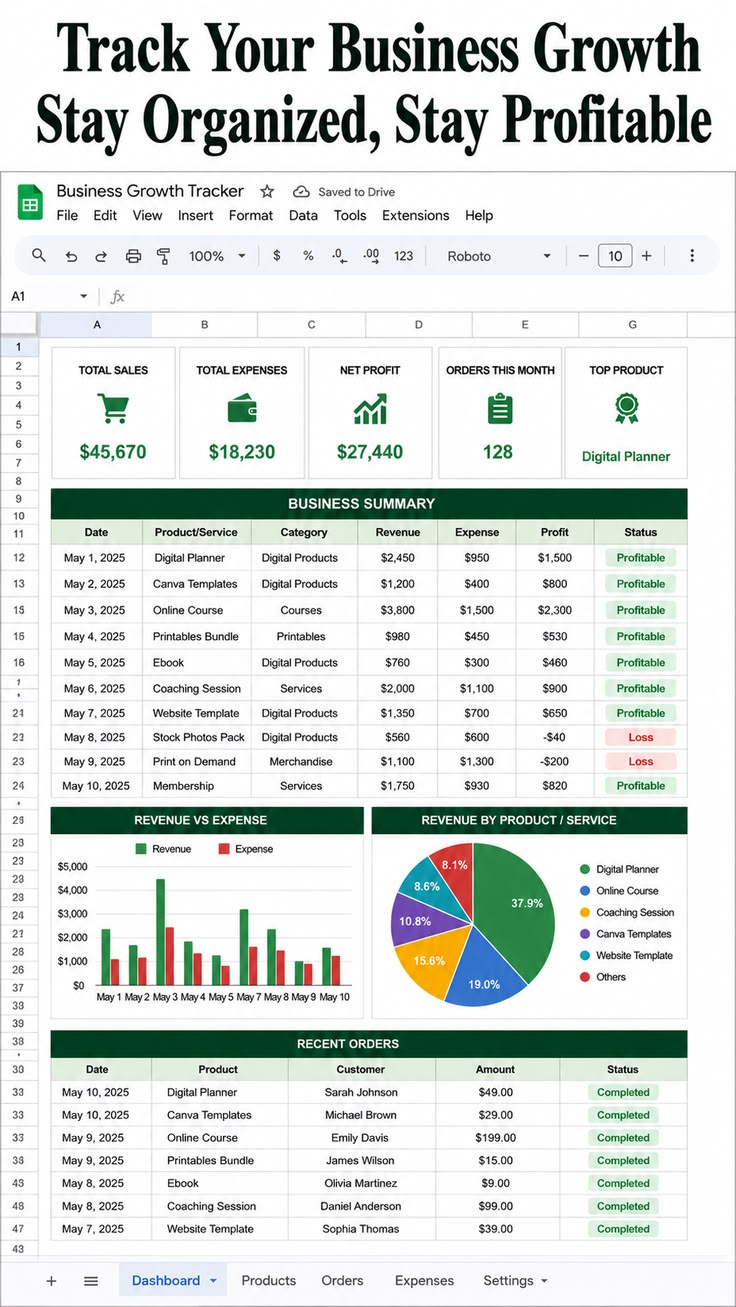


Inventory management software is a system that tracks what stock you have, where it sits, and what’s moving in or out in real time, without someone manually counting boxes or updating an Excel sheet at 11 PM. Order management software does the other half of the job: it takes a customer’s order, checks it against available stock, and pushes it through fulfillment without ten WhatsApp messages and a phone call to the godown supervisor. Put them together, and you get a system that tells you exactly what you have, what you owe customers, and what you need to reorder before it becomes a problem.
Here’s why this matters more in 2026 than it did five years ago. Indian businesses aren’t selling through one channel anymore. A textile wholesaler in Surat might be taking orders on WhatsApp, listing on IndiaMART, running a small D2C page, and still doing counter sales at the shop. Each of those channels touches the same stock. Without a proper system, you end up promising the same 200 meters of fabric to two different buyers and that’s how trust gets damaged fast.
Book a Free Demo
See how Wortal can simplify your business and help you close more deals.


Quick Summary
This guide covers what inventory software actually does, how it’s different from basic billing tools, what to look for before buying, and how Indian SMBs from manufacturers to distributors are using it to stop losing money on stock mismanagement. It’s written for business owners and operations heads who are past the spreadsheet stage but haven’t picked a system yet. By the end, you’ll know what questions to ask a vendor and what red flags to watch for.
What Problem Are We Actually Solving
Most businesses don’t realize this until it’s cost them money: stock problems are rarely about not having enough inventory. They’re about not knowing what you have.
A manufacturer might have raw material sitting in a warehouse for six months because nobody flagged it as available for a new order. A retail store might reorder a product that’s already overstocked because the person checking stock counted wrong. A wholesaler might commit to a delivery date without checking if the goods are actually in the right location.
Inventory management software in India solves this by giving everyone sales, warehouse, accounts the same real-time picture. No guessing. No “let me check and call you back.”
Did You Know? A large share of stockouts in Indian SMBs aren’t caused by supply shortages; they’re caused by poor visibility into what’s already sitting in the warehouse.
Inventory Software vs Basic Billing Software
This is where a lot of confusion happens. Many small businesses in India use GST billing software and assume that’s “inventory management.” It isn’t full.
| Feature | Billing Software | Inventory Software |
|---|---|---|
| Generates invoices | Yes | Sometimes |
| Tracks stock across locations | Rarely | Yes |
| Alerts on low stock | No | Yes |
| Links inventory to orders | No | Yes |
| Handles batch/lot tracking | No | Often |
| Multi-warehouse visibility | No | Yes |
| Reorder point automation | No | Yes |
Billing software tells you what you sold. Inventory software tells you what you can sell, what’s running low, and what’s sitting idle. Both matter, but they solve different problems and businesses that only have billing software are usually flying blind on stock decisions.
Core Features That Matter
Not every feature a vendor lists actually matters for your business. Here’s what genuinely moves the needle:
Real-time stock visibility: Every sale, purchase, or transfer updates stock immediately. Not at the end of day. Not after someone manually syncs a sheet.
Multi-location tracking: If you run more than one godown, shop, or warehouse, the system needs to show stock location-wise, not just as one combined number.
Low-stock and reorder alerts: The system should tell you before you run out, not after a customer calls asking why their order is delayed.
Batch and expiry tracking: Critical for textile, pharma, and FMCG businesses where lot numbers or expiry dates decide what gets sold first.
Order-to-inventory linking: When an order comes in, stock should reserve automatically. This one feature alone stops the “sold twice” problem.
Reporting that’s actually usable: Not fifty reports nobody opens. A handful that show fast-moving stock, dead stock, and reorder needs.
Pro Tip: Before signing up with any vendor, ask to see the low-stock alert screen live. If they can’t show it working in real time, it’s probably not built well.
Order Management: The Part Most Businesses Underestimate
Here’s what actually happens in a lot of Indian SMBs: sales takes an order over phone or WhatsApp, writes it in a register or a shared Excel file, and someone in the warehouse finds out about it hours, sometimes a day later.
That gap is where things usually go wrong. Stock gets promised that isn’t there. Orders get missed. Customers get delayed shipments and no explanation.
Order management software closes that gap. The order enters the system once. It checks stock automatically. It flags what’s available and what needs to be purchased or produced. And it keeps a status pending, packed, dispatched that anyone in the business can check without calling around.
This single flow order to fulfillment, with stock checked automatically is often the biggest efficiency gain a small business sees after switching from manual tracking.
Comparison: Manual Process vs Software-Driven Process
| Aspect | Manual (Register/Excel) | Software-Driven |
|---|---|---|
| Stock accuracy | Often 10–20% off | Near real-time accurate |
| Order visibility | Delayed, phone-dependent | Instant, system-wide |
| Time to generate reports | Hours | Minutes |
| Risk of double-selling | High | Low |
| Scaling to new locations | Difficult | Straightforward |
| Staff dependency | High (one person knows everything) | Low (system holds the data) |
Common Mistakes Businesses Make
One mistake many companies make is buying inventory software and never actually training the warehouse team on it. The system only works if stock movements are logged as they happen not at the end of the week from memory.
Another common one: choosing software built for a completely different industry. A textile business has very different needs: piece/meter-based units, roll tracking, colour and design variants compared to a hardware distributor dealing in fixed SKUs. Generic software often forces awkward workarounds.
A third mistake: ignoring order management and only buying the inventory half. Stock tracking without order linking still leaves the “what did we promise the customer” gap open.
Expert Insight: The businesses that get the most value from inventory software India solutions aren’t necessarily the largest ones. They’re the ones that commit to logging every stock movement through the system from day one, instead of treating it as optional.
Decision Framework: What to Check Before You Buy
Before choosing any inventory management software in India, run through this checklist:
- Does it handle your specific unit types (pieces, meters, kg, boxes)?
- Can it manage multiple warehouses or store locations?
- Does it link orders directly to stock, or are they separate modules?
- Is there a mobile app for warehouse staff, or is it desktop-only?
- What does support look like for an India-based team or overseas ticketing?
- Can it integrate with your existing billing/GST software?
- Is pricing per user, flat, or tiered by stock volume?
- How steep is the learning curve for non-technical staff?
If a vendor can’t answer these clearly in the first conversation, that’s usually a sign of what onboarding will feel like.
⚠️ Problem
A hardware and fittings distributor supplying to retailers across Gujarat was managing stock across two godowns using a shared Excel sheet updated by three different people. Orders were taken over the phone, written down, and manually checked against whatever stock number was last updated, sometimes a day old. The result: recurring situations where an order was confirmed to a retailer, but the stock had already been committed to someone else. Deliveries were delayed almost every week, and the owner was spending most mornings resolving stock disputes instead of growing the business.
💡 Solution
The business moved to a system that tracked both godowns separately, with orders linking directly to available stock at the point of entry.
🛠️ Implementation
Warehouse staff were trained over two weeks to log every inward and outward movement through the app instead of paper slips. Sales staff started entering orders directly into the system rather than a register.
📈 Result
Within two months, double-committed stock dropped to near zero. Order fulfillment time improved because staff no longer needed to physically walk to the godown to confirm availability. The owner started reviewing a daily low-stock report instead of finding out about shortages from an angry retailer call.
🎯 Lesson Learned
The technology mattered less than the discipline of logging every movement in real time. The software gave visibility, but the team had to commit to using it consistently for that visibility to mean anything.
This is exactly where a platform like Wortal fits for growing Indian businesses. It combines order and inventory tracking in one place, so sales and warehouse teams work off the same live data instead of separate systems that need manual reconciliation, which is usually where things break down in the first place.
Key Takeaways
- Inventory software tracks what you have; order management links it to what you’ve promised customers.
- Billing software and inventory software solve different problems most SMBs need both.
- Real-time stock visibility across multiple locations is the single most valuable feature.
- Order-to-inventory linking prevents the common problem of double-selling stock.
- Batch and expiry tracking matters heavily for textile, pharma, and FMCG businesses.
- Generic software built for a different industry often creates more manual workarounds than it removes.
- The biggest implementation risk isn’t the software, it’s staff not logging movements consistently.
- A good decision framework checks unit types, multi-location support, order linking, mobile access, and support quality before signing up.
- Reports should be limited to what teams actually use fast movers, dead stock, and reorder alerts.
- Case studies from real businesses show the gain comes from consistent use, not just having the tool.
The businesses that manage inventory well usually aren’t the biggest; they’re the ones with the right systems in place, used consistently by every person who touches stock.