
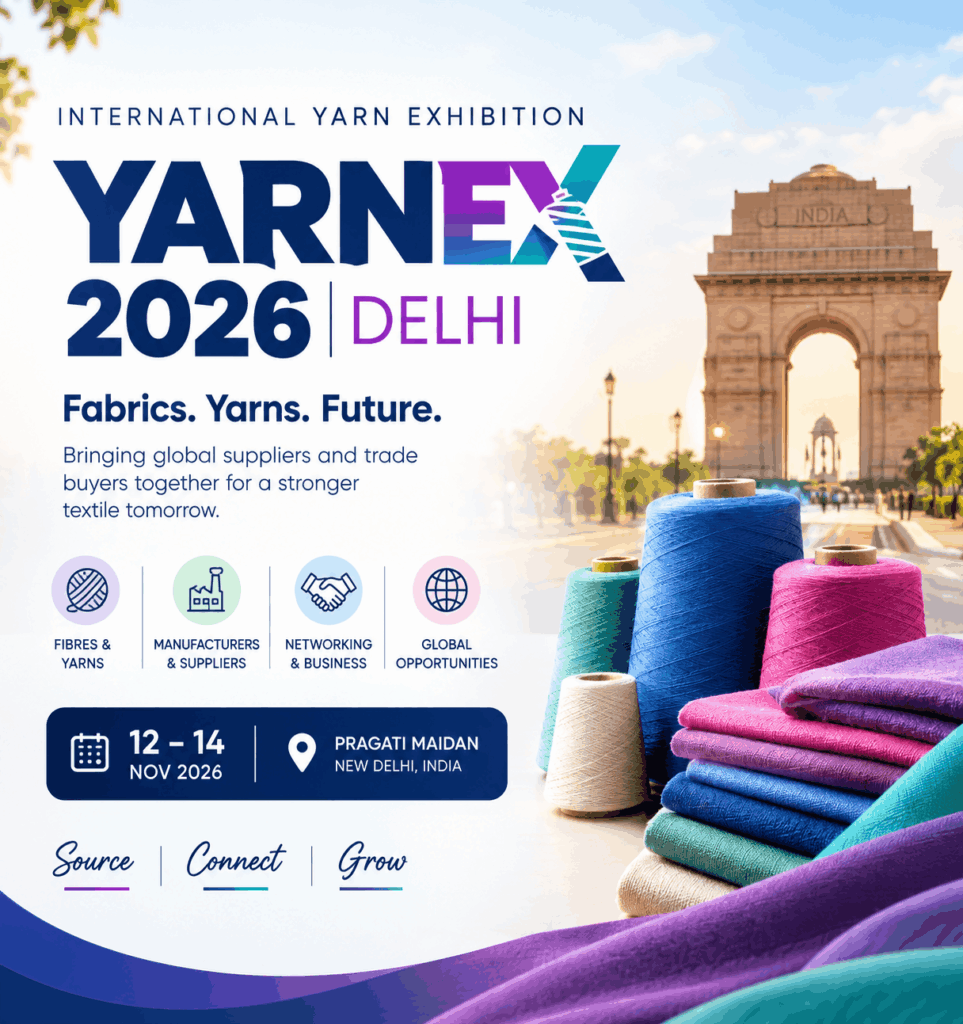

YARNEX is an international yarn exhibition that brings fibre and yarn manufacturers, suppliers and textile trade buyers together in one place. For textile businesses, it is mainly a sourcing and networking opportunity where they can explore yarns, fibres, specialty products and related textile services.
The YARNEX 2026 Delhi edition is scheduled for 9-11 December 2026 in New Delhi. The event is part of Textile Fairs India and will be held alongside F&A Show, Apparel Sourcing Fair (ASF) and Homtex.
If you are a yarn trader, textile manufacturer, wholesaler, garment business, sourcing professional or buyer, the real value of YARNEX is not simply walking around the exhibition. It is knowing what you are looking for, which suppliers you need to meet, what information to collect and how you will follow up afterward.
This guide explains how to approach the exhibition from a business point of view.
Book a Free Demo
See how Wortal can simplify your business and help you close more deals.


Quick Summary
| Detail | Information |
|---|---|
| Event | YARNEX 2026 Delhi |
| Dates | 9 – 11 December 2026 |
| Location | New Delhi, India |
| Focus | Fibres, yarns and related textile services |
| Organizer | S S Textile Media Pvt. Ltd. |
| Audience | Textile trade buyers and industry professionals |
| Co-located events | F&A Show, ASF and Homtex |
The official YARNEX website lists the Delhi edition for 9-11 December 2026 and says entry to the trade shows is for trade buyers only.
What Is YARNEX?
YARNEX is an India focused international yarn exhibition designed around the fibre and yarn segment of the textile value chain.
The exhibition brings together manufacturers and suppliers from textile centres across India, including places such as Ludhiana, Mumbai, Delhi, Tirupur and Kolkata. Its exhibitor profile covers natural fibres, man made fibres, specialty fibres, different yarn categories and several related textile services.
For a textile business, that makes YARNEX particularly relevant when the requirement is something like:
“We need a new yarn supplier.”
But the use case can be broader than that.
A manufacturer may be looking for a different blend. A wholesaler may want to add a new product category. A garment manufacturer may want to explore yarns suitable for a particular application. A sourcing team may simply want to compare what different suppliers are offering.
That is where a yarn exhibition in Delhi can become useful.
YARNEX 2026 Delhi: Date, Location and Entry Information
YARNEX Delhi 2026 is scheduled for 9-11 December 2026 in New Delhi. The official Textile Fairs India website currently lists the Delhi edition alongside YARNEX, F&A Show, Homtex and ASF.
The official visitor information says that entry is restricted to trade buyers, admission is free, and visitors need to register for a badge. It also states that visitors should carry a personal photo ID and that children below 15 years are not allowed.
Before travelling, businesses should still check the official event website for the latest registration instructions, venue information and visitor rules.
What Can You Expect to Find at YARNEX 2026?
This is one of the most important things to understand before visiting.
YARNEX is not simply a hall full of generic yarn suppliers. The official exhibitor profile covers several fibre, yarn and service categories.
Natural Fibres
The listed natural fibre categories include:
- Cotton
- Wool
- Silk
- Flax/ramie
Man-Made Fibres
The exhibition also covers:
- Regenerated fibres
- Synthetic fibres
- Specialty fibres
Yarn Categories
Depending on the participating exhibitors, the listed categories include:
- Natural and blended yarns
- Man-made and blended yarns
- Elastic yarns
- Fancy yarns
- Specialty yarns
Related Services
YARNEX also lists services such as:
- Textile CAD/CAM
- Quality assurance
- Chemicals and auxiliaries
- Textile testing
- Certification
This variety matters because textile sourcing is rarely just about finding the lowest price.
The yarn has to work for the intended application, quality requirement, production process and order quantity.
Who Should Attend YARNEX 2026 Delhi?
The official visitor profile includes a wide range of textile trade buyers and decision makers from India and overseas.
1. Textile Manufacturers
Manufacturers can use the event to explore new raw material suppliers and compare product specifications.
If you are already buying yarn regularly, meeting several suppliers in one place can also help you understand what alternatives are available.
2. Spinning and Yarn Businesses
Yarn manufacturers and related businesses can use the exhibition to meet buyers, distributors and other businesses across the textile value chain.
3. Knitters and Weavers
For knitters and weavers, yarn selection directly affects production and the final fabric.
The exhibition can be useful when exploring different yarn types, blends and suppliers.
4. Garment Manufacturers
Garment manufacturers may find the event useful when their sourcing requirements involve specific yarn or fibre characteristics.
5. Textile Wholesalers and Distributors
Wholesalers and distributors can explore new products and potential supplier relationships.
This can be particularly useful for businesses looking to expand their range rather than depending on the same suppliers year after year.
6. Buying Houses and Sourcing Teams
Sourcing teams can use the exhibition to meet multiple suppliers and collect product information in a relatively concentrated setting.
7. Apparel Brands and Retail Businesses
Brands and retailers may attend to understand available materials, identify suppliers and explore products relevant to upcoming collections.
The official visitor profile also includes apparel brands, retail chains, e-commerce businesses, fashion designers, importers, wholesalers and distributors.
What Other Textile Events Are Happening Alongside YARNEX?
One useful feature of the Delhi event is that visitors can access several textile focused exhibitions during the same period.
The official Textile Fairs India website currently lists:
- YARNEX
- F&A Show
- Apparel Sourcing Fair (ASF)
- Homtex
F&A Show
F&A Show focuses on fabrics and accessories. This can be relevant for businesses whose requirements extend beyond yarn into fabrics, trims and other apparel related materials.
Apparel Sourcing Fair
ASF is relevant to businesses involved in apparel sourcing and related supply-chain requirements.
Homtex
Homtex focuses specifically on home textiles. Its exhibitor profile includes furnishing fabrics, bed linen, bath linen, curtains, made-ups, mattresses, table and kitchen linen, rugs and carpets and contract textiles.
So a business that works across yarn, fabric, apparel or home textiles may find value in planning its visit around more than one exhibition.
What Can Textile Businesses Actually Gain From Visiting?
Simply attending a textile exhibition in Delhi does not automatically create business.
The value comes from what you do there.
1. Find New Suppliers
This is probably the most obvious reason to attend.
You can meet suppliers that you may not have discovered through your usual network.
But don’t collect contacts just for the sake of collecting them.
If a supplier looks relevant, record:
- Company name
- Contact person
- Product
- Yarn/fibre specification
- MOQ
- Price indication
- Sample availability
- Lead time
- Payment terms
- Location
- Follow-up requirement
2. Compare Products
One advantage of a physical exhibition is that you can compare multiple offerings in a shorter period.
But compare like with like.
A lower price does not necessarily mean a better deal if the specification, quality, MOQ or lead time is different.
3. Collect Samples Properly
Samples can become difficult to manage after three days of meetings.
A simple rule helps:
Never take a sample without recording what it is and where it came from.
For each sample, record:
Supplier → Product → Specification → Date → Contact → Next Action
This small step can save a lot of confusion later.
4. Understand Quality Requirements
Depending on the product and application, businesses may need to discuss factors such as:
- Fibre composition
- Yarn count
- Blend
- Strength
- Finish
- Application
- Consistency
- Certification
- MOQ
- Lead time
The exact technical requirements will vary by product and end use.
So don’t walk into a supplier conversation with only one question:
“What is your price?”
A Simple Supplier Comparison Sheet
If you are meeting several suppliers, use a basic comparison framework.
| Factor | Supplier A | Supplier B | Supplier C |
|---|---|---|---|
| Product | |||
| Composition | |||
| Count | |||
| MOQ | |||
| Price | |||
| Quality | |||
| Sample | |||
| Lead Time | |||
| Certification | |||
| Payment Terms | |||
| Next Follow-up |
You don’t have to complete every field for every supplier.
But recording the important details while you are there is much better than trying to remember everything two days later.
How to Prepare Before YARNEX 2026
A little preparation can make a three-day exhibition much more productive.
10 Things to Do Before the Exhibition
1. Decide What You Want to Source
Don’t start with “Let’s see what’s there.”
Start with:
“We are looking for these three things.”
It immediately gives your visit a purpose.
2. Prepare Your Specifications
Know what you need before speaking to suppliers.
3. Set a Tentative Budget
You don’t need a final purchasing budget, but having a range helps you judge opportunities.
4. Prepare Supplier Questions
Write them down before arriving.
5. Prepare Your Business Introduction
Be able to explain what your business does in a few sentences.
6. Identify Relevant Product Categories
Review the exhibition categories and focus on what actually matches your business.
7. Complete Official Registration
Use the official event registration process and check the latest visitor instructions before travelling.
8. Plan How You Will Record Information
This is often overlooked.
Decide beforehand whether your team will use a CRM, spreadsheet or another system.
9. Keep Sample Tracking Ready
Every sample should have a clear supplier reference.
10. Plan the Follow-Up
Don’t wait until the exhibition ends to think about follow-up.
Questions to Ask Yarn Suppliers at YARNEX
Here are some practical questions worth asking when a supplier looks relevant:
- What is the fibre or yarn composition?
- What counts are available?
- What is the MOQ?
- What is the usual lead time?
- Can you provide samples?
- What colours or variants are available?
- What are the packing options?
- Where is the product manufactured?
- What quality certifications are available?
- What are your payment terms?
- Can you handle repeat orders at larger quantities?
- How do you handle quality complaints?
- What happens if the delivered material does not match the approved sample?
The last question is especially useful.
A supplier may have a good sample, but your business ultimately needs consistent supply, not just one good sample.
Common Mistakes Businesses Make at Textile Exhibitions
A few mistakes show up again and again.
Collecting Too Many Samples
More samples don’t necessarily mean better sourcing.
If you return with 100 samples but cannot identify 30 of them, the samples have little value.
Comparing Only on Price
Price needs to be considered alongside specification, quality, MOQ, lead time and other commercial terms.
Forgetting Supplier Details
A sample without supplier information quickly becomes a problem.
Not Recording the Next Step
“Will contact later” is not a follow-up plan.
Instead write:
Send quotation → Friday
Request sample → Monday
Discuss MOQ → After sample approval
Treating Every Contact as Equal
Some contacts will be highly relevant. Others won’t.
Classify them.
For example:
A — Immediate requirement
B — Potential supplier
C — Future opportunity
That simple classification makes post-event follow-up much easier.
The Exhibition Ends. The Follow-Up Starts.
This is where many businesses lose the value of an exhibition.
Imagine a textile business returns from YARNEX 2026 Delhi with:
- 35 supplier contacts
- 18 samples
- 12 quotations
- 8 serious supplier discussions
- Several buyer enquiries
- Multiple follow-up commitments
If all of this is sitting across WhatsApp, Excel files, notebooks and phone contacts, the team has to reconstruct the entire exhibition after returning to the office.
A better process is:
How Digital Tools Can Help After YARNEX
For a growing textile business, exhibition information can quickly become difficult to manage manually.
Supplier and buyer details may be spread across WhatsApp messages, spreadsheets, notebooks, email and phone contacts.
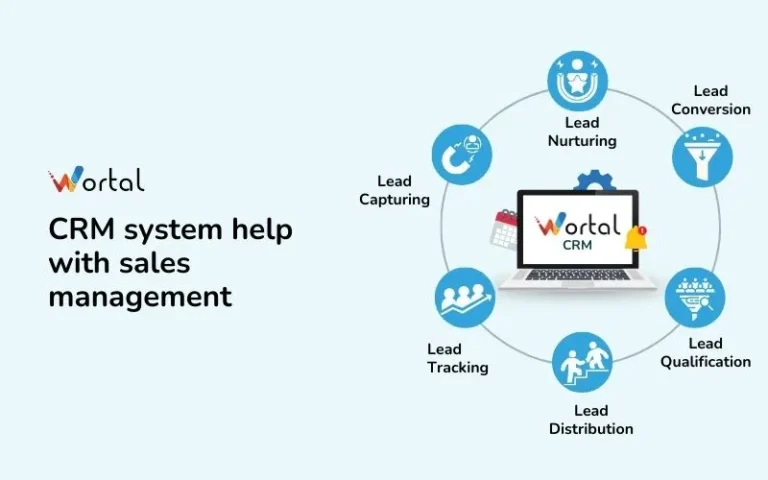
A business system can bring these activities into one workflow.
For example:
- Record buyer and supplier information
- Track enquiries
- Manage follow-ups
- Create quotations
- Track orders
- Monitor inventory
- Manage multiple warehouses or godowns
- Assign tasks to team members
- Maintain communication history
This becomes particularly useful when several people from the same company attend the exhibition.
Instead of one salesperson knowing what happened with a supplier, the information can remain available to the wider team.
Where Wortal Fits for Textile Businesses
This is where a textile-focused business system such as Wortal can become useful.
Wortal’s textile ERP offering is designed to manage processes from buyer enquiry through orders, inventory, billing and team tasks. Its textile features include enquiry management, buyer follow-ups, quotations, order tracking and inventory management across godowns, including tracking by attributes such as quality, shade and lot.
For an exhibition focused workflow, the connection is fairly straightforward:
Meet → Record → Follow Up → Quote → Order → Track → Repeat
Wortal can help businesses keep buyer enquiries and follow-ups organized, while its order and inventory features can carry the process forward once business is generated.
For example, a textile wholesaler returning from YARNEX could organize new supplier and buyer information, create follow-up activities, manage quotations and then connect confirmed orders with inventory and dispatch processes.
The point isn’t to add another software tool just because you attended an exhibition.
The point is to avoid losing useful business information after the exhibition.
An Illustrative Example: A Textile Wholesaler at YARNEX
Imagine a growing textile wholesaler looking for new yarn suppliers.
Before visiting, the company prepares three requirements:
- A new yarn category
- A better option for an existing product
- A backup supplier for an important material
During the exhibition, the team meets 20 suppliers.
Instead of taking every sample home, they shortlist eight.
For each shortlisted supplier, they record:
- Product
- Specification
- MOQ
- Price
- Sample
- Lead time
- Contact person
- Next action
After returning, the eight suppliers are divided into three groups.
Immediate: Suppliers that match current requirements.
Evaluation: Suppliers where samples need to be tested.
Future: Suppliers with interesting products but no immediate requirement.
The team then follows up based on those categories.
This is an illustrative scenario, but the principle is simple: a structured process makes an exhibition much easier to turn into actual business activity.
Before, During and After YARNEX
| Before YARNEX | During YARNEX | After YARNEX |
|---|---|---|
| Define requirements | Meet suppliers | Shortlist contacts |
| Set budget | Collect relevant samples | Compare quotations |
| Prepare questions | Record specifications | Follow up |
| Research categories | Discuss MOQ | Request samples |
| Plan priorities | Record contact details | Negotiate |
| Decide what information to capture | Note next action | Place trial orders |
A useful rule is:
Don’t leave the exhibition with only business cards. Leave with next actions.
What Is the TFI Trend Forum?
The Textile Fairs India ecosystem also highlights the TFI Trend Forum as an event feature.
The forum is positioned around emerging and upcoming fashion directions, including areas such as colours, prints, fabrics, accessories and lifestyle trends.
For textile businesses, trend information can be useful when product development and sourcing decisions are being made.
However, businesses should treat trend information as an input into decision-making, not as a guarantee that a particular product will sell.
The specific Trend Forum content for the 2026 Delhi edition should be checked against the official event information as it is announced.
Should Your Textile Business Attend YARNEX 2026 Delhi?
There isn’t one answer for every textile business.
It may be relevant if:
- You are actively sourcing yarn or fibres.
- You want to meet new suppliers.
- You are expanding your product range.
- You want to compare suppliers.
- You work with textile manufacturing or sourcing.
- You are looking for new product possibilities.
- You want to build industry relationships.
It may be less relevant if:
- Your business has no connection with textile sourcing or manufacturing.
- You are not currently looking for suppliers or industry connections.
- The product categories at the exhibition don’t match your requirements.
The official visitor profile is specifically focused on trade buyers and textile industry decision-makers, so businesses should review their requirements before planning a visit.
Key Takeaways
- YARNEX 2026 Delhi is scheduled for 9-11 December 2026 in New Delhi.
- YARNEX focuses on fibres, yarns and related textile services.
- The exhibition is relevant to manufacturers, buyers, wholesalers, distributors and sourcing professionals.
- Product categories include natural, man-made, blended, elastic, fancy and specialty yarns, among others.
- Don’t visit without knowing what you want to source.
- Don’t compare suppliers only on price.
- Record supplier details along with every useful sample.
- Check MOQ, quality, specification and lead time before moving forward.
- Classify contacts based on their relevance and urgency.
- Plan your follow-up before leaving the exhibition.
- Use a structured system when supplier, buyer and quotation information starts becoming difficult to manage manually.
- The real value of a textile exhibition often comes from what happens after the event.
FAQs
YARNEX 2026 Delhi is an international yarn exhibition focused on fibres, yarns and related textile services. It brings manufacturers, suppliers and trade buyers together for sourcing, product discovery and business networking. The Delhi edition is scheduled for 9-11 December 2026 in New Delhi.
YARNEX 2026 Delhi is scheduled for 9, 10 and 11 December 2026. Businesses planning to attend should check the official Textile Fairs India website before travelling for the latest visitor instructions and event updates.
The official Textile Fairs India information currently lists the event in New Delhi, India. The Delhi edition page provides the venue information, but businesses should check the official page for the latest event-specific venue and hall details before the exhibition.
YARNEX is mainly relevant to textile trade buyers and professionals such as manufacturers, knitters, weavers, garment manufacturers, buying houses, apparel brands, wholesalers, distributors, importers and sourcing teams. The official visitor profile includes decision-makers and merchandising personnel from India and overseas.
The official exhibitor profile includes natural fibres, man-made fibres, specialty fibres, natural and blended yarns, man-made and blended yarns, elastic yarns, fancy yarns and specialty yarns. Related services include textile CAD/CAM, quality assurance, chemicals and auxiliaries, textile testing and certification.
Yes. Finding fibre and yarn suppliers is one of the main business purposes of the exhibition. YARNEX brings fibre and yarn manufacturers and suppliers together with textile trade buyers, making it possible for businesses to discover suppliers and discuss specifications, samples, MOQ, pricing and supply requirements.
Start with a clear sourcing list. Decide what products you need, prepare specifications, set a tentative budget and make a list of supplier questions. Also decide how your team will record contacts, samples, quotations and follow-up actions so information does not get lost after the exhibition.
Don’t compare suppliers only by price. Look at product specification, composition, count, quality, MOQ, sample, lead time, certification where relevant and commercial terms. Record the information while you are at the exhibition so you can make a proper comparison later.
Sort contacts according to their relevance. Separate suppliers with immediate requirements from those that need sample evaluation or may be useful later. Follow up with specific next actions such as requesting a quotation, asking for samples or discussing MOQ rather than sending the same generic message to everyone.
It can be useful when the business has a genuine sourcing, supplier-discovery or product-development requirement that matches the exhibition categories. Smaller businesses should go with a clear objective rather than trying to meet everyone. A focused visit can make supplier comparison and networking more manageable.
Conclusion
A textile exhibition can give a business access to suppliers, products and industry conversations that may otherwise take weeks to find individually.
But walking through an exhibition is the easy part.
The harder part is knowing what you need, asking the right questions, recording the details and following up once you return to the office.
For anyone planning to attend YARNEX 2026 Delhi, the simplest approach is to go in with a clear sourcing objective and come out with clear next steps.
And once those contacts turn into quotations, orders and inventory movements, having a system to keep that information organized can make the difference between collecting contacts and actually building business relationships.