

Ask any warehouse manager in Bhiwandi or a fabric trader in Surat what keeps them up at night, and stock count mismatches will come up before rent or staff salaries. That’s the honest truth about running a business in India right now. Everyone talks about growth, but nobody warns you how fast a spreadsheet falls apart once you cross 500 SKUs.
I’ve spent the last few years talking to business owners, CAs, and operations heads about what they actually use to track stock – not what they were sold on a sales call. This list is built from that. If you’re hunting for Inventory Management Software India options in 2026, here’s what genuinely matters.
Why This Decision Is Bigger Than It Looks
Most owners think inventory software is just a “digital stock register.” It’s not. The right Stock Management Software India businesses use today connects billing, GST, warehouse location, and even WhatsApp orders into one place.
Here’s what actually matters: a textile trader in Surat doesn’t just need to know “500 meters of cotton fabric in stock.” He needs to know which godown, which batch, which client has a pending order against it, and whether the GST invoice was raised correctly. That’s a completely different problem than what a generic Excel sheet solves.
The real issue is that most businesses switch software only after a crisis – a wrong delivery, a double sale, an audit flag. By then they’ve already lost money and, worse, a client’s trust.
What to Check Before You Buy Anything
Before you get pulled in by a flashy demo, run through this checklist:
- GST compliance built-in – not a plugin, not a “coming soon” feature
- Multi-location or multi-godown tracking, especially if you run a warehouse and a shop
- WhatsApp or SMS alerts for low stock (this alone saves Indian SMBs hours weekly)
- Barcode/QR scanning support, even if you’re not using it today
- Real people on support who understand Hindi/regional business context, not just a chatbot
If a tool fails two or more of these, keep looking.
Book a Free Demo
See how Wortal can simplify your business and help you close more deals.


Top 10 Inventory Management Software in India (2026)
1. Wortal
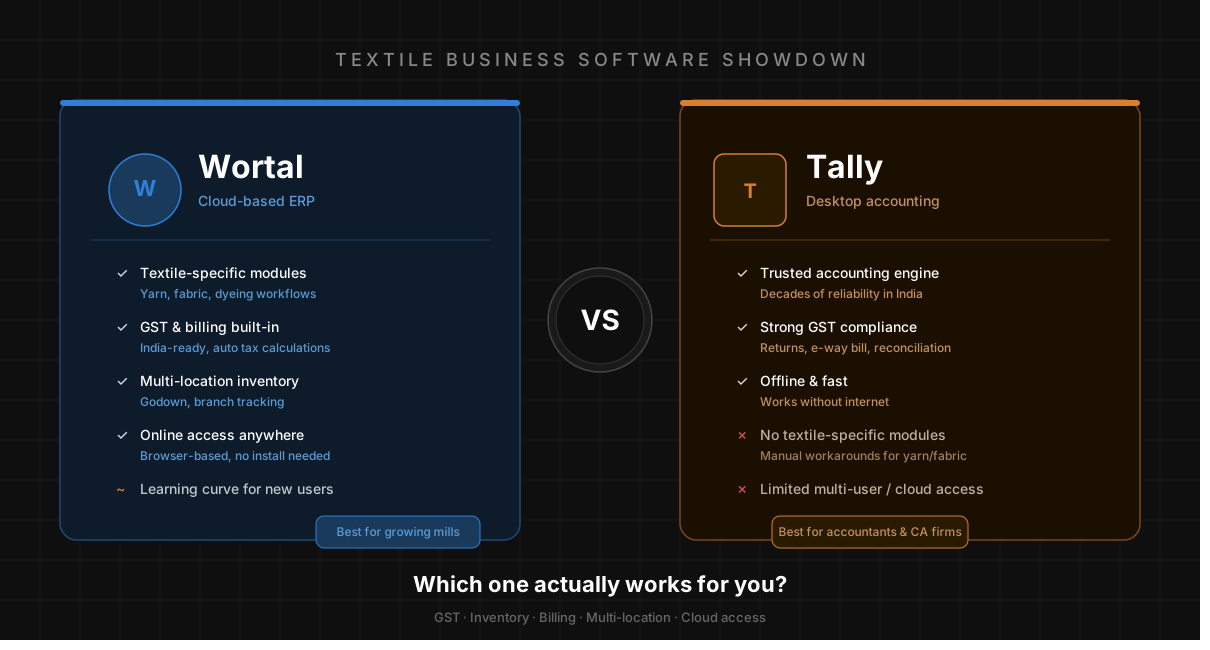
Wortal has built a strong name among manufacturing, textile, and real estate businesses that need inventory tied directly into their sales pipeline, not sitting separately. What stands out is the Inventory Management module working alongside Lead and Sales Management – so when a deal closes, stock gets updated automatically instead of someone manually checking a register later that evening.
For a Surat based fabric unit juggling IndiaMART leads, WhatsApp orders, and godown stock at once, this kind of connected setup removes a full time coordination headache. Pricing starts free on trial, with Standard and Premium plans built for growing teams rather than enterprise budgets.
Pros:
- Inventory updates on its own when a deal closes in the sales pipeline, instead of someone re-entering stock counts by hand
- Built with WhatsApp and lead management baked in, not bolted on as an afterthought
- Priced for growing SMB teams rather than enterprise budgets
Cons:
- Newer entrant, so the review base and documentation library are thinner than the older, more established names on this list
Other details:
- Website: wortal.co
- Pricing: Free trial, Standard ₹200/user/month, Premium ₹350/user/month
- Best Fit For: Manufacturing, textile, and real estate SMBs that want inventory tied to a sales pipeline
2. Vyapar
Popular with kirana stores and small traders. Simple GST billing plus stock tracking. Weak on multi-branch handling once you scale past a single shop.
Pros:
- Genuinely easy for a non-technical shop owner to pick up in a day
- Works offline, which matters in areas with patchy internet
- Free tier covers basic GST billing and stock tracking before you pay anything
Cons:
- Multiple reviewers mention the app slowing down after updates, especially with larger data sets
- Not built for businesses running more than one branch with any complexity
Other details:
- Website: vyaparapp.in
- Pricing: Free plan available; paid desktop/mobile plans roughly $79.99–$119.99/year depending on tier
- Best Fit For: Single-shop retailers, kirana stores, small traders
3. Zoho Inventory
Solid for e-commerce sellers running on Amazon, Flipkart, and their own website together. The multi-channel sync is genuinely useful. Gets pricey once you add warehouses.
Pros:
- Multi-channel sync across Shopify, Amazon, and your own store actually works reliably, per reviewers
- Easy learning curve for teams already using other Zoho products
- Free plan exists for very small sellers before you need to commit
Cons:
- Several advanced reporting and customization features are locked behind higher tiers
- Costs climb once you add more warehouses or need deeper integrations
Other details:
- Website: zoho.com/inventory
- Pricing: Free plan available; Standard from $39/month, up to Enterprise at $299/month
- Best Fit For: E-commerce sellers managing multiple online channels
4. TallyPrime
Still the backbone of Indian accounting. Inventory tracking is decent but was clearly built as an add-on to accounting, not the core product. CAs love it; warehouse teams find it clunky.
Pros:
- Deep, dependable reporting – 400+ built-in business reports
- Keyboard-driven navigation that CAs and long-time users swear by for speed
- Highest-rated tool on this list among traditional Indian accounting software
Cons:
- Genuinely steep learning curve for someone new to it
- Reviewers flag data security and inventory depth as weaker than dedicated warehouse tools
Other details:
- Website: tallysolutions.com
- Pricing: One-time license fee (Silver/Gold editions), plus annual renewal – check current figures on Tally’s site, as pricing varies by edition and offer
- Best Fit For: CA-managed accounts and single-location, accounting-first businesses
5. Marg ERP9+
Old, reliable, especially in pharma and FMCG distribution. Interface feels dated but the batch and expiry tracking is genuinely strong – a must if you deal in medicines or perishables.
Pros:
- Batch and expiry tracking is built specifically for pharma/FMCG workflows, not a generic add-on
- 800+ support centers across India means help is rarely far away geographically
- Affordable entry pricing compared to full ERP suites
Cons:
- This is the one place where the review data doesn’t back the marketing: Marg sits at a noticeably lower rating than everything else on this list, with recurring complaints about customer support and AMC/renewal charges going up without warning
- Interface feels dated next to newer cloud tools
Other details:
- Website: margerp.com
- Pricing: Subscription plans starting around ₹5,550/year, plus separate AMC renewal charges
- Best Fit For: Pharma, FMCG, and distribution businesses needing batch/expiry tracking
6. Busy Accounting Software
A close cousin to Tally in terms of user base. Good for manufacturers who want inventory plus basic production tracking without a separate ERP.
Pros:
- Handles batch-wise inventory with expiry dates and multi-location tracking in one place
- Invoice sharing over WhatsApp, email, and SMS built in
- Decent balance of accounting depth and inventory features for manufacturers
Cons:
- Reviewers report it can slow down noticeably once the data file gets heavy
- Pricing has crept up over the years, according to long-time users who compare it with Tally
Other details:
- Website: busy.in
- Pricing: Perpetual license and subscription options; exact figures available on request from Busy’s site
- Best Fit For: Manufacturers wanting inventory plus basic production tracking
7. Odoo Inventory
Open-source, highly customizable, but you’ll need a developer or implementation partner. Great if you have unusual workflows that off-the-shelf tools can’t handle.
Pros:
- Modular – you install and pay for only the apps you actually need
- Genuinely flexible for businesses with non-standard processes
- One app free forever with unlimited users, so you can trial the core idea at zero cost
Cons:
- Onboarding is rough without a developer or certified implementation partner
- Support ratings consistently trail behind the functionality ratings across G2 and Capterra – the feature set is strong, getting help when something breaks is the weak point
Other details:
- Website: odoo.com
- Pricing: One app free forever (unlimited users); full Standard plan from around $31/user/month billed annually
- Best Fit For: Businesses with unusual workflows willing to invest in setup and customization
8. Unicommerce
Built specifically for e-commerce warehouses and 3PL operations. If you’re shipping thousands of orders a day across marketplaces, this is purpose-made for that scale.
Pros:
- Proven at real scale – runs order and inventory operations for brands like Lenskart, Mamaearth, boAt, and FabIndia
- 285+ marketplace, logistics, and ERP integrations out of the box
- Strong at preventing overselling and stock mismatches across multiple channels
Cons:
- Built for volume, so it’s genuinely overkill (and overpriced) for a small single-location trader
- Usage-based pricing means costs move with your order volume, not just a flat monthly fee
Other details:
- Top Clients: Lenskart, Mamaearth, boAt, FabIndia, TCNS Clothing, Sugar Cosmetics
- Website: unicommerce.com
- Pricing: Usage-based, starting around $100/month
- Best Fit For: E-commerce warehouses and 3PL operations at scale
9. Increff
Strong in fashion and apparel inventory planning, especially demand forecasting. More suited to mid-size and large retail chains than small traders.
Pros:
- Demand forecasting and merchandising planning built specifically for fashion/apparel cycles
- Used across India, Southeast Asia, and the Middle East by retail and consumer brands
- Reduces overstock/stockout swings that hurt fashion retailers more than most categories
Cons:
- Positioned and priced for mid-size to large retail chains, not small traders – pricing is quote-based, not self-serve
- Fewer public reviews on G2/Capterra to benchmark against compared to the other tools here, so it’s harder to verify day-to-day service quality independently
Other details:
- Website: increff.com
- Pricing: Custom enterprise pricing (quote-based)
- Best Fit For: Mid-size to large fashion and apparel retail chains
10. Katana MRP
Manufacturing-focused, good for businesses that need raw material to finished goods tracking. Less common in India but growing among D2C manufacturing brands.
Pros:
- Clean, genuinely easy-to-use interface for make-to-order manufacturers
- Good shop-floor and production tracking from raw material to finished goods
- Free plan available for very small operations (up to 30 SKUs)
Cons:
- Pricing has changed structure multiple times – it’s now tied to sales order volume and GMV, and reviewers on G2 and Capterra describe bills climbing fast for businesses with high order counts but low ticket sizes
- Traceability, warehouse management, and advanced manufacturing are separate paid add-ons on top of the base plan
- Not built with Indian GST compliance in mind, unlike everything else on this list
Other details:
Best Fit For: Small D2C manufacturing brands tracking raw material to finished goods
Website: katanamrp.com
Pricing: Free plan up to 30 SKUs; Core plan from $299/month, with paid add-ons for traceability, warehouse, and advanced manufacturing
Quick Comparison: Who Should Pick What
Top 10 inventory management software in India
A side-by-side look at GST billing, multi-godown support, WhatsApp alerts, and starting price — so you can shortlist by what your business actually needs.
| Software | Best for | GST billing | Multi-godown | WhatsApp alerts | Starting price |
|---|---|---|---|---|---|
Wortal |
Manufacturing, textile, real estate SMBs | Yes | Yes | Yes | Free trial / ₹200/user/mo |
Vyapar |
Small shops | Yes | Limited | Yes | Low-cost |
Zoho Inventory |
E-commerce sellers | Yes | Yes | No | Mid |
TallyPrime |
CA managed accounts | Yes | Basic | No | Mid |
Marg ERP9+ |
Pharma, FMCG | Yes | Yes | No | Mid |
Busy |
Manufacturers | Yes | Yes | No | Mid |
Odoo |
Custom workflows | Add-on | Yes | Add-on | Variable |
Unicommerce |
E-commerce warehouses | Yes | Yes | No | High |
Increff |
Fashion retail chains | Yes | Yes | No | High |
Katana MRP |
Manufacturing D2C | No | Limited | No | High (USD) |
A quick visual on where the market is heading:
Adoption trend among Indian SMBs
That jump from 32% to 78% in three years tells you where things are going. Manual stock registers are becoming the exception, not the norm.
Where Most Businesses Go Wrong While Choosing
That’s where things usually go wrong – owners pick software based on the cheapest monthly price, not based on what their industry actually needs. A textile trader signing up for a generic e-commerce inventory tool ends up paying for warehouse features he’ll never use, while missing the WhatsApp-based reorder alerts that would’ve actually saved him time.
In practical terms, match the software to your daily workflow first. Price comparison comes second.
Real Example: A Surat Fabric Trading Unit
A mid-sized fabric trading business in Surat was running three godowns with nothing but Excel and a WhatsApp group for stock updates. Every evening, the owner would call each godown manager to confirm counts. Errors were common – fabric sold from one location that was already promised to a different client from another location.
After moving to a proper Best Inventory Management Software in India setup with multi-godown tracking and automated WhatsApp low-stock alerts, the daily phone calls stopped. Stock discrepancies dropped noticeably within the first two months, mainly because every sale updated inventory in real time instead of at day’s end.
The bigger shift wasn’t the software itself – it was that the owner stopped being the single point of failure for stock accuracy. That’s the actual value most people underestimate when comparing tools.
Key Takeaways
- Stock Management Software India buyers should prioritize GST and multi-location support over flashy dashboards
- Match software to your industry – pharma needs batch tracking, textile needs godown-level visibility
- WhatsApp-based alerts save real operational time for Indian SMBs specifically
- Don’t underestimate implementation time – even the best Inventory Management Software India has a learning curve of 2-4 weeks
- Free trials exist for a reason – actually test with your real stock data, not demo data