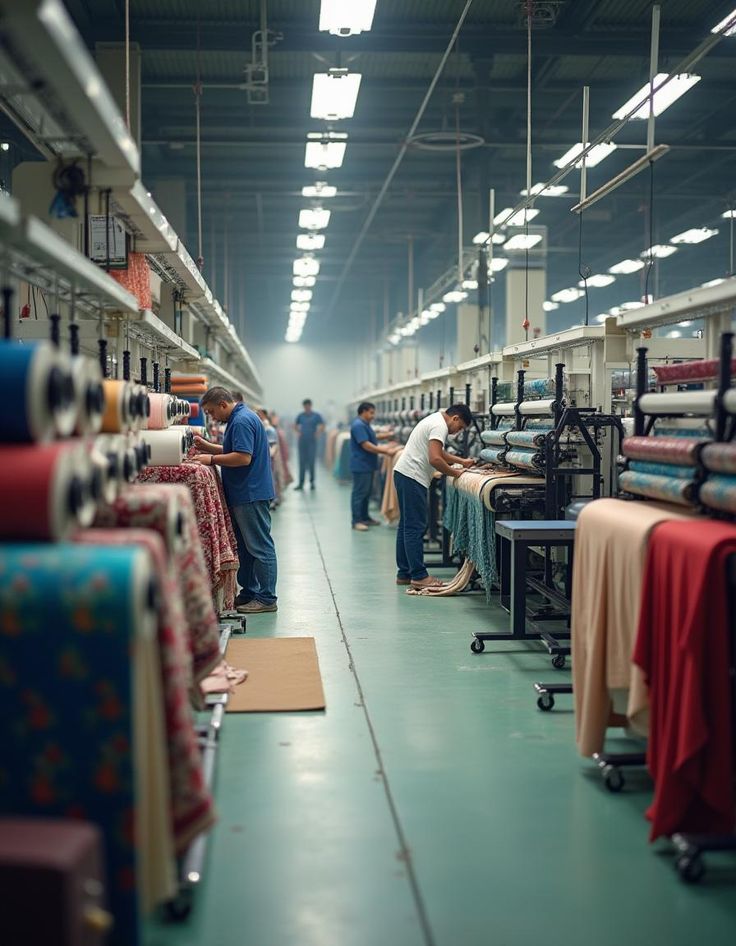



Walk into any wholesale market in Surat around 11 am and you’ll see the same scene. Phones ringing on three different numbers. A ledger open on the counter. Someone shouting a design number across the shop floor. And somewhere in that noise, an order gets written down wrong.
That’s not a small problem. In the saree and fabric trade, one wrong order – wrong color, wrong meter count, wrong buyer address – can mean a return shipment, a furious retailer, and a loss that eats into weeks of margin.
This is the story of Jignesh Shah, who runs a saree wholesale unit near Sahara Darwaja, and how he cut his order mistakes by nearly 40% in under six months. It’s also a good example of how Surat fabric traders manage bulk orders digitally once they stop relying purely on memory, notebooks and WhatsApp screenshots.
The Problem Wasn’t the Business. It Was the Process.
Jignesh’s business wasn’t small. He was moving anywhere between 800 to 1,200 saree pieces a week, across georgette, organza and banarasi silk categories, to buyers scattered across Madhya Pradesh, Bihar, and parts of the South.
His system, though, hadn’t changed since 2014.
Orders came in three ways – a phone call, a WhatsApp voice note, or a buyer physically visiting the shop. Each one got written into a register by whichever staff member picked up first. At the end of the day, someone would type these into an Excel sheet for the tailoring and packing team.
Here’s what actually matters: every single handoff in that chain was a chance for an error to creep in.
A voice note saying “50 piece, design 212, red and maroon mix” could easily become “50 piece design 212 red” by the time it reached the packing table. Multiply that across 40-50 orders a day, and you start to see why mistakes weren’t occasional – they were built into the workflow.
What “Order Errors” Actually Looked Like on the Ground
Most people outside the trade assume an “order error” means sending the wrong item. In reality, in a Surat textile business software case study 2026 like this one, the errors break down into much more specific categories:
- Design mismatch – buyer wanted design 212, got 215 because the numbers looked similar on paper
- Colour combination errors – especially common with mix-lot sarees where two or three shades are packed together
- Meter/piece count mismatch – a big one in fabric trading, where “50 meter” gets confused with “50 piece”
- Duplicate order entry – same order taken twice by two staff members, leading to double dispatch
- Address or transporter mismatch – order goes to the right buyer but through the wrong transport agent, delaying delivery by days
Jignesh’s own tracking, done manually for one month before he changed anything, showed roughly 14 order errors out of every 100 orders processed. That’s not an unusual number for a shop his size – it’s actually close to the average across many Surat units still running on manual systems.
Book a Free Demo
See how Wortal can simplify your business and help you close more deals.


Where Things Usually Go Wrong – and Why WhatsApp Isn’t Enough
WhatsApp is the backbone of B2B textile trade in Surat. Nobody’s disputing that. Buyers send photos, ask for quotations, confirm orders – all on WhatsApp.
The real issue is that WhatsApp was never built to be an order management tool. It has no structured fields, no way to flag a confirmed order versus an inquiry, and no audit trail once a chat gets buried under 200 new messages the next morning.
This is exactly why more traders are now looking at Surat saree wholesaler order management software – not to replace WhatsApp, but to sit behind it. The conversation still happens on WhatsApp. But once an order is confirmed, it gets entered into a structured system instead of just living in a chat thread.
What Jignesh Changed
Jignesh started using Wortal, a CRM built specifically with Indian SMB traders in mind, in early 2026. The shift wasn’t dramatic – he didn’t throw out WhatsApp or stop taking phone orders. What changed was what happened after an order was confirmed.
Here’s the before-and-after in numbers:That’s a 40% drop – from 14 mistakes per 100 orders down to roughly 8-9. Not zero, because no system removes human error completely. But close to half, which on a weekly volume of 1,000 pieces means dozens fewer wrong dispatches every single week.
The Three Changes That Actually Moved the Needle
In practical terms, it wasn’t one big feature that fixed things. It was three small, boring changes.
1. Every confirmed order got one single entry point. Instead of five people typing orders into five different places, every confirmed WhatsApp or call order got logged once, by one designated person, straight into the system. Sounds obvious. Almost nobody in the unorganised textile trade actually does this.
2. Design numbers and colour codes were standardised. Jignesh’s team created a master list of design codes tied to colour combinations. When an order was entered, the system flagged it if the design number didn’t match any known colour combo – catching the “212 vs 215” type mistakes before they reached the packing floor.
3. Packing staff stopped working off memory or shouted instructions. The packing team started pulling orders directly from the system on a shared screen instead of a handwritten chit. That single change alone cut duplicate dispatches almost to zero.
This is, in essence, how Surat fabric traders manage bulk orders digitally without changing their entire way of doing business overnight. The trade relationships, the WhatsApp negotiations, the trust-based dealing – all of that stayed exactly the same. Only the internal handoff changed.
What Other Traders Get Wrong When They Try This
Most people ignore this part: adopting software doesn’t fail because the software is bad. It fails because shop owners try to digitize everything at once – inventory, billing, GST, order tracking – in week one.
Jignesh didn’t do that. He started with just order entry and confirmation. Billing and inventory came three months later, once his staff were comfortable with the basic habit of logging every order in one place.
That’s the real lesson buried in this Surat saree wholesaler order management software story – sequencing matters more than the tool itself.
Key Takeaways for Traders Considering This
- Start with your single biggest pain point – for most units, it’s order entry, not billing
- Don’t remove WhatsApp from your workflow – structure what happens after the WhatsApp message
- Build a design-code and colour master list before anything else; it’s the single highest-leverage fix
- Give your packing and dispatch staff direct access to confirmed orders – not verbal relays
- Track your error rate for even two weeks before you start. You can’t measure improvement against a number you never had
A Realistic Case Study Snapshot
| Metric | Before | After (6 months) |
|---|---|---|
| Orders processed per week | ~1,000 pieces | ~1,050 pieces |
| Order errors per 100 orders | 14 | 8.4 |
| Time to confirm and log an order | 25-40 minutes | 8-12 minutes |
| Duplicate dispatch incidents/month | 6-8 | 1-2 |
| Staff involved in order entry | 4-5 | 1 designated entry point |
None of these numbers came from a lab study. They came from Jignesh comparing his own register data against his system’s export, month over month.