
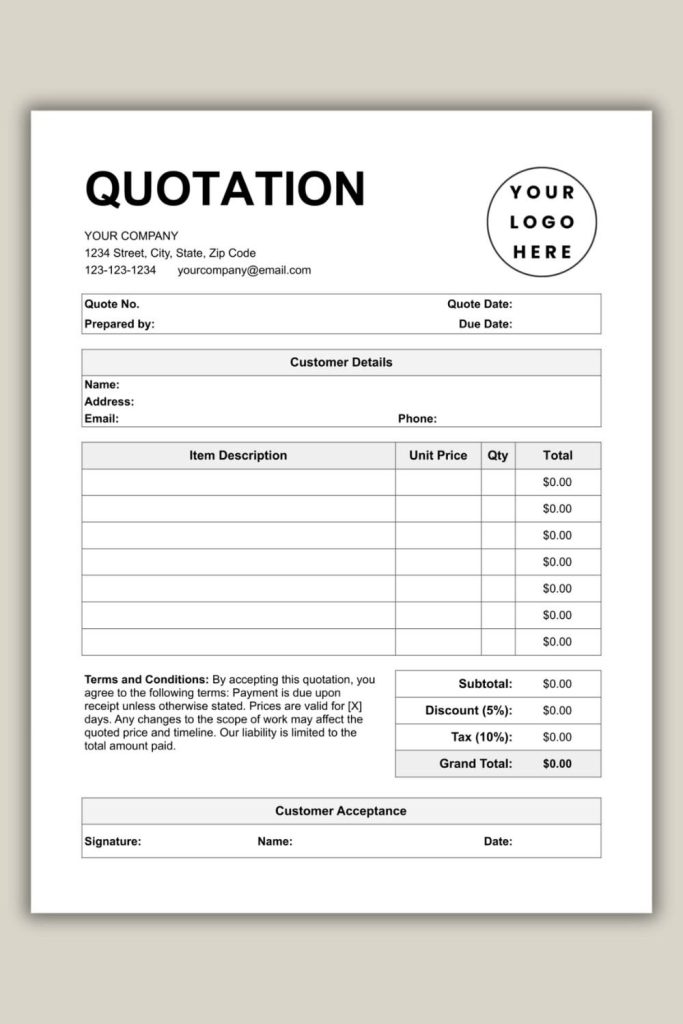

Ask any sales guy in India how his day actually goes, and quotations will come up within the first two minutes. Not leads. Not calls. Quotations. The back-and-forth of typing the same product names in Excel, copying rates from last month’s file, forgetting to update GST, and then realizing the client already bought from someone else because your PDF took four hours to reach their inbox.
That’s the real problem this guide is solving. Not “what software exists” – but which quotation management software in India actually fits how Indian businesses sell, negotiate, and close.
By 2026, this isn’t optional anymore. Buyers compare quotes on WhatsApp within minutes of asking for them. If your quote is late, sloppy, or inconsistent with what you quoted last time, you’ve already lost credibility before the negotiation even starts.
Why Manual Quotation Work Quietly Kills Sales
Here’s what actually matters: quotation delays don’t just slow you down, they change how buyers perceive your business.
A distributor in Rajkot once told me his biggest competitor wasn’t a rival firm – it was his own sales team’s Excel sheet. Every quote had a slightly different format. Some had old pricing. One quote missed a discount that was already promised verbally. The client noticed. Trust dropped.
This is the pattern across most SMBs using spreadsheets or WhatsApp for quoting:
- Rates get copy-pasted wrong
- No one knows which version of the quote is “final”
- Follow-ups get forgotten because there’s no tracking
- Discounts approved on call never make it into the actual document
- Sales reps spend more time formatting PDFs than actually selling
That’s where a proper quotation management system in India earns its money back in the first month itself, not eventually.
What a Good Quotation Management System in India Should Actually Do
Most people ignore this part and just look at “does it make a PDF.” That’s the wrong filter.
A real quotation management system in India needs to handle Indian business realities – GST slabs, HSN codes, regional pricing, WhatsApp-first communication, and multi-branch approval chains. Global tools built for the US or Europe often miss this completely.
Here’s a simple breakdown of what to check:
| Feature | Why it matters in Indian context |
|---|---|
| GST & HSN auto-fill | Avoids manual tax errors on every quote |
| WhatsApp quote sharing | Buyers reply faster on WhatsApp than email in India |
| Approval workflow | Owner/manager sign-off before discount goes out |
| Template locking | Keeps pricing and terms consistent across reps |
| Quote-to-invoice conversion | Saves double data entry once order is confirmed |
| Version history | Shows what was quoted, when, and by whom |
If a tool skips even two or three of these, it’s built for a different market, not for Indian SMBs.
The Real Cost of Skipping a Sales Quotation Software in India
Let’s talk numbers, because “efficiency” as a word means nothing without context.
A typical SME sales rep in India manually creating quotes spends roughly 25-40 minutes per quote when done in Excel or Word – checking rates, formatting, adding terms, converting to PDF, then sending it. Multiply that by 15-20 quotes a week, and you’re looking at nearly two full working days lost every week to something that shouldn’t take more than 5 minutes.
Here’s a rough picture of where that time goes:
Manual Quotation Process (per quote)
| Step | Time Taken |
|---|---|
| Rate lookup | 8 min |
| Formatting | 12 min |
| Approval chase | 7 min |
| PDF + send | 5 min |
| Total time per quote | 32 min |
Total: ~32 minutes
With Sales Quotation Software (per quote)
| Step | Time Taken |
|---|---|
| Auto rate pull | 1 min |
| Template applied | 1 min |
| One-click approval | 2 min |
| Send via WhatsApp | 1 min |
| Total time per quote | 5 min |
Total: ~5 minutes
That’s not a small productivity gain – that’s the difference between a sales team that chases paperwork and one that actually chases customers.
This is exactly why more Indian distributors, manufacturers, and trading firms are shifting to dedicated sales quotation software in India instead of stitching together Excel, WhatsApp, and manual approvals.
What To Look For Before You Buy (Not What Vendors Tell You)
Most reviews online tell you to check “features” and “pricing.” Fine, but here’s what actually separates a good fit from a bad one for Indian businesses specifically:
1. Does it work offline-first or slow-internet friendly?
Tier 2 and Tier 3 cities still deal with patchy internet. A tool that needs constant high-speed connectivity will frustrate your field sales team.
2. Can non-tech-savvy staff use it without training?
If your 45-year-old sales veteran can’t figure it out in a day, adoption will fail no matter how good the backend is.
3. Does it integrate with your CRM or inventory?
A quotation sitting isolated from your CRM means you’re still manually updating lead status separately. That defeats the purpose.
4. Is pricing per-user reasonable for SMB budgets?
Enterprise-grade tools built for large corporates often price themselves out of the SMB range entirely.
This is where a platform like Wortal fits naturally into the conversation – it’s built specifically around Indian SMB workflows, with quotation, lead, and inventory management sitting in one place instead of three different tools that don’t talk to each other.
A Real Example: How Poor Quotation Tracking Cost a Business a Rs.6 Lakh Order

A machinery spare parts trader in Ahmedabad – let’s call him Sanjay – ran his quotations entirely through Excel and WhatsApp for years. His team of four sales reps would type quotes individually, based on rate sheets that got updated inconsistently.
One incident stuck with him. A regular buyer asked for a quote on a bulk order of bearing assemblies worth roughly Rs.6 lakh. Two different reps, unaware of each other, sent two different quotes with different pricing – one slightly outdated. The client noticed the mismatch immediately and started questioning whether Sanjay’s pricing was even reliable.
The deal didn’t collapse instantly, but the buyer got cautious, delayed the order by three weeks, and eventually split it between Sanjay and a competitor. Half the order, gone, because of a pricing mismatch that should never have happened.
After that, Sanjay moved his quoting process onto a centralized quotation management software in India setup where every rep pulled from the same live pricing sheet, approvals were logged, and quotes auto-synced with his CRM. Within two months, quote turnaround time dropped from almost a day to under 20 minutes, and repeat order value actually went up because buyers started trusting the consistency again.
This is a small story, but it repeats across thousands of Indian SMBs every single month – because pricing inconsistency is rarely a “big mistake.” It’s a small, quiet leak that adds up.
Key Takeaways Before You Choose
In practical terms, here’s what to prioritize:
- Pick a quotation management system in India built for Indian tax rules, not adapted from a foreign template
- Prioritize WhatsApp-first sharing since that’s where most Indian B2B conversations actually happen
- Make sure approvals and discount logs are trackable, not verbal
- Check integration with your CRM or inventory before committing
- Test with your least tech-comfortable staff member, not your most skilled one
That’s where things usually go wrong – businesses buy software that looks powerful in a demo but fails with the actual team using it daily.
FAQs