

Inventory management software is a system that tracks what a retail store has in stock, what’s selling, what’s running low, and what needs to be reordered all without someone manually counting shelves or flipping through a register book. It exists because retail businesses lose money in two very specific ways: dead stock sitting in a corner, and empty shelves when a customer actually wants to buy. Good software closes both gaps.
For a store owner in India whether you’re running a single outlet in a local market or managing stock across three branches this isn’t a “nice to have” anymore. It’s the difference between knowing your business and guessing at it.
Quick Summary
This guide walks through what inventory management software actually does, which features genuinely matter for a retail store (not just what vendors list on their websites), and a detailed look at popular inventory software India options features, pros, cons, and pricing. It’s written for retail store owners, small business operators, and anyone evaluating inventory software for the first time. By the end, you’ll know exactly what to check before signing up for any tool.
Book a Free Demo
See how Wortal can simplify your business and help you close more deals.


Why Retail Stores Struggle Without Proper Inventory Software
Most retail owners don’t lose money because business is bad. They lose money because they don’t actually know what’s happening inside their own store.
Here’s an example. A shop owner reorders a fast-moving item based on memory, not data. Turns out it wasn’t moving as fast as they thought three months later, half the stock is still sitting there, and cash that could’ve gone into a better-selling item is stuck.
That’s where things usually go wrong. Not with bad decisions, but with decisions made without real numbers.
Did You Know?
A large share of small retailers in India still track stock using registers or basic spreadsheets. That works fine at low volume but the moment you add a second location, a second sales channel, or more than a few hundred SKUs, manual tracking starts costing more than the software would.
Features You Can’t Ignore
Not every feature a vendor advertises actually matters day to day. Here’s what genuinely moves the needle for a retail store.
1. Real-Time Stock Tracking: Every sale, return, or transfer should update stock instantly. If your system shows stock “as of last night,” you’re already working with stale data.
2. Low Stock & Reorder Alerts: The software should tell you before you run out, not after a customer walks out empty-handed. Set reorder points per item, not a blanket rule for the whole store.
3. Barcode / QR Scanning: Manual entry is where most stock errors are born. Scanning cuts billing time and almost eliminates counting mistakes.
4. Multi-Location Support: If you run more than one outlet, or a shop plus a godown, the software needs to show stock separately by location and let you transfer between them without confusion.
5. Vendor & Purchase Order Management : Track which supplier you ordered from, at what rate, and whether the delivery matched the order. This alone prevents a lot of billing disputes.
6. Sales & Inventory Reports: Not just “total sales” you need to see which items are moving, which are dead stock, and what your actual margin looks like per category.
7. Integration with Billing/POS: If your inventory system and your billing counter are two different tools that don’t talk to each other, you’re doing double entry. That defeats the purpose.
8. GST-Compliant Billing: For Indian retailers, this isn’t optional. The software should generate GST-ready invoices without you manually calculating tax slabs.
Pro Tip: Before shortlisting any tool, list your actual SKU count and monthly transaction volume. A lot of retailers pick software built for either much smaller or much larger operations than theirs, and end up either underusing it or hitting limits within six months.
Detailed Look: Popular Inventory Management Software in India
1. Wortal
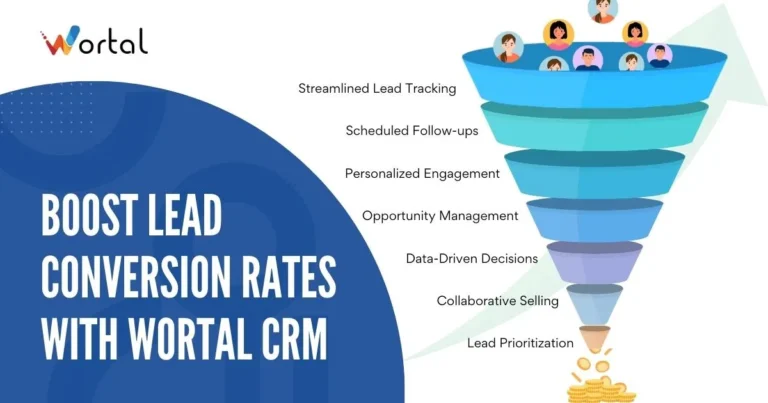
Wortal is built primarily as a CRM for Indian SMBs, with inventory management as one of its core modules which matters for retailers who need stock tracking connected to their sales pipeline and customer follow-ups, not sitting as a separate silo.
Features:
- Inventory management tied directly to leads, orders, and sales pipeline
- Visual deal pipeline showing stock commitments against open orders
- WhatsApp and email automation for reorder reminders and vendor communication
- Employee-level access control for stock updates
- WCaller integration for tracking vendor and customer calls tied to specific stock movements
Pros:
- Strong fit for retailers who also manage a sales team or multiple leads sources inventory isn’t isolated from the customer relationship
- WhatsApp-based alerts suit how many Indian retailers actually communicate with vendors and staff
- Built with Indian SMB workflows in mind, including textile and manufacturing-adjacent retail
Cons:
- Retailers wanting a pure, standalone inventory tool without CRM features might find it does more than they need
- Best suited to businesses that value the sales-to-stock connection; a single-counter shop with no repeat B2B buyers may not use the full feature set
Pricing: Free trial available. Standard plan around Rs. 200/user/month, Premium around Rs. 350/user/month.
2. Vyapar
A widely used billing and inventory app aimed at small Indian retailers.
Features: GST billing, barcode scanning, low stock alerts, basic reporting.
Pros: Simple interface, works well offline, low learning curve.
Cons: Reporting gets limited once you scale past a single outlet; multi-location support is basic compared to enterprise tools.
Pricing: Free tier with limits; paid plans typically start in the low thousands per year.
3. Marg ERP
An older, established player, especially strong in pharma and FMCG retail.
Features: Deep inventory batching, expiry tracking, distributor-level stock management.
Pros: Very mature for regulated retail (pharma, FMCG) where batch and expiry tracking is critical.
Cons: Interface feels dated; steeper learning curve for staff used to simpler apps.
Pricing: Varies widely by module; typically sold as an annual license.
4. Zoho Inventory
Part of the broader Zoho ecosystem, popular with retailers already using Zoho Books or Zoho CRM.
Features: Multi-channel selling support, warehouse management, integrations with major marketplaces.
Pros: Strong if you’re already inside the Zoho ecosystem; good for retailers selling online and offline together.
Cons: Can feel like overkill for a single small store; pricing scales up quickly with multiple warehouses or users.
Pricing: Free tier for very low volume; paid plans scale by order volume and warehouse count.
5. Tally with Inventory Module
Tally remains extremely common in Indian retail, largely because of accountant familiarity.
Features: Inventory tracking tied directly to accounting, GST returns, stock valuation methods (FIFO, weighted average).
Pros: Accountants already know it; strong for retailers who want inventory and books in one place.
Cons: Not built for modern retail workflows like barcode-first billing or WhatsApp alerts; feels more like an accounting tool with inventory bolted on.
Pricing: One-time license plus renewal, or subscription-based cloud versions.
| Software | Best For | Multi-Location | WhatsApp Alerts | Starting Price |
|---|---|---|---|---|
| Wortal | Retailers with sales pipeline needs | Yes | Yes | ~ Rs. 200/user/month |
| Vyapar | Single-outlet small shops | Basic | No | Free tier available |
| Marg ERP | Pharma/FMCG retail | Yes | No | License-based, varies |
| Zoho Inventory | Multi-channel sellers | Yes | No | Free tier, scales up |
| Tally | Accounting-first retailers | Limited | No | License/subscription |
Common Mistakes Retailers Make
- Choosing software based on price alone, ignoring whether it fits their actual SKU volume
- Not training staff properly, so the tool gets half-used and errors creep back in
- Ignoring GST-compliance features until tax filing season creates a scramble
- Running billing and inventory on two disconnected systems
Common Mistake: A lot of retailers switch software every year chasing a slightly cheaper plan, without realizing the real cost is in re-entering stock data and retraining staff each time. Stability matters more than saving a few hundred rupees a month.
A Surat Garment Retailer
A mid-sized garment retailer in Surat’s textile market was managing stock across two outlets using registers and a shared WhatsApp group for updates between staff. Stock mismatches were common — one outlet would sell an item the other thought was still available, leading to cancelled customer orders.
The owner moved to inventory software with real-time multi-location tracking and WhatsApp-based low-stock alerts, so both outlets stayed in sync without staff manually messaging each other.
Stock was digitized over two weeks, starting with fast-moving categories first (sarees, unstitched suits), while registers were still used as backup for a month to build staff confidence.
Stock mismatches dropped sharply within the first two months. Reorder decisions became data-based rather than guesswork, and the owner reported catching a slow-moving category early enough to discount it before it became dead stock.
The switch worked because staff were trained gradually, not all at once, and because the owner picked software that matched how the team already communicated — through WhatsApp — rather than forcing an entirely new workflow.
Decision-Making Framework
Ask these questions before choosing:
- How many SKUs and locations do you manage today, and in 12 months?
- Do you need GST-compliant billing built in, or handled separately?
- Does your team need barcode scanning, or is manual entry manageable at your volume?
- Do you sell online and offline, or purely offline?
- Is inventory connected to a sales pipeline or customer relationships you need to track?
If the answer to question 5 is yes, a CRM-linked tool becomes far more useful than a pure inventory app.
Key Takeaways
- Inventory management software exists to close the gap between what you think you have in stock and what you actually have.
- Real-time tracking, reorder alerts, and barcode scanning are non-negotiable features for any retail store.
- GST-compliant billing is essential for Indian retailers, not optional.
- Multi-location support matters the moment you cross one outlet.
- Inventory software India options range from simple billing apps (Vyapar) to CRM-linked platforms (Wortal) to accounting-first tools (Tally) . The right pick depends on your workflow, not just price.
- Training staff gradually, alongside a backup period, reduces resistance and errors during rollout.
- Choosing based on SKU volume and growth plans prevents outgrowing the tool within a year.
- Inventory software that connects billing and stock in one place eliminates double entry and reduces mismatches.
Conclusion
The retailers who manage stock well usually aren’t running the biggest stores; they’re the ones who stopped relying on memory and started relying on numbers. Whichever tool you pick, the goal is the same: know what you have, know what’s moving, and know before you run out.
FAQs
It’s a system that tracks stock levels, sales, and reorders in real time, replacing manual registers or spreadsheets. It helps retailers know exactly what’s in stock at any moment. See how this plays out for a single small shop.
Start with your SKU count and monthly transaction volume. Match those to a tool’s pricing tier, then check for GST billing, barcode scanning, and multi-location support if relevant.
Global tools work, but GST compliance and India-specific billing formats matter a lot. Indian-built software usually handles this out of the box.
Free tiers work fine at very low volume. Once you cross a certain SKU count or need multi-location tracking, paid plans usually pay for themselves in reduced errors.
Tally is strong if accounting is your priority. Dedicated inventory software fits better if you need barcode-first billing, WhatsApp alerts, or CRM-linked stock tracking.
Some apps like Vyapar offer offline functionality. Cloud-based tools generally need internet, though many sync once connectivity returns.
For a single-outlet store, digitizing stock usually takes one to two weeks if done category by category, starting with fast-moving items first.
You risk running out of fast-moving stock or overordering slow-moving items — both directly hurt cash flow and customer trust.
Yes. Even single-outlet shops benefit from barcode scanning and stock alerts; the errors from manual tracking start small but add up over months. Learn more in what inventory software actually does.
Without it, each outlet operates blind to the other’s stock, leading to overselling, cancelled orders, and mismatched inventory counts — exactly the problem most retailers run into once they expand. See a real example in choosing the right software.