

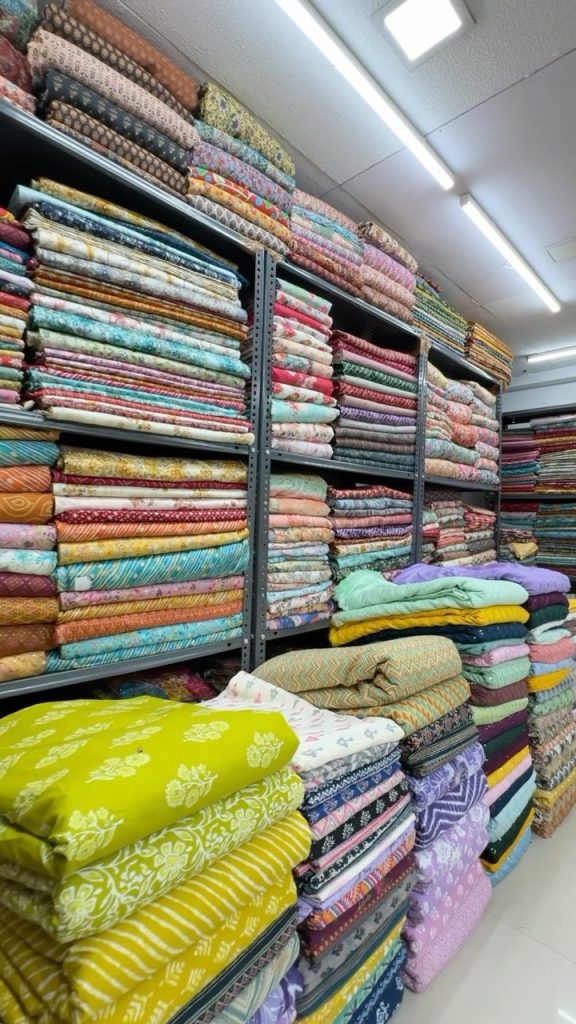

Fabric losses rarely happen because of one big mistake. Most of the time, it’s small gaps that quietly build up – wrong stock entries, untracked roll movement, excess dye lot purchases, dead inventory sitting for months, or production teams cutting fabric without updated consumption data.
That’s why many manufacturers are shifting toward Textile Inventory Software instead of relying only on spreadsheets or disconnected systems. When fabric margins are already tight, even a 2-3% stock mismatch can directly affect profitability.
The real issue is that textile inventory is far more complicated than regular product inventory. Fabric comes with shade variations, GSM differences, shrinkage factors, roll lengths, and production wastage. Managing all of that manually becomes difficult once operations scale.
This article covers practical textile inventory management practices that actually help reduce fabric stock losses – especially for garment manufacturers, textile processors, traders, and fabric warehouses.
Book a Free Demo
See how Wortal can simplify your business and help you close more deals.


Why Fabric Stock Losses Happen So Frequently
Most textile businesses don’t lose stock because of theft alone. Losses usually happen due to operational inefficiencies.
Some of the most common reasons are surprisingly simple:
- Incorrect fabric entries during inward
- Delayed stock updates by staff
- Mixing different fabric shades or lots
- Purchasing fabric without accurate stock visibility
- Poor warehouse organization
- Untracked cutting and production wastage
- Dead stock lying unused for months
- Duplicate stock records across departments
Best Practices to Reduce Fabric Stock Losses
1. Track Fabric Roll-Wise Instead of Bulk Quantity
Most textile businesses still track fabric in total meters or kilograms. The problem is, fabric doesn’t actually move that way inside a warehouse. It moves roll by roll.
Let’s say your system shows 4,500 meters of Cotton Lycra in stock. On paper, that sounds fine.
But when production urgently needs fabric, the warehouse team may realize some rolls are partially used, a few are damaged, and one or two are already reserved for another order.
That’s where stock confusion usually starts.
Tracking fabric roll-wise gives much better control because every roll has its own details – shade, GSM, width, remaining meters, and movement history.
A practical Textile Inventory Software should ideally support:
- Roll-wise stock tracking
- Barcode tagging
- Shade-wise inventory management
- GSM and fabric width records
- Roll movement and usage history
Even simple roll-level tracking can reduce inventory mismatches significantly.
2. Separate Fresh Stock, Rejected Stock, and Leftover Fabric
Most people overlook this part.
Fabric leftovers from production often get mixed with usable stock. Over time, nobody knows what’s actually available for fresh orders.
A simple warehouse segregation system helps a lot:
Create Separate Zones for:
- Fresh inventory
- QC rejected fabric
- Cutting leftovers
- Return materials
- Dead stock
Even small textile units benefit from this structure.
In practical terms, this prevents teams from purchasing fabric that already exists inside the warehouse but was never properly categorized.
3. Use Real-Time Inventory Management for Textile Industry
Textile inventory changes every hour. Fabric gets issued to production, returned from cutting, transferred between branches, or adjusted after inspection.
If updates happen only at the end of the day, mismatches become unavoidable.
That’s why real-time Inventory Management for Textile Industry matters so much.
With live inventory tracking, teams don’t have to depend on guesswork or old stock reports. They can instantly check what fabric is actually available, which stock is moving slowly, how much material has already been used for a particular order, and even see stock across multiple warehouses or godowns.
This becomes especially important in dyeing and processing units where shade lots matter a lot.
For example, a production team may think the required fabric is available and start cutting immediately. But if the inventory isn’t updated in real time, they could accidentally pick fabric from a different shade lot. The difference may not look obvious at first, but once stitching or finishing starts, the color variation becomes visible – and the entire batch may need rework or replacement.
That’s the kind of mistake that usually happens when stock updates are delayed.
4. Conduct Cycle Counts Instead of Waiting for Annual Stock Audits
Many textile businesses check their physical stock only once or twice a year. The problem is, by the time the audit happens, the stock differences are already too big to understand properly or trace back to the actual issue.
That’s why many warehouses now prefer cycle counting instead of waiting for yearly stock audits.
For example:
- Cotton fabrics can be checked every week
- High-value imported fabrics every 2-3 days
- Accessories and trims once a month
Small and regular stock checks make it much easier to catch mistakes early before they turn into major inventory problems.
Most experienced warehouse managers will tell you the same thing – frequent smaller checks are far more practical than one massive annual stock audit.
5. Monitor Fabric Consumption Against BOM Standards
One area where many garment businesses quietly lose money is fabric consumption. The losses may not look huge initially, but over time they add up faster than most people expect.
If the actual fabric used during cutting is regularly higher than the planned BOM consumption, it usually means there’s wastage, inaccurate planning, or poor tracking somewhere in the process.
A good Garment ERP Software helps businesses compare:
- Planned fabric requirement
- Actual fabric used in production
- Wastage percentage
- Order-wise consumption differences
For example, a production order may be planned for 1,200 meters of fabric, but the actual usage ends up reaching 1,340 meters. At first glance, that extra 140 meters may not seem like a big issue. But when similar variances happen across multiple orders every month, the total fabric loss becomes quite significant.
That’s why tracking actual consumption against BOM standards is so important in garment manufacturing.
6. Reduce Dead Stock Through Fabric Aging Reports
Dead stock is one of those problems that quietly keeps increasing in many textile businesses. Fabric keeps piling up in the warehouse, but since nobody regularly checks old inventory, some materials stay untouched for months or even years.
That’s why fabric aging reports are useful. They help businesses understand how long stock has been sitting in the warehouse.
Most companies usually divide inventory into categories like:
- 0- 30 days
- 31- 90 days
- 90- 180 days
- 180+ days
Once the stock is properly categorized, it becomes much easier to take decisions quickly.
For example, businesses can:
- Clear slow-moving stock before it becomes unusable
- Offer discounts on old fabric
- Shift unused stock to another branch or production unit
- Avoid buying the same material again unnecessarily
Without proper visibility, warehouses slowly end up storing fabric that may never actually get used.
7. Integrate Production and Inventory Data
Integrated Garment ERP Software systems are becoming common in textile manufacturing.
Integrated systems help connect:
- Purchase orders
- Fabric inward
- Inventory movement
- Production consumption
- Job work tracking
- Dispatch planning
The result is better traceability and fewer manual errors.
8. Train Warehouse Staff on Fabric Handling
Software alone cannot solve inventory problems.
Fabric losses also happen due to:
- Improper roll stacking
- Moisture exposure
- Wrong labeling
- Cutting damage
- Mixing shades accidentally
Even basic warehouse discipline improves stock control significantly.
Some practical habits include:
- Label every roll immediately
- Use barcode scanning
- Restrict manual stock adjustments
- Maintain FIFO movement
- Train staff for shade segregation
Simple operational discipline often reduces losses faster than expensive technology upgrades.
How Textile Inventory Software Helps Reduce Losses
Modern textile businesses need more than basic accounting software.
A specialized textile inventory system helps with:
- Roll-wise stock tracking
- Fabric lot management
- Barcode scanning
- Multi-warehouse inventory
- Production linkage
- Real-time stock visibility
- Fabric consumption analysis
- Dead stock reporting
The biggest advantage is visibility.
Once businesses start seeing accurate inventory data daily, unnecessary purchases and stock leakages naturally reduce.
Final Thoughts
Fabric stock losses usually build slowly in the background. Most textile businesses don’t notice the actual impact until margins start shrinking or urgent orders face material shortages.
The businesses that manage inventory well are usually the ones with better operational visibility – not necessarily bigger warehouses.
Using the right processes along with practical Textile Inventory Software can significantly improve stock accuracy, reduce wastage, and help textile businesses make more confident purchasing and production decisions.
If your textile operations are growing and inventory mismatches are becoming frequent, this is probably the right time to review how your stock is being tracked daily.
Textile Inventory Management – Common Questions
Quick answers on reducing fabric stock losses, roll-wise tracking, and choosing the right textile inventory system.
See how a purpose-built system handles roll tracking, shade lots, and dead stock automatically.
Explore Textile ERP →