

I’ve spent years talking to business owners across Surat, Bhiwandi, and Tiruppur who run their entire sales operation through WhatsApp chats and Excel sheets. Most of them didn’t even know Cloud CRM Software existed until a lead slipped through the cracks and cost them a six-figure order. That’s usually the moment someone starts Googling this topic seriously.
So let’s skip the textbook definitions. This is about what Cloud CRM Software actually does for an Indian SMB, where it genuinely helps, where it doesn’t, and how to pick something that won’t gather dust three months after you buy it.
What Cloud CRM Software Really Means (Without the Jargon)
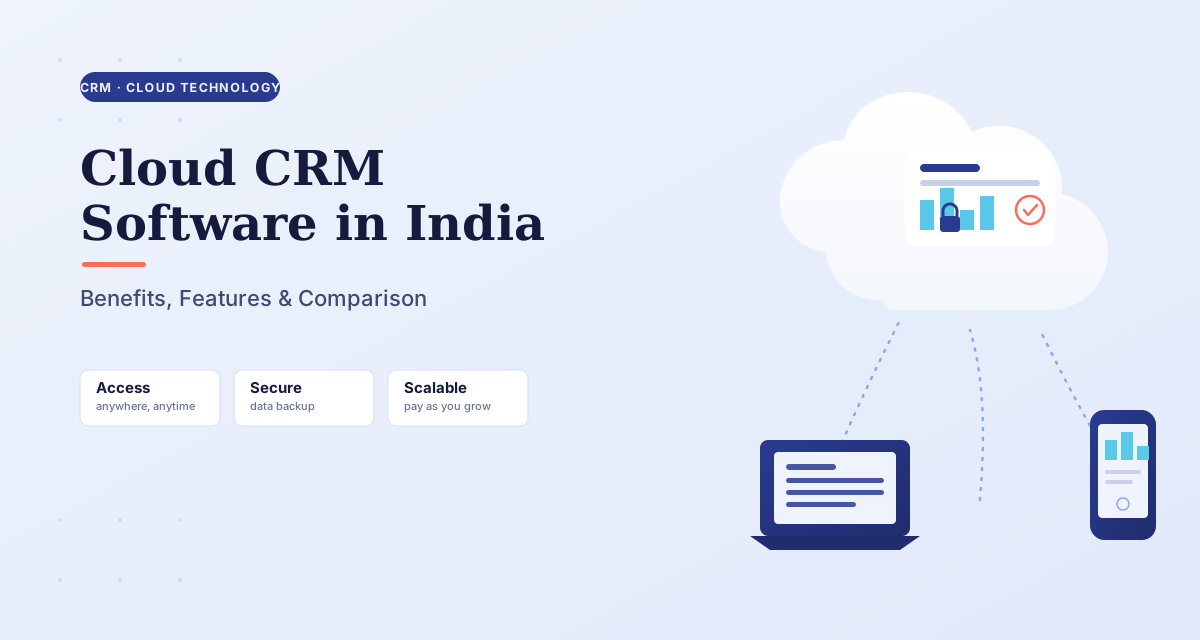
A Cloud CRM Software is basically a system that stores your customer data, sales conversations, and follow-ups on a remote server instead of your laptop or office computer. You log in from your phone, your desktop, or a tablet at a trade fair – the data is always the same, always updated.
Compare that to the old on-premise setup where your CRM lived on one server in your office. If that server crashed, or if your sales guy quit and took his personal notebook of client numbers with him, you lost everything. I’ve seen this happen to a textile trader in Surat – his top salesperson left, and three years of client history walked out the door with him.
That’s the real problem Online CRM Software solves. Data belongs to the company, not to one person’s memory or personal diary.
Why Indian Businesses Are Actually Switching Now
Most people ignore this part, but the shift isn’t just about technology – it’s about how Indian buying behavior has changed.
A decade ago, a distributor in Bhiwandi would get orders through phone calls and visits. Now the same distributor gets leads from IndiaMART, WhatsApp broadcasts, Instagram DMs, and cold calls – all in the same week. Nobody can track that manually anymore, not even with the sharpest memory.
Here’s what actually matters: Cloud CRM Software gives you one place to see every lead, no matter where it came from. You stop losing track of who said “call me next week” three weeks ago.
A few real reasons adoption has picked up sharply:
- Remote and hybrid teams – sales reps travel constantly in manufacturing and real estate; they need CRM access from their phone, not just the office desktop.
- WhatsApp-first selling – since most Indian B2B and B2C conversations now happen over WhatsApp, businesses need CRM tools that plug directly into that channel.
- GST and compliance pressure – businesses want systematic records, not scattered notebooks, especially during audits.
- Cost of losing a single big order – one missed follow-up in a manufacturing deal can mean lakhs in lost revenue.
Core Features That Separate Good CRM From Time-Wasting CRM
I’ve tested and reviewed enough CRM tools to say this plainly – most CRMs look identical on a sales call. The difference shows up after 60 days of actual use.
1. Lead Management That Doesn’t Require Manual Sorting
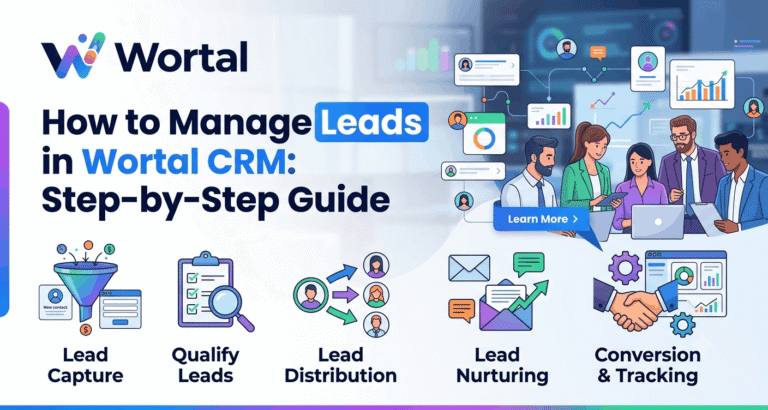
A decent Online CRM Software should automatically capture leads from your website, IndiaMART, Facebook ads, or WhatsApp and drop them into a pipeline. If your team still has to copy-paste leads from an Excel export every morning, the CRM isn’t doing its job.
2. Visual Deal Pipeline
This sounds like a small feature until you actually use one. Seeing every deal as a card moving from “New Lead” to “Negotiation” to “Closed Won” gives a sales manager instant clarity – no need to ask five people for updates in a WhatsApp group.
3. WhatsApp and Email Automation
This is where a lot of generic CRMs fall short for the Indian market. Global CRM tools are built assuming email is the primary channel. But for a textile manufacturer in Surat, WhatsApp is where 80% of business conversations actually happen. A Cloud CRM Software built for Indian SMBs needs native WhatsApp automation – automatic follow-up messages, quotation sharing, and order confirmations sent straight from the CRM.
4. Inventory and Sales Management Together
Most CRM tools stop at the “sales” part and leave inventory tracking to a separate system. That creates a disconnect – your sales team promises stock that doesn’t exist in the godown. A CRM that ties sales management with inventory visibility avoids that embarrassment entirely.
5. Employee and Task Tracking
For businesses with field sales teams – real estate agents, insurance agents, distributors – knowing who visited which client and when is non-negotiable. A task dashboard with call logs (through something like a WCaller-type app) keeps everyone accountable without micromanaging over the phone all day.
6. Mobile-First Access
If your CRM only works well on a desktop browser, your field team simply won’t use it. Period. This is the single biggest reason CRM projects fail in India – the tool wasn’t built for the guy on a bike visiting five shops a day.
Book a Free Demo
See how Wortal can simplify your business and help you close more deals.


Cloud CRM vs On-Premise vs Basic Spreadsheets: The Honest Comparison
Spreadsheet vs On-Premise CRM vs Cloud CRM
A side-by-side look at how manual tools, on-premise systems, and cloud CRM software stack up on the factors that matter most to a growing business.
| Factor | Spreadsheet / WhatsApp Only | On-Premise CRM | Cloud CRM Software |
|---|---|---|---|
| Access from anywhere | No | Limited | Yes |
| Data loss risk | Very High | Moderate (server dependent) | Low – backed up automatically |
| Setup cost | None | High (hardware + IT) | Low – subscription based |
| Scaling with team growth | Painful | Expensive | Simple – just add users |
| WhatsApp / Email automation | Manual | Rare | Built-in on most modern tools |
| Maintenance | None needed – but no structure either | Needs in-house IT support | Handled entirely by the vendor |
Here’s what actually matters when you’re comparing options: the upfront cost of Cloud CRM Software almost always looks higher than “just using WhatsApp for free.” But the hidden cost of chaos – missed leads, duplicate follow-ups, no visibility into what your team is doing – is far more expensive over a year.
Best Cloud CRM Software in India: What to Actually Look For
When people search for the Best Cloud CRM Software in India, they usually end up comparing feature lists that all look the same. That’s the wrong approach. Here’s a better filter:
- Does it understand Indian selling habits? WhatsApp-first automation, IndiaMART lead capture, GST-ready invoicing – not just generic Western CRM templates.
- Is pricing per-user and predictable? A lot of SMBs get burned by CRM tools with hidden add-on charges for basic features like automation or reporting.
- Can your team actually learn it in a week? If onboarding takes a month, adoption will die halfway through.
- Does it work for your specific sector? A CRM built generically for “all businesses” often misses sector-specific needs – manufacturing needs inventory sync, real estate needs site-visit tracking, textile trading needs order + godown visibility.
This is exactly the gap Wortal was built to close. It’s a Cloud CRM Software designed around how Indian SMBs – particularly in manufacturing, textile, real estate, and distribution – actually operate. Lead management, visual deal pipelines, WhatsApp and email automation, inventory tracking, and employee task management sit in one dashboard, with plans starting free and scaling to Rs.200-Rs.350 per user per month. No bloated enterprise pricing, no features borrowed from a US sales playbook that don’t apply here.
A Real Example: How a Surat Textile Trader Fixed His Lead Leakage

A textile trader I know in Surat used to run his entire order book through a mix of a physical diary and WhatsApp chats spread across three phones – one for suppliers, one for buyers, one personal. Every festival season, when order volume tripled, his team would lose track of at least a dozen quotations. Buyers would message asking “any update?” and get silence for four days.
He switched to a Cloud CRM Software in early 2026, mainly because a competitor started following up faster and was winning orders he should have gotten first. Within the first month, three things changed:
- Every WhatsApp lead got logged automatically instead of sitting in someone’s personal chat.
- His sales team got automatic reminders for follow-ups, so nothing sat untouched for four days.
- He could finally see, in one screen, which salesperson was closing deals and which one was just “busy.”
By the next festival season, his conversion rate on quotations went up noticeably – not because he had more leads, but because fewer leads were forgotten. That’s the entire value of Online CRM Software in one sentence: it doesn’t create demand, it stops you from wasting the demand you already have.
Key Takeaways Before You Choose a CRM
- Don’t buy a CRM because it has the most features. Buy one that fits how your team already communicates – if that’s WhatsApp, prioritize WhatsApp automation.
- Test the mobile experience yourself before rolling it out to your team. If you find it clunky, your field staff will hate it.
- Migrate your existing data properly. A CRM with empty history on day one feels useless to a sales team that’s used to scrolling back through old chats.
- Track adoption in the first 30 days, not just after three months. If your team isn’t logging calls and updates within the first week, something about the setup is wrong.
- Pick a CRM built for your industry’s actual workflow – generic global tools often miss things like godown-level inventory or site-visit tracking that Indian SMBs need daily.
Frequently Asked Questions
Common questions from Indian businesses evaluating cloud CRM software for the first time.