
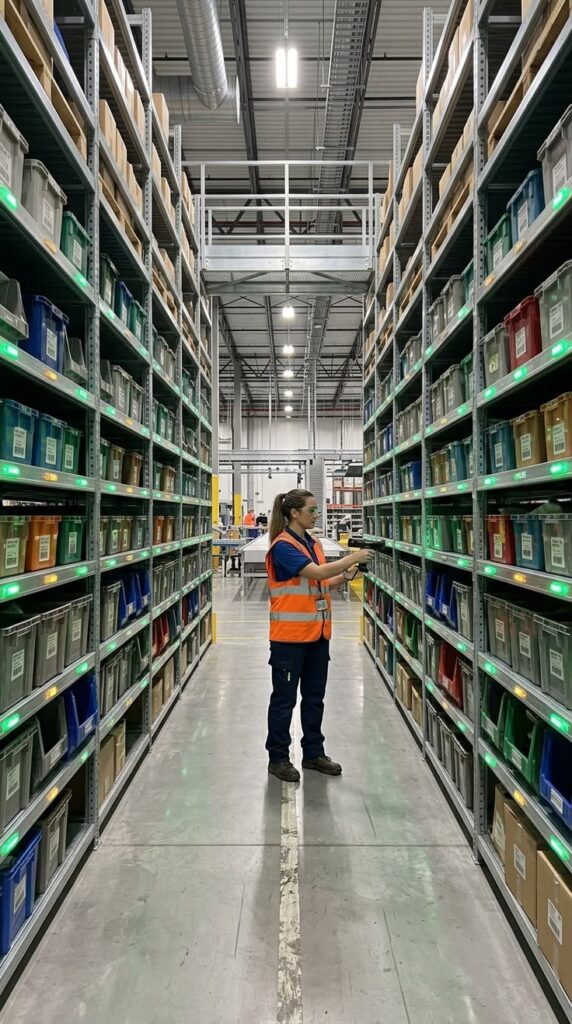

Inventory management software is a system that tracks what stock you have, where it’s sitting, and when it needs reordering automatically, instead of through registers or Excel sheets. It exists because manual stock tracking breaks the moment a business crosses a certain size. It matters because stockouts and dead stock are two of the costliest, most avoidable problems any trading or manufacturing business faces.
Here’s what actually matters for 2026: the market has split into two camps. Global platforms built for e-commerce scale – Zoho, Odoo, Unicommerce and India-first tools built around GST, godown tracking, and how Indian traders actually operate – Vyapar, TallyPrime, Marg ERP. Picking the wrong camp is the most common mistake businesses make, and it’s expensive to undo six months in.
Quick Summary
This guide goes deep on 10 of the best inventory management software options for 2026, actual feature lists, current pricing, and what real users say on G2, Capterra, and Google Play, not just marketing copy.
Who this is for: Retailers, wholesalers, textile traders, manufacturers, and distributors comparing inventory software India options before signing a contract.
Why it matters: Review scores without context are meaningless. A 4.5-star rating means nothing if every complaint is about the exact problem your business would hit first. This guide flags that.
Comparison Table: 10 Best Inventory Management Software in 2026
| Software | G2 / Capterra Rating | Starting Price | Best For |
|---|---|---|---|
| Zoho Inventory | Free – Rs.2,999/month | Multi-channel online sellers | |
| Vyapar | Rs.3,399/year | Solo shop owners, offline billing | |
| TallyPrime | Rs.18,000/year | Accounting-led businesses | |
| Marg ERP | Rs.9,000–15,000/year | Pharma, FMCG distribution | |
| Unicommerce | Custom quote | D2C brands, marketplace sellers | |
| Odoo Inventory | $24.90/user/month | Manufacturers, modular ERP | |
| SAP Business One | $85–150/user/month | Large manufacturers | |
| goFrugal | Rs.15,000+/year | Retail chains, POS-heavy | |
| Ginesys | Custom quote | Fashion and apparel retail | |
| Wortal | Rs.200/user/month | Textile and SMB B2B trade |
1. Wortal
What it is: A CRM built for Indian SMBs that includes inventory tracking tied directly to leads, orders, and follow-ups not a standalone stock counter.
Features:
- Godown wise stock tracking with combined multi-location totals
- Inventory visibility linked directly to the sales pipeline
- WhatsApp and email automation tied to stock related follow-ups
- WCaller app for call tracking alongside deal and stock context
- Employee management and task dashboards
Pricing: Free trial available; Standard plan around Rs.200 per user per month, Premium around Rs.350 per user per month.
Reviews: As a newer entrant compared to legacy players like Tally or Marg, Wortal’s review footprint is smaller, but the feedback pattern from users centers on one specific thing: keeping stock in separate godowns (Surat, Bhiwandi, Ludhiana) visible individually while still showing combined totals to the sales team.
Pros: Solves the specific problem of sales teams quoting stock they don’t actually have, ties inventory directly to WhatsApp based B2B trade follow-ups, affordable for SMB budgets.
Cons: Not built for high volume e-commerce fulfillment, its strength is B2B trade and manufacturing SMBs, not marketplace-heavy D2C brands chasing hundreds of daily orders.
2. Vyapar
What it is: India’s most widely used mobile billing and stock app, built for shopkeepers and small traders, many of whom have never used accounting software before.
Features:
- Offline billing and stock updates, synced to cloud when internet returns
- GST compliant invoicing with 14 plus invoice formats
- E-way bill and e-invoice generation
- Multi-payment tracking (UPI, cash, card, bank transfer)
- Automatic Google Drive backup
Pricing: Around Rs.3,399 a year for the paid mobile plan; a free tier exists with reduced features.
Reviews: Vyapar holds an unusually high 4.76 to 4.77 out of 5 on Google Play, based on roughly 180,000 ratings among the highest of any Indian billing app. On Capterra, users describe cutting their accounting time roughly in half and finding it easier than switching between Excel sheets for GST and stock together. Techjockey reviewers repeatedly mention the interface needs little to no training, though a recurring criticism is the lack of an iOS version.
Pros: Extremely low learning curve, genuinely useful offline mode, very affordable, strong for GST return prep.
Cons: No iOS app, multi-location tracking and advanced reporting aren’t built for scale, one Capterra reviewer running a growing business specifically noted inventory management for medium to large operations isn’t really what it’s designed for.
3. TallyPrime
What it is: India’s most established accounting software with a built-in inventory module, used where stock and books need to move together.
Features:
- GST return filing and e-way bill generation built in
- Multi-godown stock tracking with batch and expiry management
- Payroll and financial statement generation
- Multi-user access with role-based permissions
- Data security and audit trail features
Pricing: Silver edition starts around Rs.18,000 a year (single user), Gold edition (multi-user) costs more, and both offer free trials.
Reviews: TallyPrime rates 4.5 out of 5 on G2 from 287 reviews, with small businesses making up nearly 60 percent of reviewers. In a direct G2 comparison against Zoho Inventory, reviewers highlighted TallyPrime’s strong support for multi-user environments and its customizability and data security features as reasons for higher overall satisfaction.
Pros: Deep GST and compliance depth, familiar to nearly every Indian CA, strong multi-user support, reliable audit trail.
Cons: The interface feels dated next to newer cloud tools, and real time visibility across multiple locations often needs the higher-tier license or add-ons.
Expert Insight: Tally’s biggest practical advantage isn’t the inventory module in isolation, it’s that your CA already knows the software, which makes audit season considerably less painful.
4. Marg ERP
What it is: An inventory management software built specifically for pharma distribution, FMCG retail, and trading businesses with heavy compliance needs.
Features:
- Drug licence tracking and batch-based dispensing for pharma
- Barcode scanning and scheme/discount management
- GST return filing and e-way bill solution
- Android app for on the go billing
- Industry specific modules for retail chain, POS, distribution, jewelry
Pricing: Roughly Rs.9,000 to Rs.15,000 a year depending on modules, though several reviewers note it runs slightly higher than direct competitors once add-ons are included.
Reviews: Marg ERP’s ratings are more mixed than other tools on this list – 3.4 out of 5 on Capterra UAE (50 reviews) and closer to 3.8 to 4 on Techjockey. The split is consistent and worth taking seriously: users praise the actual software for being fast and genuinely strong for pharma and trading businesses, but a large share of negative reviews are about post-sale support. GetApp’s aggregated review summary specifically flags poor after-sales service, delayed responses, and unhelpful local partners as a recurring concern among reviewers.
Pros: Industry-specific depth for pharma and FMCG, fast billing, budget-friendly relative to feature depth, strong scheme management.
Cons: Customer support quality depends heavily on which local partner you buy from, this comes up in a striking number of reviews. It can also feel over-featured for a very small, simple business.
Did You Know? Marg’s channel-partner model means your actual support experience can vary wildly by city, it’s worth asking for references from businesses your size before signing.
5. Unicommerce
What it is: A leading e-commerce-focused inventory and order management platform used by major D2C brands and marketplace sellers.
Features:
- 290-plus marketplace and webstore integrations (Amazon, Myntra, Flipkart, Shopify)
- Centralized inventory database across warehouses and channels
- Low-stock notifications and inventory-level dashboards
- Asset and batch tracking
- Payment reconciliation across marketplaces (though several reviewers flag this as inconsistent)
Pricing: Custom quote based on order volume, no published flat rate.
Reviews: Unicommerce rates 4.5 out of 5 on G2 from 65-plus reviews and has been recognized by Capterra for ease of use in the e-commerce category. In a direct G2 comparison against Odoo Inventory, Unicommerce scored notably higher on ease of setup (9.4 vs 8.1) and centralized inventory database strength. On Capterra, the most common complaint across multiple reviewers is around reporting accuracy and payment reconciliation for marketplace payouts – one recurring theme is that reconciliation reports don’t always match what marketplaces actually settle.
Pros: Deep marketplace integration, strong warehouse level visibility, fast setup relative to its feature depth.
Cons: Pricing runs high compared to simpler tools, and reporting/reconciliation accuracy is a genuinely recurring complaint, not a one-off.
6. Odoo Inventory
What it is: A modular, open-source-based inventory management software that’s part of the larger Odoo ERP suite, popular with manufacturers who eventually want production, purchasing, and inventory under one roof.
Features:
- Modular apps – activate CRM, accounting, inventory, manufacturing independently
- Multi-location inventory movement and warehouse transfers
- Barcode scanning and inventory forecasting
- Automated stock updates tied to sales orders and invoicing
- Kanban-style dashboards, customizable per workflow
Pricing: Starts around $24.90 per user per month for the Inventory app alone; costs scale up quickly as more apps and users get added.
Reviews: Odoo Inventory rates 4.5 out of 5 on G2 from 62 reviews. The pattern in reviews is consistent: users like the ease and speed of stock movement across locations (cited in 13-plus reviews) and the seamless connection between modules, but a recurring complaint is a confusing initial setup without proper training, along with limited customization on the free tier. One G2 reviewer described real-time inventory visibility across branches after switching, with faster month-end closing and fewer stock errors but this generally came after a properly managed implementation, not out of the box.
Pros: Highly customizable, scales into a full ERP without switching platforms, strong multi-location handling.
Cons: Genuinely needs technical setup not a plug and play tool if you don’t have IT support. Subscription costs climb fast once you stack apps and users.
7. SAP Business One
What it is: An enterprise-grade platform for larger manufacturers who need bin-level warehouse control, MRP, and deep customization – SAP’s answer for companies too big for QuickBooks but not ready for full SAP S/4HANA.
Features:
- Bin-level and batch-level multi-warehouse inventory tracking
- MRP module for batch and discrete production planning
- User-defined fields for deep in-app customization
- Automated workflows across inventory, invoicing, and auditing
- Multi-currency and multi-language support
Pricing: No public flat rate. Cloud deployment typically runs $85 to $150 per user per month; perpetual on-premise licenses run $3,500 to $5,500 per user plus 17 to 22 percent annual maintenance. Implementation with a certified partner typically costs $25,000 to $150,000 and takes three to six months.
Reviews: SAP Business One rates around 4.3 out of 5 on Capterra. Reviewers consistently describe it as powerful for automating inventory checks, invoicing, and logistics, but the implementation burden shows up in nearly every review – G2 feedback specifically notes it can be complex to implement and use, with a steeper learning curve compared to more modern cloud-based alternatives.
Pros: Genuinely deep functionality for complex, multi-warehouse manufacturing operations, strong automation once configured, SAP brand credibility matters to banks and investors.
Cons: Implementation cost and time are not optional extras, you cannot self-implement this and expect it to work. Partner selection matters enormously and a bad one can leave you with a misconfigured, expensive system.
Common Mistake: Businesses under roughly Rs.50 crore turnover sometimes choose SAP Business One for the brand name, then discover the implementation timeline and cost don’t match their actual complexity.
8. goFrugal
What it is: Inventory management bundled tightly with POS, built for retail chains, supermarkets, and distributors running multiple billing counters.
Features:
- Integrated POS and inventory in one system
- Real-time business monitoring from anywhere
- Loyalty program integrations (eWards, OptCulture)
- Payment gateway integrations (PhonePe, Paytm)
- Regular weekly software updates
Pricing: Starts around Rs.15,000 a year, scaling with number of billing counters and modules.
Reviews: goFrugal rates roughly 3.9 to 4.2 out of 5 across Capterra listings (198-plus reviews on the Canadian listing). Reviewers consistently praise the reporting depth and real-time visibility, but a genuinely recurring complaint is that support quality depends heavily on which solution partner sold you the software, several reviewers specifically credit good experiences to one named partner while flagging inconsistent centralized support otherwise.
Pros: Strong POS-inventory link, solid real-time monitoring, frequent feature updates.
Cons: Weekly updates can be a hassle to keep current in-store, accounting side features need improvement per multiple reviewers, and support quality varies by reseller.
9. Ginesys
What it is: Retail management software used heavily by fashion and apparel brands and department store chains across India.
Features:
- Size, colour, and style-level inventory tracking built for fashion retail
- Multi-location support across stores and warehouses
- GST-ready billing and reporting
- Cube-based reporting for deeper retail analytics
Pricing: Custom quote, and multiple reviewers describe it as priced on the higher side for the mid-market segment.
Reviews: Ginesys rates 4.2 out of 5 on Capterra from 40-plus reviews. One long-time user of over ten years described steady growth alongside their business, but noted feeling it may not scale well for very large operations after a certain point. Another reviewer flagged that reporting requires more sophisticated navigation than a single click for some Cube-based reports.
Pros: Purpose-built for fashion and apparel – size/colour/style tracking is a genuine strength few competitors match. Strong customer support relative to similarly priced ERPs.
Cons: Pricing runs high, integration flexibility with third-party tools is limited according to several reviewers, and some feel it plateaus for genuinely large-scale operations.
10.Zoho Inventory
What it is: A cloud-based inventory management software for businesses selling across Amazon, Flipkart, Shopify, and their own site at the same time.
Features:
- Real-time stock sync across every connected sales channel
- Batch tracking, serial number tracking, barcode scanning
- Item grouping and composite item bundles
- Native integration with Zoho Books, Zoho CRM, Zoho Commerce
- Multi-warehouse stock transfer and shipping label generation
Pricing: Free plan for very small teams (limited orders), paid plans running roughly Rs.1,500 to Rs.2,999 a month depending on order volume and warehouse count.
Reviews: Zoho Inventory sits at 4.3 to 4.5 out of 5 on G2 across different comparison pages, based on 80-plus reviews. Users on G2 consistently praise how quickly item grouping and setup work, one common line of feedback is that TallyPrime’s higher G2 Score reflects users appreciating its simple, intuitive interface for daily accounting and inventory tasks, and by comparison Zoho users highlight fast onboarding and clean Zoho-suite integration. On Merchant Maverick’s review, users flagged the free tier and out of the box usability as the biggest draws.
Pros: Strong multi-channel sync, low learning curve for basic setup, generous free tier, deep Zoho ecosystem integration.
Cons: Custom support isn’t available on lower tiers, support is limited to five days a week, and Zoho carries an F rating with the Better Business Bureau in the US market worth knowing even though it doesn’t affect day-to-day functionality.
Common Mistake: Businesses expect instant multi-channel sync the day they sign up, without realizing each marketplace integration needs individual setup and testing before it’s reliable.
SAP Business One (large)
A Surat Sarees Wholesaler’s Stock Problem
How disconnected godown registers were quietly costing order accuracy — and what actually fixed it.
Problem
A sarees wholesaler in Surat’s textile market ran two godowns — one for finished stock, one for embroidery work-in-progress. Stock counts lived in separate Excel sheets updated by two staff members, and neither synced with the billing register.
Solution
The business switched to a CRM-linked inventory management software that combined godown-wise stock with the sales pipeline, so the sales team could see live stock before confirming an order.
Implementation
Migration took about ten days — mapping stock categories, training two staff on daily updates, and running both systems in parallel for one billing cycle before switching fully.
Result
Order confirmation errors dropped noticeably within two months, and month-end reconciliation time fell by more than half.
Lesson Learned
The fix wasn’t a fancier inventory tool — it was connecting inventory to the point where promises actually get made to buyers: the sales conversation, not the stock register.
Common Mistakes Businesses Make When Choosing Inventory Software
- Picking a tool on price alone, then discovering it can’t handle GST properly
- Choosing enterprise software (SAP, NetSuite) before the business is ready for a six-month implementation
- Ignoring offline reliability for godowns in areas with patchy internet
- Not checking whether support quality depends on a local reseller, this shows up repeatedly in Marg and goFrugal reviews specifically
- Underestimating training time before go-live, especially with Odoo and SAP
Key Takeaways
- Inventory management software exists to keep stock counts accurate in real time and connect them to sales, billing, and accounting
- The best inventory management software depends heavily on business type, review scores alone don’t tell you fit
- For inventory software India specifically, GST readiness and offline reliability matter more than flashy dashboards
- Vyapar’s 4.76 rating on Google Play reflects ease of use for solo shop owners, not scalability
- Marg ERP and goFrugal both show a consistent pattern: strong software, inconsistent reseller-dependent support
- Odoo and Unicommerce both score 4.5 on G2 but solve different problems – modular ERP versus marketplace-first order management
- SAP Business One’s implementation cost ($25K-$150K) is not optional and needs to be budgeted for upfront
- Ginesys is genuinely strong for fashion retail specifically, weaker as a general purpose tool
- Wortal fits B2B trade businesses where inventory and sales conversations need to stay connected
- Always confirm current pricing directly with the vendor, it changes often and regional pricing in India varies by reseller
Conclusion
The businesses that manage inventory well usually aren’t the biggest, they’re the ones with the right system for how they actually work, backed by a support relationship that doesn’t fall apart the moment something breaks. A single-shop trader doesn’t need SAP, and a five factory manufacturer won’t survive on a billing app. Match the tool to the business you run today, and read the actual complaint patterns in reviews, not just the star rating.
Inventory Management Software — Common Questions
Straight answers on choosing, comparing, and switching to inventory software for small and mid-size businesses in India.