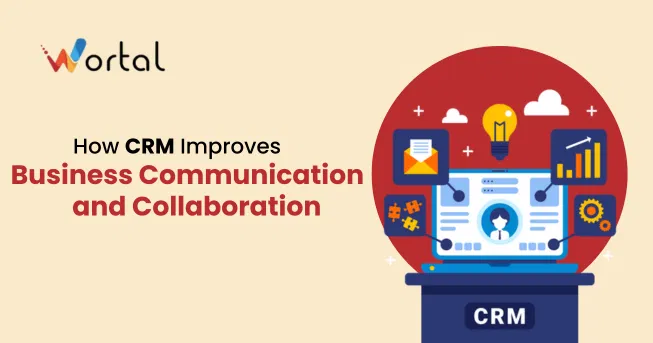

In today’s fast-paced world, staying connected and working efficiently is crucial for business growth. This is where a good customer relationship management (CRM) system comes in. CRM is not just about keeping a track of customer information; it’s about building better relationships, improving teamwork, and providing great experiences for customers.
So, relax, and let’s see how CRM makes business collaboration among teams more effective and interactions with customers seamless. It also increases your efficiency by streamlining workflows.
The Communication Problem: Where Things Often Go Wrong
Let’s imagine a day without an integrated system. Salespeople can track leads in spreadsheets. Marketing can send emails across multiple platforms, and customer support handles queries in a shared mailbox. This method frequently results in:
Overlooked Information: Critical information regarding customer interactions may be lost in email exchanges or scribbled notes, leading to confusion.
Unnecessary Efforts: Multiple teams may unintentionally reach the same customer with the same message, resulting in frustration and a confusing experience.
Slowed Responses: With no clear insight into customer needs, response times may be delayed, potentially leading to lost opportunities or frustrating existing clients.
No Context: Distributed teams fail to view the whole customer life cycle. Without seeing the customer as a whole, it’s challenging to create custom interactions and pre-empt their needs.
Internal Disagreements: Weak communication hampers intra-teams, leading to misunderstandings, which negatively affect productivity and work-life.
Both are not just contributing to unhappy customers but causing wastage in the form of unused resources that choke growth further. This is something a CRM could resolve effectively.
CRM: Communication and Collaboration Game-Changer
A CRM acts as a repository for all the customer data and interactions. That one platform assists teams in communicating and collaborating with each other and with customers in a better manner within the firm and with clients. Let’s examine how a CRM accomplishes this:
1. Centralised Customer Data: The Key to Effective Communication
A CRM gives a complete view of every customer. This comprises their contact information, previous interactions, buying history, likes, and any significant comments or papers.
For Sales Teams: A salesperson can immediately view a customer’s entire history of interactions, look at their previous purchases, and record any outstanding problems. This enables him to have tailored and informed conversations, establish rapport, and enhance the likelihood of success.
For Marketing Teams: With this information, marketers can more accurately target their audience. When they know a customer’s previous interaction and product affinities, they can build targeted messages, which correspondingly increases the engagement rate.
For Customer Support Teams: As soon as the customer contacts customer support, their full history can be viewed by the support representative. This ensures they know what’s going on and can make instant, personal fixes without asking the customer to explain themselves repeatedly.
This overall picture keeps everybody within the organisation focused on the customer, guaranteeing clear, consistent communication.
2. Improved Team Collaboration: Breaking Down Silos
CRM software improves team collaboration through mutual access to data and greater interdepartmental communication.
Common Activity Logs: All interactions with customers, be it calls, emails, meetings, or support tickets, are logged into the CRM. Openness to see what one’s colleagues are doing prevents the redoing of efforts and having multiple people share a different message.
Internal Communication Tools: Many CRMs have built-in messaging, note-taking, and task assignment tools. This feature allows teams to discuss customer issues, share information, and collaborate on solutions directly in the software, minimising the use of long email threads.
Account Ownership and Teamwork: CRMs define who owns each account, so there is accountability. They also facilitate teamwork on key accounts. For example, a salesperson can easily engage a technical specialist or a marketing manager to address a customer’s unique requirements, with all the conversations and progress recorded in the CRM.
Sharing Knowledge: By consolidating customer information and interaction history, a CRM becomes a treasure trove. New employees can quickly familiarise themselves with customer relationships, and the firm can readily share best practices in communication and problem-solving.
This better collaboration leads to faster response times, improved problem-solving, and a more cohesive, customer-centric strategy within the company.
3. Streamlined Customer Communication: Building Stronger Relationships
Effective customer communication is the key to any successful business. A Customer Relationship Management (CRM) system aids you in communicating with your customers on a more personal, timely, and relevant basis.
Personalised Interactions: With customer data at your disposal, you are able to tailor your messages to address individual requirements. Referring to customers by name, remembering previous interactions, and making relevant proposals indicates that you care for their business.
Multi-Channel Communication Management: Most CRMs link to various types of channels of communication such as email, phone, social media, and chat. This will allow you to handle all customer interactions from one location, with all points of contact being consistent.
Automated Communication: You can have automated emails or notifications triggered by certain customer behaviour. For instance, a welcome email is sent after a person subscribes, or a reminder email is sent after a product demo. This maintains communication in a timely manner without additional manual effort.
Branding and Messaging Consistency: CRMs offer templates and guidelines to maintain your customer communication consistent with your brand. This establishes trust and reinforces your brand identity.
Collection and Analysis of Feedback: Most CRMs have facilities to collect customer feedback through surveys. You can analyse the feedback in the CRM to identify how you can improve the communication and overall customer experience. By streamlining and personalising customer communication, a CRM helps build stronger relationships, increase customer loyalty, and drive business growth.
4. Workflow Automation: Boosting Efficiency and Consistency
Workflow automation is an important feature of many CRM systems. It improves both team collaboration and customer communication by automating repetitive tasks. This allows your team to focus on more important activities.
Automated Lead Assignment: New leads can be automatically assigned to the respective sales representative based on predetermined criteria. This provides for immediate follow-up and improved lead management.
Automated Follow-ups: Reminders and follow-up tasks can automatically generate based on certain triggers. This provides for no lead or customer interaction being missed.
Automated Email Marketing Campaigns: When CRMs integrate with marketing platforms, you can automate targeted email campaigns based on customer behaviour.
Automated Task Creation: When a customer reaches a specific point in the sales process or requests support, appropriate tasks can auto-create and route to the correct team members.
Automated Reporting: CRMs can automatically create reports on key metrics like customer satisfaction and sales performance. This provides you with useful insights without manual labor of working with data.
Selecting the Right CRM for Your Team
Choosing the appropriate CRM is crucial in enhancing communication and collaboration in your company. Have the following considerations in mind while making your decision:
Your Business Needs: Determine your own communication and collaboration challenges. Consider what functionality your sales, marketing, and support teams need.
Team Size and Structure: Choose a CRM that will grow with your company and accommodate your team structure.
Ease of Use: The CRM must be easy and simple to learn and effectively operate by your staff.
Integration Capabilities: Ensure the CRM is able to integrate with your business’s current software tools, such as e-mail marketing software, accounting systems, and social media platforms.
Customisation Options: Find a CRM that allows you to customise fields, workflows, and reports according to your requirements.
Mobile Accessibility: In the present mobile era, make sure that your CRM comes with robust mobile apps so that your team stays connected and productive while on the move.
Budget: Prices of CRMs can differ, so think of your budget and select a solution that provides good value for the money.
Launching Your CRM to Get the Greatest Impact
Once the right CRM is selected, effective implementation is the key to fully realising the potential of enhanced communication and collaboration. Some best practices include:
Define Your Goals: Explicitly mention what you want to accomplish with your CRM when it comes to communication and collaboration.
Involve Your Team: Incorporate input from all applicable teams in the selection and configuration process so everyone is on the same page and addresses their unique requirements.
Offer Complete Training: Provide complete training so your team will understand how to use the CRM software effectively and get the best out of its communication and collaboration features.
Personalise and Configure: Modify the CRM to suit your particular workflows and communication style.
Create Clear Guidelines: Define clear guidelines on using the CRM for communication, data entry, and task management.
Track and Improve: Track the team’s usage in CRM and gather feedback to identify room for improvement and optimisation.
The Long-Term Advantages of CRM in Communication and Cooperation
Investment in a CRM and its optimal use yields valuable long-term advantages for your business:
Increased Customer Satisfaction: Timely and personalised communication results in happier, more loyal customers.
More Sales: Improved lead management, enhanced collaboration, and personal interactions result in increased conversion rates and more sales.
Improved Team Productivity: Automating routine tasks and streamlining workflows enable your team to work on more critical tasks.
Increased Internal Alignment: A unified platform promotes improved communication and collaboration among departments, building a more cohesive and customer-centric organisation.
Data-Driven Decision Making: Detailed reports and analytics would provide valuable insights into customer behavior and the efficacy of your communication, enabling you to make more informed decisions.
Scalable Growth: A good CRM sets the foundation for long-term growth by optimising processes and improving efficiency.
Conclusion
Today, good communication and teamwork are essential for business success. A CRM system helps your teams work better together, communicate with customers effectively, and build stronger, profitable relationships. When you select a CRM for your teams, you are not only purchasing software; you are making an investment in a future with effortless collaboration, customer communication that is personalised and effective, and automated processes driving productivity and growth. So go ahead and browse the possibilities and see how CRM can revolutionise your business. Your customers and teams will thank you!
What are your biggest challenges with communication and teamwork right now? Please share your thoughts in the form of comments, below the blog! Visit Wortal CRM website today, sign up, and book a free demo today to know more about how the use of a CRM system helps to improve business communication and collaboration.