
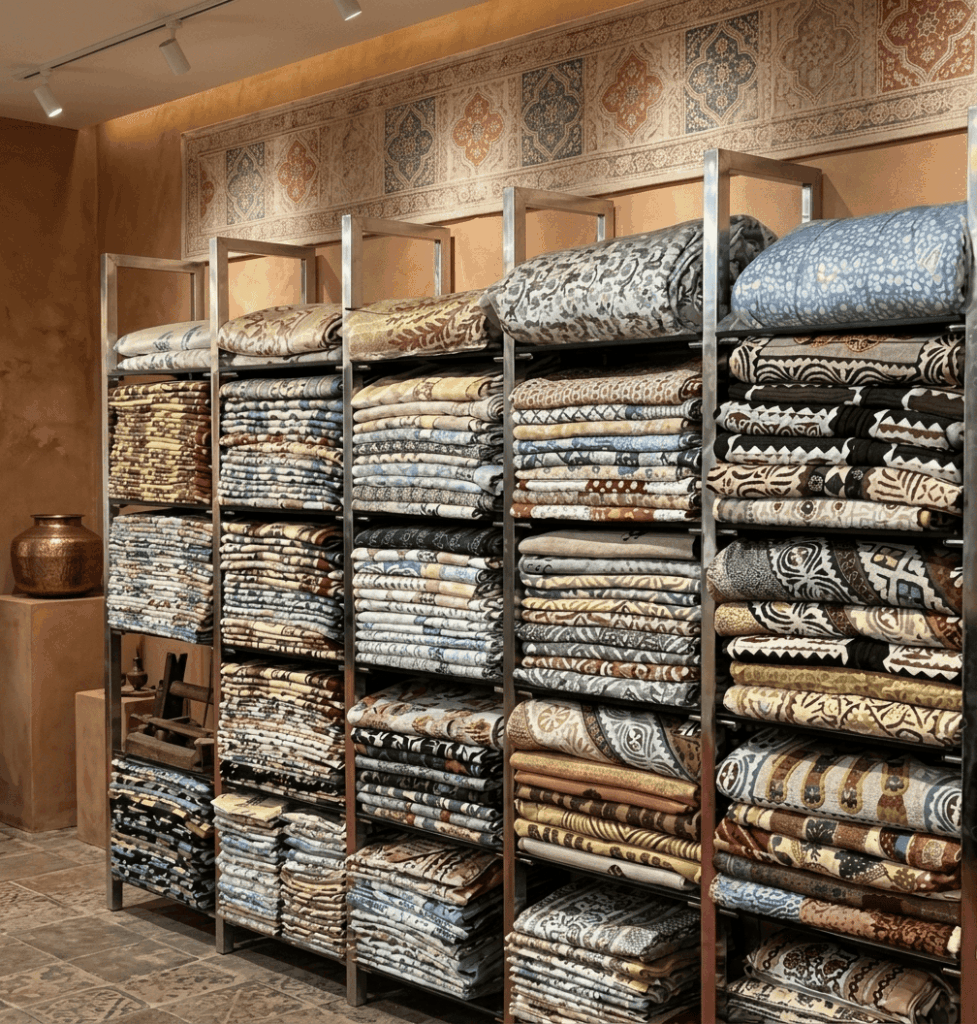

Jaipur is one of India’s well-known destinations for traditional printed cotton fabrics. Its textile markets and nearby printing centres offer everything from delicate floral prints to bold traditional patterns. Among these, Jaipur block print fabrics have a strong place in the Indian textile trade because of their distinctive designs and handcrafted appearance.
For a boutique owner, garment manufacturer or fabric wholesaler, Jaipur offers plenty of sourcing opportunities. But finding attractive designs is only the beginning. The real challenge is finding fabric that has consistent quality, suitable pricing and a reliable supply.
Let’s look at what businesses should understand before purchasing.
1. Why Is Jaipur Popular for Block Printed Cotton Fabric?
The popularity of Jaipur textiles comes from the craftsmanship developed in its surrounding printing communities.
Two places deserve particular attention: Sanganer and Bagru.
Sanganer is known for fine floral patterns, delicate butis and detailed designs. Traditionally, these prints were commonly produced on light-coloured cotton fabrics. Today, buyers can find several colour combinations and contemporary patterns too.
Bagru has a different character. Its printing tradition includes earthy shades, traditional motifs and Dabu, a mud-resist printing technique.
Both Sanganeri Hand Block Printing and Bagru Hand Block Print have registered Geographical Indications (GI).
For buyers, understanding this difference helps when selecting products for different customer segments.
2. Choosing the Right Cotton Fabric
A beautiful print cannot compensate for poor fabric quality. This is something garment manufacturers often discover after receiving their first bulk order.
During cotton fabric sourcing, pay attention to the fabric’s weight, weave, texture and intended use.
Some commonly available options include:
| Fabric | Common Use |
|---|---|
| Mulmul | Dupattas, summer garments |
| Cambric | Kurtis and dresses |
| Cotton Voile | Lightweight clothing |
| Cotton Poplin | Shirts and everyday wear |
| Cotton Sheeting | Bedsheets and furnishings |
For example, a boutique selling lightweight summer kurtis may prefer mulmul or voile. A manufacturer producing everyday shirts may find poplin more suitable.
Don’t select fabric simply because the supplier recommends it. Ask for a sample, feel the material and check whether it suits your finished product.
3. What Should You Check Before Buying Jaipur Block Print Fabric?
When purchasing Jaipur block print fabric in bulk, the biggest risk is assuming that the entire lot will match the approved sample.
A few checks can prevent unnecessary losses.
Fabric composition: Confirm whether the material is 100% cotton or a cotton blend.
GSM and width: Check fabric weight and usable width. These affect garment consumption and costing.
Colour bleeding: Wash a small sample to see whether the colours run.
Shrinkage: Measure the fabric before and after washing. This is particularly important for garment manufacturers.
Printing quality: Examine whether the motifs are properly aligned and whether there are unwanted marks or uneven printing areas.
One more thing: genuine hand block printing can show small variations between impressions. These are part of the handmade process and should not automatically be treated as defects.
However, large stains, damaged fabric and inconsistent colour application should never be ignored.
4. Finding the Right Supplier in Jaipur
A supplier’s quoted price tells you very little about how dependable their business will be.
When exploring cotton fabric sourcing options, understand whether you are dealing directly with a manufacturer, printing unit, wholesaler or trader.
Each has a different role.
A printing unit may offer better flexibility for custom designs, while a wholesaler may provide a wider selection of ready-stock fabrics.
Before confirming an order, discuss:
- Minimum order quantity (MOQ).
- Sample availability.
- Production and dispatch timelines.
- Payment terms.
- Repeat-order availability.
- Fabric and printing specifications.
A practical suggestion: Don’t depend on one supplier for every design. Having alternative suppliers can help when a particular fabric becomes unavailable.
5. Why Fabric Sourcing Becomes Difficult as Business Grows
Consider a textile wholesaler handling 50 different printed fabric designs.
Initially, maintaining purchase details in a notebook or spreadsheet may seem manageable. But as orders increase, remembering supplier rates, available metres and previous purchase quantities becomes difficult.
The same problem occurs with garment manufacturers. They may have enough raw material overall but still run short of a particular fabric required for an urgent production order.
This is where organised cotton fabric sourcing and inventory management need to work together.
Businesses should maintain records of:
- Design-wise stock.
- Supplier-wise purchase history.
- Fabric quantity and purchase rates.
- Customer orders.
- Available and reserved stock.
Wortal Textile ERP can help textile businesses manage purchases, inventory, sales and order-related information in one system. This is particularly useful when the business handles multiple designs, suppliers and customer orders.
6. A Practical Example: Managing Fabric Purchases
Imagine a small garment manufacturer sourcing printed cotton from Jaipur for its summer collection.
The business purchases several designs from different suppliers. After a few weeks, some designs sell faster than expected, while others remain unsold.
Without proper records, the owner may reorder fabrics that are already available and miss purchasing designs that customers are requesting.
The business starts maintaining design-wise product codes, supplier records and purchase entries through an organised inventory system.
Now, the team can check available quantities before placing new orders and review previous supplier purchases.
The lesson is simple: good sourcing is not just about buying the right fabric. It also means knowing what you have purchased, what you have sold and what needs replenishment.
7. Common Mistakes Textile Buyers Should Avoid
A few sourcing mistakes repeatedly affect textile businesses:
- Approving bulk orders without checking physical samples.
- Ignoring fabric shrinkage before garment production.
- Comparing suppliers only on price.
- Assuming every printed fabric is handmade.
- Not confirming repeat-order availability.
- Maintaining incomplete purchase and stock records.
These problems may appear small during individual transactions. Across hundreds of purchases, however, they can affect margins and customer satisfaction.
Key Takeaways
- Sanganer and Bagru have distinct printing traditions.
- Check fabric suitability before selecting a print.
- Always test samples before bulk purchasing.
- Confirm GSM, width and fabric composition.
- Check colour fastness and shrinkage.
- Compare suppliers beyond their quoted rates.
- Maintain design-wise inventory records.
- Track supplier purchases and repeat orders.
- Use textile ERP software as operations grow.
Conclusion
Jaipur offers textile businesses a wide choice of traditional prints and cotton fabrics. But successful buying requires patience, proper quality checks and a clear understanding of supplier capabilities.
For businesses dealing in Jaipur block print collections, the difference between a profitable purchase and an expensive mistake often comes down to the checks performed before placing an order.
Good fabric creates a good product. Good sourcing and inventory management help turn that product into a sustainable business.