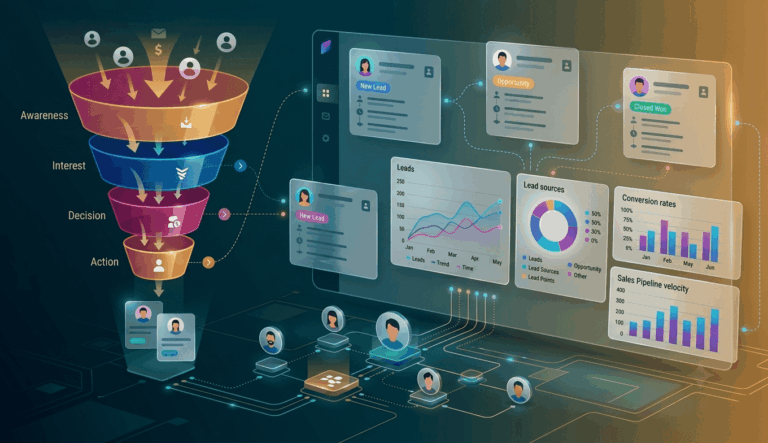
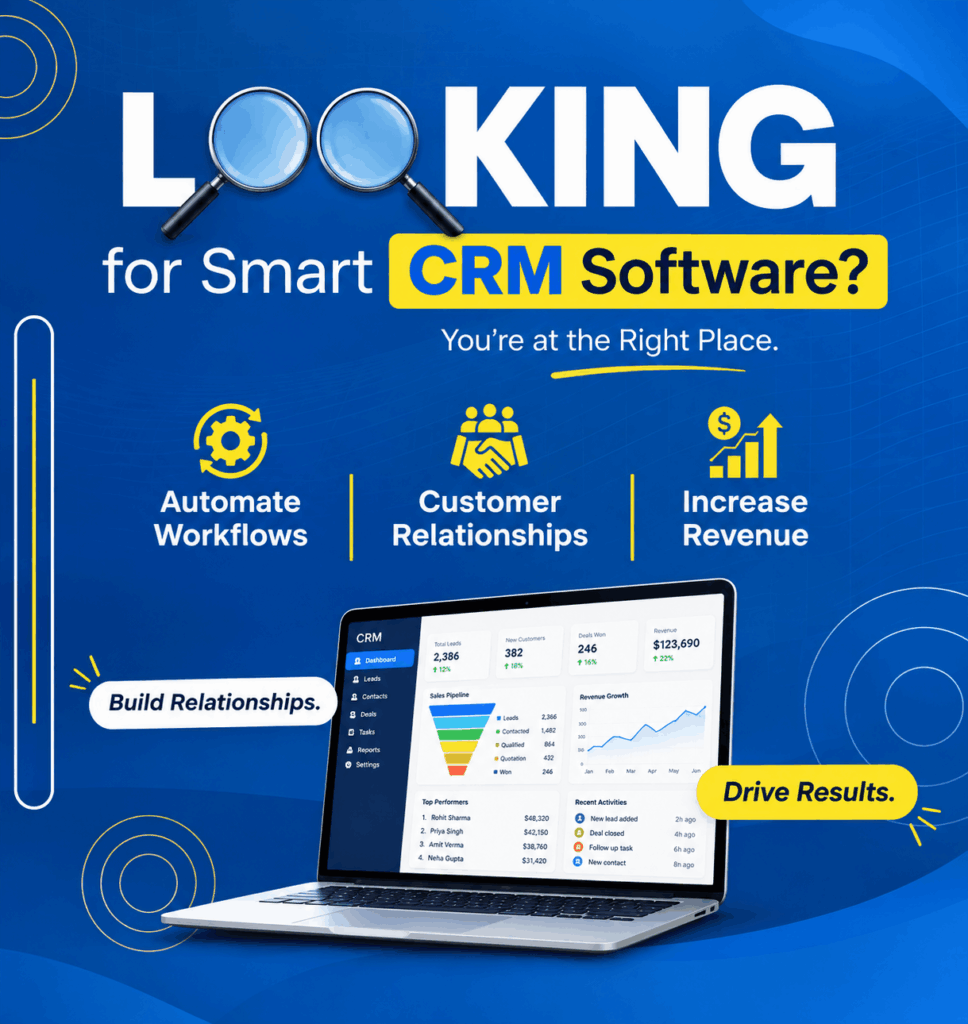

Picking the best crm software India in 2026 feels like walking into a sweet shop with 50 mithai trays. Every tool claims to be the fastest, smartest, and most affordable. But once you actually start using them, most fall apart within the first month, either too complex, too expensive, or missing the one feature your team actually needs.
This guide cuts through that noise. Below is an honest list of 15 CRM platforms that small businesses in India are genuinely using right now, with features, pricing, and where each one fits best.
What to Look for in a CRM Before You Commit
Most people ignore this part and jump straight to the features list. That’s where things usually go wrong. Before comparing tools, get clear on what matters:
- WhatsApp integration – non-negotiable for Indian businesses since most customer chats happen there
- Lead capture from IndiaMart, Justdial, websites, and social media
- Affordable per-user pricing that doesn’t punish you for growing your team
- Cloud-based CRM access so your sales team can update deals from the field
- Reports that a non-technical owner can actually understand
If a tool checks all five, you’re already ahead of 90% of small businesses still managing customers on Excel.
The 15 Best CRM Tools for Indian Small Businesses
1. Wortal CRM
Made in India, built for SMBs that want simplicity without losing features. Wortal offers customizable pipelines, real-time WhatsApp alerts, lead distribution automation, inventory and employee management, all in one cloud-based platform. Industries it serves include manufacturing, real estate, insurance, textile, and IT. Pricing: 15-day free trial, Standard plan Rs. 200/user/month, Premium Rs. 350/user/month. One of the most affordable options on this list.
Case Study: From WhatsApp Chaos to Closed Deals
Rajesh runs a mid-sized fabric trading business out of Surat, supplying to wholesalers across Bhiwandi and Tiruppur. For years, his “CRM” was three things: a notebook, an Excel sheet his nephew updated once a week, and roughly 40 unread WhatsApp chats at any given time.
The problem wasn’t a lack of leads. IndiaMART was sending him 15-20 enquiries a day. The problem was that half of them went cold because nobody followed up in time. His two sales reps were manually copying customer numbers from WhatsApp into Excel, and by the time someone got around to calling back, the buyer had already placed an order with a competitor.
He tried a well-known international CRM first. It had every feature under the sun, but his team gave up within ten days. “Too many clicks just to log one call,” he said. The mobile app was clunky on the factory floor, and nobody on his team had the patience to sit through a 40-minute onboarding video for software that was supposed to save them time, not eat it.
A trade association contact pointed him to Wortal. What actually got him to commit wasn’t the pricing, although Rs. 200 a user mattered for a 6-person sales team. It was that leads coming in through WhatsApp landed directly in the pipeline with zero manual entry, and his older sales rep, who still types with two fingers, was using it comfortably by day three.
Within six weeks, his follow-up time on fresh IndiaMART leads dropped from an average of almost two days to under four hours. He didn’t get this from a dashboard report; he noticed it because buyers stopped saying “arre, I already ordered from someone else” when his team called back.
The bigger shift was visibility. Rajesh could finally see, on his phone, which leads were sitting untouched for more than a day, something his notebook system never gave him. He still doesn’t use half the inventory and employee management features Wortal offers. For him, it solved one specific pain: leads weren’t slipping through the cracks anymore.
2. Zoho CRM
Built by an Indian company. Strong automation, WhatsApp Business API, and a generous free plan for up to 3 users. Pricing: Free, paid plans from Rs. 800/user/month.
3. Bigin by Zoho
Stripped-down Zoho for tiny teams. Pipeline-focused, set up in an afternoon. Pricing: Free plan, paid from Rs. 400/user/month.
4. Freshsales by Freshworks
Indian-built, AI-driven, clean interface. Freddy AI handles lead scoring well. Pricing: Free, paid from Rs. 999/user/month.
5. TeleCRM
Made for high-volume call and WhatsApp-driven sales teams. Auto-dialer and lead distribution built in. Pricing: Starts around Rs. 420/user/month.
6. Kylas
Flat pricing with unlimited users. Useful for growing teams that don’t want to keep renegotiating costs. Pricing: Rs. 12,999/month flat, unlimited users.
7. LeadSquared
Heavy-duty CRM for lead-heavy industries like EdTech, BFSI, and real estate. Pricing: From Rs. 2,500/user/month.
8. HubSpot CRM
Free tier that’s genuinely useful. Best when marketing and sales need to work together. Pricing: Free, paid plans from around Rs. 1,800/user/month.
9. Salesforce Starter
The global giant in a small-business avatar. Heavy on features, light on local touch. Pricing: From $25/user/month (~Rs. 2,100).
10. Pipedrive
Visual, drag-and-drop pipelines. Sales reps love it. Pricing: From Rs. 1,260/user/month.
11. Salesmate
Underrated cloud-based CRM with strong calling, SMS, and email automation. Pricing: From Rs. 999/user/month.
12. EngageBay
All-in-one platform (CRM + marketing + helpdesk). Useful for small teams avoiding multiple tools. Pricing: Free plan, paid from Rs. 1,200/user/month.
13. Vtiger
Open-source roots, now a full CRM suite. Decent automation at a fair price. Pricing: Free, paid from Rs. 850/user/month.
14. Monday Sales CRM
Started as project management, evolved into CRM. Highly visual. Pricing: From Rs. 1,200/user/month.
15. NeoDove
Built around tele-calling teams. Strong dialer, lead allocation, and WhatsApp integration. Pricing: From Rs. 500/user/month.
Quick Pricing Comparison Snapshot
In practical terms, here’s how the pricing splits:
- Budget-friendly (Rs. 200-Rs. 999): Wortal CRM, Bigin, TeleCRM, NeoDove, Zoho, Vtiger
- Mid-tier (Rs. 1,000-Rs. 2,000): Freshsales, Pipedrive, EngageBay, Monday, Salesmate
- Premium (Rs. 2,000+): LeadSquared, Salesforce, HubSpot paid plans
Wortal CRM stands out as one of the cheapest starting points for Indian small businesses without stripping away core features.
How to Actually Choose the Right One
Here’s what actually matters once you start shortlisting:
- Run a real trial for 2 weeks with actual customer data, not test entries
- Check if your team uses it daily, that’s the only metric that counts
- Confirm WhatsApp and call integration work without extra plugins
- Don’t fall for “advanced AI” features if you haven’t fixed basic follow-ups yet
- Pick Indian support over chatbots when you have 50+ users
The best CRM software India businesses pick isn’t the one with the longest feature list. It’s the one your sales team won’t ditch by month two.
Key Takeaways
- Wortal, Bigin, and TeleCRM lead the affordable Indian-built segment
- Kylas works best for growing teams that hate per-user pricing
- LeadSquared rules in lead-heavy verticals
- WhatsApp integration is now baseline, not a feature
- Free trials matter more than marketing demos
Best CRM Software in India: Features, Pricing & WhatsApp Comparison
| CRM | Free Plan | Mobile App | Starting price | |
|---|---|---|---|---|
| Wortal CRM | Yes | Yes | Yes | Rs. 200 |
| Zoho CRM | Yes | Yes | Yes | Rs. 800 |
| Bigin by Zoho | Yes | Limit | Yes | Rs. 400 |
| Freshsales | Yes | Yes | Yes | Rs. 999 |
| TeleCRM | No | Yes | Yes | Rs. 420 |
Frequently Asked Questions
The best CRM software depends on business needs. Wortal, Zoho CRM, HubSpot CRM, and Freshsales are popular options for managing leads and sales.
CRM software helps small businesses manage customer data, track leads, automate follow-ups, and improve sales performance.
Startups can consider Wortal, Zoho CRM, HubSpot CRM, and Freshsales based on affordability, ease of use, and sales automation features.
Yes, free CRM software is suitable for basic lead and contact management, but advanced features may require paid plans.
CRM pricing varies by provider, features, and users. Businesses can choose free or paid plans based on their requirements.
Important features include lead management, contact tracking, sales automation, pipeline management, reporting, and task reminders.
CRM software improves lead tracking, automates follow-ups, and helps sales teams convert potential customers more efficiently.
CRM manages overall customer relationships, while lead management software focuses on capturing, tracking, and converting leads.
Yes, many CRM platforms provide simple dashboards and user-friendly features that require minimal technical knowledge.
Compare CRM software based on pricing, features, usability, automation, integrations, customer support, and business requirements.