
Managing orders in a textile business is messier than it looks from the outside. You have buyers from multiple cities, fabrics in different variants and quantities, and a dispatch team that needs real-time clarity. Without the right order management software textile businesses end up losing time – and sometimes clients – to avoidable mix-ups.
Most traders start with Excel or WhatsApp groups. It works for a while. But as order volume grows, things start slipping. A buyer calls asking about an order your team thought was already shipped. A duplicate entry leads to wrong stock dispatch. These aren’t rare situations – they happen regularly without proper textile order management software in place.
What Happens When You Outgrow WhatsApp and Excel
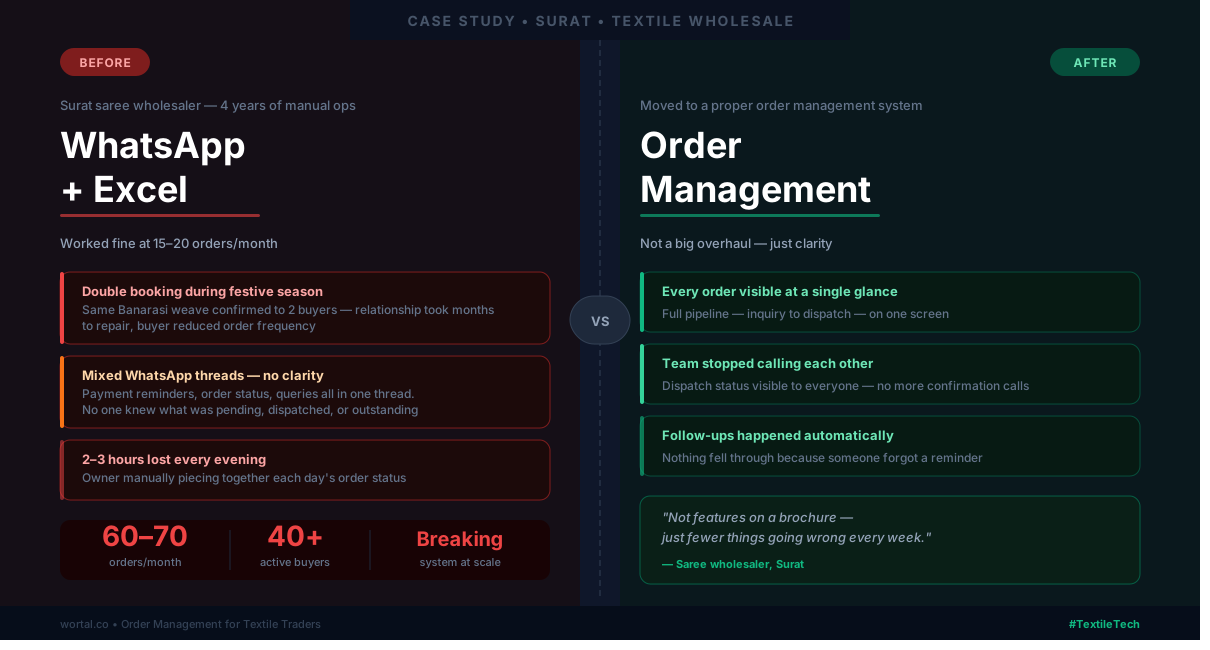
A saree wholesaler in Surat – running a mid-sized operation with around 40 active buyers across Gujarat and Maharashtra – managed everything on Excel sheets and a shared WhatsApp group for nearly four years. It worked fine when he had 15-20 orders a month. But when the volume crossed 60-70 orders, things started breaking down.
The first real problem showed up during the festive season. Two buyers placed orders for the same fabric lot – a specific Banarasi weave in a limited quantity. Both orders got confirmed because different people were handling the conversations. By the time dispatch realised the stock couldn’t cover both, one buyer had already been promised delivery for the next day. That relationship took months to repair, and even then the buyer reduced his order frequency.
The second issue was slower and harder to spot. Follow-ups were happening on WhatsApp, which meant payment reminders, order status updates, and general queries were all mixed together in the same thread. Nobody had a clear picture of which orders were pending, which were dispatched, and which payments were still outstanding. The owner was spending two to three hours every evening just trying to piece together the day’s status.
When he finally moved to a proper order management system, the immediate difference wasn’t some big operational overhaul – it was just clarity. He could see every order at a single glance. His team stopped calling each other to confirm dispatch status. And follow-ups happened automatically, so nothing fell through because someone forgot to send a reminder.
That’s the real value of order management software for textile businesses. Not features on a brochure – just fewer things going wrong every week.
Before we get into the list, it’s worth being clear about what good order management software textile operations actually need: visibility into order status, buyer communication tools, stock linkage, and reporting. Keep that in mind as you evaluate each option.
1. Wortal CRM – Best All-in-One Option for Indian Textile Traders
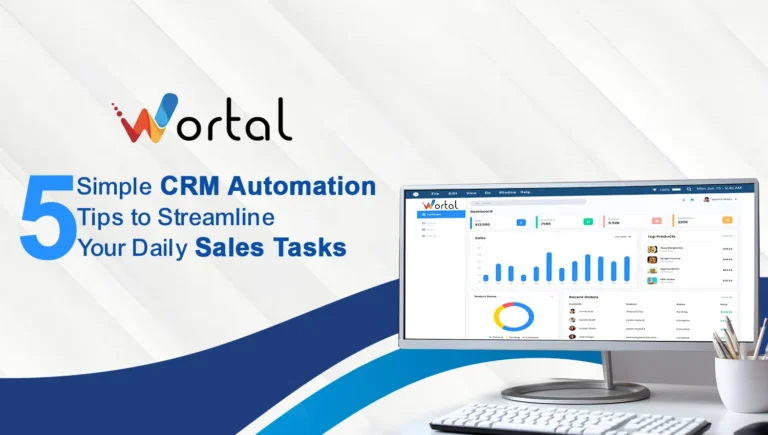
Wortal is the most relevant order management software textile traders in India should seriously evaluate. It’s not a standalone inventory tool – it’s a full CRM built for small and mid-sized businesses, meaning you get lead tracking, sales pipeline management, order follow-ups, and team coordination all in one place.
What makes it stand out as textile order management software is how it maps to the way Indian traders actually operate. Most textile businesses don’t just need order tracking – they need to manage buyer relationships, follow up on pending payments, and keep their field sales team accountable. Wortal handles all of that without requiring a dedicated IT team to set it up.
Key features worth noting:
• Visual deal pipeline – see every order from inquiry to dispatch at a glance
• WhatsApp and email automation for follow-ups – no more manual reminders
• Wortal Caller app that logs and tracks sales calls – useful if your team works mostly on phone
• Inventory and employee management built in
• Task dashboard to keep your team aligned without daily standups
As order management software for textile industry use, Wortal is priced at Rs.200/user/month for the Standard plan and Rs.350/user/month for Premium. For a small textile trading business with 3-5 users, that’s genuinely affordable. There’s a free trial too, so you can test before committing.
The real issue with most CRMs is they’re built for software companies or service businesses – not for traders dealing in physical goods across multiple buyer accounts. Wortal was built with Indian SMBs in mind, which shows clearly in how its features are structured.
Best for: Textile wholesalers, manufacturers, and traders in India who need CRM + order management without enterprise pricing.
2. Ordoro – Best for Textile Sellers Running Online Channels
If your textile business sells through Shopify, Amazon, or your own website, Ordoro is a capable textile order tracking software worth considering. It connects your sales channels and syncs inventory automatically, which prevents overselling – a common headache for online fabric and garment sellers.
Ordoro also handles dropshipping well, so if you source from multiple suppliers and route orders differently depending on stock, it can manage that without manual routing. As order management software for textile industry sellers who are digitally active, it covers the basics cleanly.
That said, if most of your orders come through phone calls, WhatsApp, or in-person buyers, Ordoro’s feature set is probably more than you need right now.
Best for: Online textile retailers and fabric sellers managing multi-channel digital sales.
3. Cin7 – Best for Larger Textile Operations with Complex Inventory
Cin7 is a heavyweight option. It works well as order management software for textile industry businesses running multiple warehouses, dealing in large SKU counts, or managing production alongside trading. Batch tracking, production orders, and detailed stock movement reports are all available.
Most people ignore this part – Cin7 also supports EDI (Electronic Data Interchange), which matters if you’re exporting or supplying large retail chains that require a specific order format. It’s not something a small trader needs, but for a mid-to-large textile manufacturer, it’s a real advantage.
If you’ve tried lighter order management software textile tools and found them too limited for your production volume, Cin7 is probably the right next step. The learning curve is steeper and the pricing reflects that, but the depth is there.
Best for: Textile manufacturers, exporters, and larger wholesalers managing high-volume, multi-location inventory.
4. Zoho Inventory – Best for Traders Already Using Zoho Tools
Zoho Inventory makes sense as textile order tracking software if your business is already running on Zoho CRM or Zoho Books. The integrations are tight and you’re not introducing a separate platform – everything connects within the same ecosystem.
In practical terms, it covers purchase orders, sales orders, basic shipment tracking, and stock alerts. The free plan is available for very small setups, though limits kick in quickly as your volume grows.
That’s where things usually go wrong – businesses start on the free tier assuming it’ll scale with them, then find the features they actually need are on paid plans. Worth reviewing the plan tiers carefully before you commit to Zoho as your textile order management software.
Best for: Small textile traders already within the Zoho ecosystem looking for a connected, low-cost starting point.
5. Cin7 Core (formerly DEAR Systems) – Best for Growing Textile Wholesalers
Cin7 Core, previously known as DEAR Systems, sits between basic tools and enterprise platforms. As textile order management software for a growing wholesale business, it handles purchase orders, sales orders, stock management, and accounting integrations with Xero and QuickBooks.
The standout feature is the B2B portal – it lets your buyers place and track their own orders without calling your team. For textile traders with a regular wholesale client base, that reduces a significant amount of back-and-forth. It also works well as textile order tracking software for monitoring shipment stages across multiple buyers simultaneously.
Best for: Growing textile wholesalers who need financials and order management tightly integrated.
Key Takeaways Before You Choose
Choosing order management software textile businesses actually stick with comes down to where your business is right now – not where you plan to be in five years. Start with what fits your current volume and team size.
• Small Indian textile trader needing CRM + orders combined – Wortal is the strongest fit at the most practical price point
• Selling fabric or garments online across platforms – go with Ordoro
• Running a larger manufacturing or export operation – Cin7 has the depth
• Already on Zoho – Zoho Inventory is the path of least friction
• Growing wholesale business needing buyer portals – Cin7 Core handles that well
Here’s what actually matters – the best textile order management software is the one your team will use consistently. Features on paper mean nothing if adoption is low. Most tools listed here offer free trials, so test two or three before deciding.
Order Management Software for Textile Traders
Everything you need to know before choosing the right OMS for your textile business.
Order Management Software (OMS) is a digital platform that helps businesses track, manage, and fulfil customer orders from start to finish. For textile traders, it is especially critical because:
- Textile businesses deal with thousands of SKUs across fabrics, colors, sizes, and designs
- Orders come from multiple channels – wholesale, retail, e-commerce, and exhibitions
- Inventory needs to be tracked in metres, kilograms, or pieces depending on the product
- B2B payment cycles, credit limits, and ledger management require tight integration
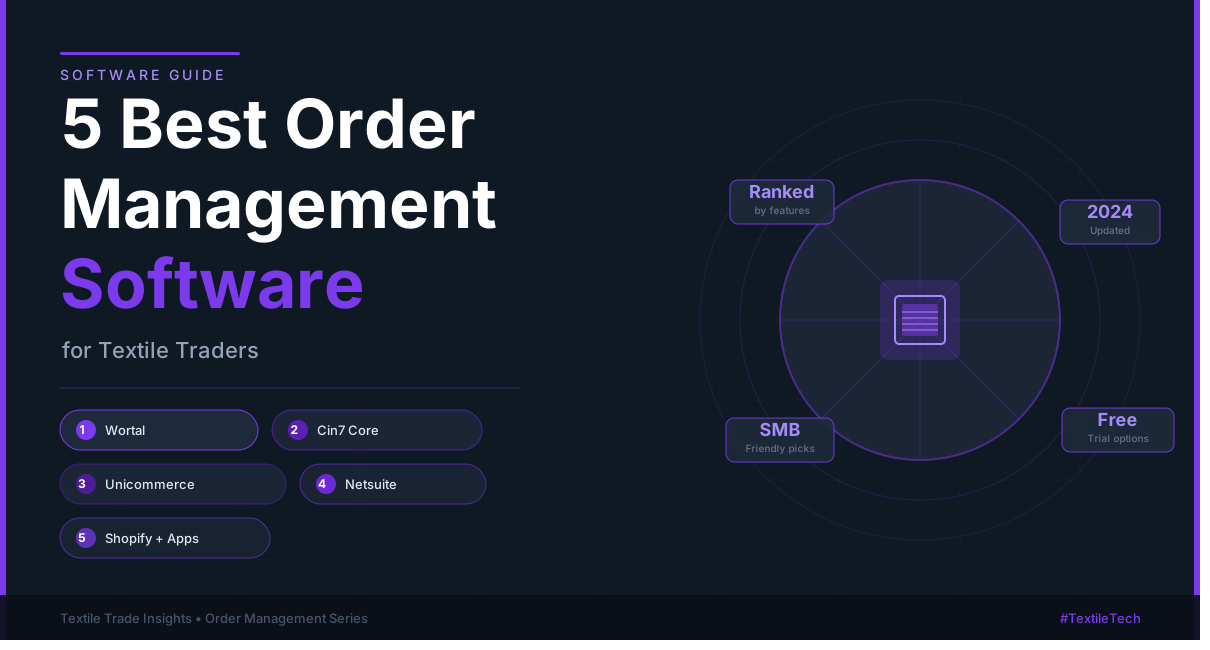
For small textile traders in India, Wortal and Unicommerce are the most recommended options due to their affordability, ease of use, and India-specific GST compliance features. Wortal is especially built keeping Indian textile businesses in mind, with support for regional languages and local payment methods.
- Wortal — best for local textile traders and wholesalers
- Unicommerce — ideal for those selling on Meesho, Flipkart, Amazon
- Shopify + Apps — best for D2C textile brands starting online
Yes. Most modern OMS platforms designed for the Indian market include built-in GST compliance features. These typically cover:
- Automatic GST calculation on invoices (CGST, SGST, IGST)
- HSN code mapping for textile products
- GSTR-1 and GSTR-3B report generation
- E-invoicing and e-way bill integration
- Tally or accounting software sync for easy return filing
This is one of the most important requirements for textile traders. Unlike regular retail, fabrics need to be measured in metres, rolls, kilograms, or pieces. Here is how the top tools handle it:
- Wortal and Cin7 Core support custom units of measurement (UOM) per product
- NetSuite allows multi-unit inventory tracking at an enterprise level
- Unicommerce supports roll-based and piece-based inventory for garments
- Shopify requires third-party apps for custom unit tracking
Pricing varies widely based on features, users, and business size. Here is a general range:
- Wortal – affordable plans starting for small traders, contact for pricing
- Cin7 Core – starts around $349/month for growing businesses
- Unicommerce – subscription-based, plans from approx. Rs.1,500/month
- NetSuite – enterprise pricing, typically Rs.5 lakh+ per year
- Shopify + Apps – from Rs.1,500/month (Shopify Basic) + app costs
Yes, multi-channel order management is one of the biggest advantages of using an OMS. Many textile traders receive orders from WhatsApp, Instagram DMs, Meesho, Amazon, and offline buyers all at the same time. A good OMS centralises all of these:
- Unicommerce integrates with 50+ marketplaces including Meesho, Ajio, Myntra
- Shopify supports Instagram Shopping and WhatsApp Commerce
- Wortal supports offline B2B order entry and digital catalogue sharing
- Cin7 Core supports omnichannel retail and wholesale in one dashboard
Migrating from Excel to an OMS feels overwhelming at first but most modern platforms make it straightforward. Typically the process involves:
- Uploading your existing product catalogue and customer data via CSV
- Setting up GST rates, HSN codes, and pricing rules once
- Running both systems in parallel for 1–2 weeks during transition
- Training your team – most platforms take 2–5 days to learn
Wortal and Unicommerce offer dedicated onboarding support for Indian textile businesses, which makes the switch much smoother.
Wholesale textile trading has unique requirements like credit limits, payment terms (30/60/90 days), and party-wise ledgers. The best options for wholesale management are:
- Wortal – built for Indian wholesale with party ledger and credit tracking
- Cin7 Core – strong B2B wholesale module with tiered pricing
- NetSuite – most powerful for large-scale wholesale and distribution