

A textile trader I know in Surat ran his entire stock register in Excel for six years. Worked fine until the day a buyer from Tiruppur asked for 500 meters of a specific fabric, the team confirmed it, and then couldn’t find it. It turned out it had been sold three days earlier nobody updated the sheet. He lost that order, and worse, lost the buyer’s trust.
That single incident pushed him toward cloud inventory software India options, and within two months his godown stock and his billing were finally talking to each other.
This is the real story behind most searches for inventory software for small businesses not curiosity, but a mistake that cost real money. Below are five options worth looking at for 2026, based on what actually works for Indian SMBs.
What Goes Wrong Without Proper Inventory Tracking
Most people ignore this part until it bites them: stock data that lives in someone’s head or in a notebook is basically a guess.
A few patterns I’ve seen repeatedly:
- Two godowns, two different “final” numbers
- Sales team promising stock that’s already committed elsewhere
- Owners discovering dead stock only during annual audits
- GST mismatches because billing and inventory aren’t connected
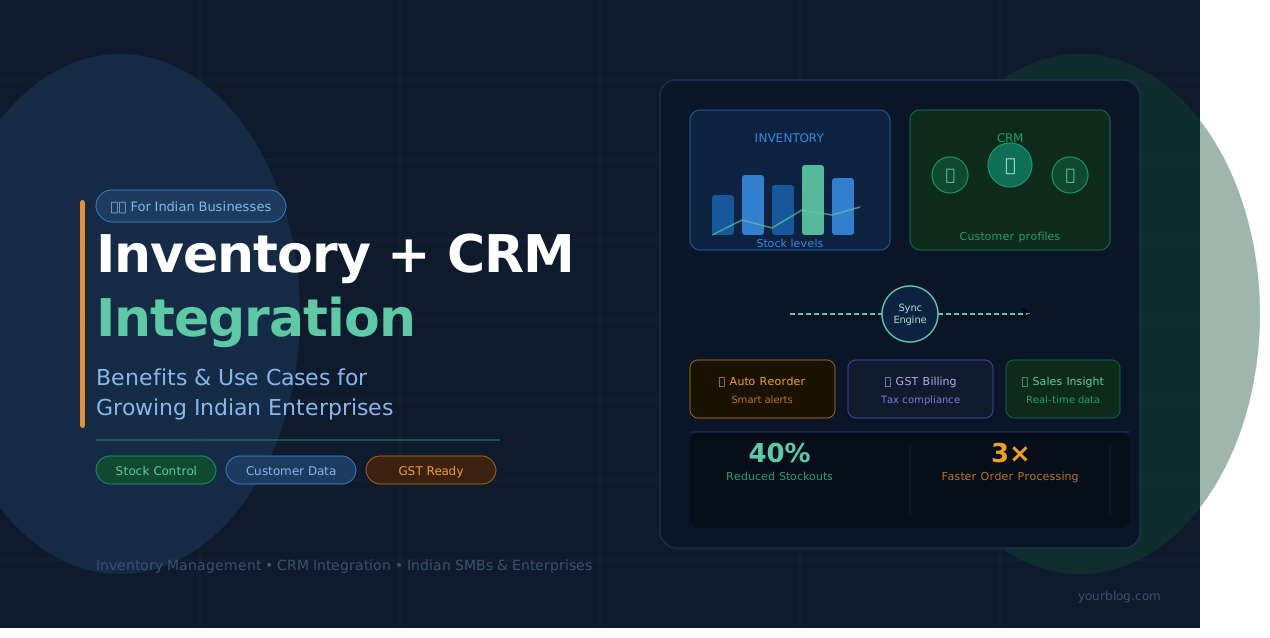
Best inventory management India tools fix this by making one number the source of truth visible to sales, accounts, and the warehouse at the same time.
What to Check Before You Choose
Here’s what actually matters when shortlisting:
- Mobile access can the owner check stock from a buyer meeting?
- Multi-godown support if you operate across cities
- GST billing built in, not a separate add-on
- WhatsApp alerts for low stock or order updates
- Pricing that doesn’t punish a 3-person team
That last point sounds obvious, but a lot of tools price like you’re a 50-person company even when you’re not.
Top 5 Cloud Inventory Software for 2026
1. Wortal
Wortal is built around how Indian trading and manufacturing businesses actually operate heavy WhatsApp use, multiple godowns, and a sales process that needs to reflect stock changes instantly.
Going back to that Surat trader: after switching to Wortal, every confirmed sale automatically adjusted the godown stock. His sales team could see “available” versus “committed” stock separately so nobody promised fabric that was already sold.
What stood out for him:
- Stock split by godown (Surat unit vs Bhiwandi warehouse)
- WhatsApp alerts when stock dropped below a set quantity
- Deal pipeline linked directly to inventory, so a confirmed order updates stock without manual entry
- Pricing at Rs.200/user/month (Standard) or Rs.350/user/month (Premium) see Wortal pricing plans for details
For anyone running a textile or trading business where buyers expect quick confirmations, this kind of cloud inventory software India setup removes the back-and-forth phone calls entirely.
2. Zoho Inventory
Zoho Inventory works well if you’re selling across Amazon, Flipkart, and your own site at the same time. The multi-channel sync is genuinely useful.
Where it gets tricky is the learning curve smaller teams without a dedicated person managing software often find the setup more involved than they expected. GST handling is solid once configured properly, though.
3. Vyapar
Vyapar started life as a billing app, and that’s still its strength. For a single shop owner who mainly needs billing plus basic stock counts, it’s simple enough to start using within a day.
The limitation shows up once you grow multi-location tracking and deeper reporting aren’t really its focus. Fine for stage one, less so for stage two.
4. Khatabook (Inventory Add-on)
Khatabook’s inventory feature is an extension of its ledger app, and it shows. It’s basic, but for a kirana store or a single-person trading setup just moving away from a paper register, it’s an easy first step.
Don’t expect multi-godown tracking or detailed analytics here that’s not what it’s built for.
5. Tally Prime (Cloud)
If your accountant already runs Tally Prime and most do the cloud version reduces friction since your existing data doesn’t need to move anywhere new.
The trade-off is cost and setup time. It tends to make more sense once a business has grown past the very small stage, both in terms of budget and complexity it can handle.
A Closer Look: The Surat Case

Here’s what actually changed for that trader after three months on Wortal:
🔴 Before: Stock checked manually every morning via phone calls to the godown manager. Order confirmations took anywhere from 30 minutes to a few hours.
🟢 After: Stock visible live on mobile. Order confirmations happened during the buyer call itself, because the numbers on screen matched what was physically in the godown.
He also noticed something he didn’t expect dead stock became obvious within weeks instead of during the yearly audit. Fabric that hadn’t moved in four months showed up clearly in reports, and he could finally clear it at a discount instead of writing it off later.
That’s where things usually go wrong without this kind of visibility slow-moving stock just sits there, quietly eating into working capital, until someone finally notices.
Book a Free Demo
See how Wortal can simplify your business and help you close more deals.


Key Takeaways
- Cloud inventory software India isn’t only for large companies even a 2-3 person trading firm benefits from real-time stock visibility.
- Pick tools that fit habits you already have, like WhatsApp, instead of forcing a new workflow.
- Multi-godown tracking matters if you operate across hubs like Surat, Bhiwandi, or Tiruppur.
- The best inventory management India tools connect inventory directly to sales and billing, not just stock counts.
- A good inventory software for small business should show “available vs committed” stock this alone prevents most overselling mistakes.
In Practical Terms Which One Fits You?
If you’re in textiles, trading, or manufacturing and your team lives on WhatsApp, Wortal is worth testing first the pricing makes it low-risk, and the godown-wise tracking solves a very specific pain point.
If multi-channel e-commerce is your main game, Zoho Inventory is stronger there. For a single shop just getting started, Vyapar or Khatabook are reasonable entry points. And if Tally is already central to your accounting, its cloud version avoids unnecessary switching.
Frequently Asked Questions
Cloud inventory software ke baare mein common sawaal aur unke jawab.