
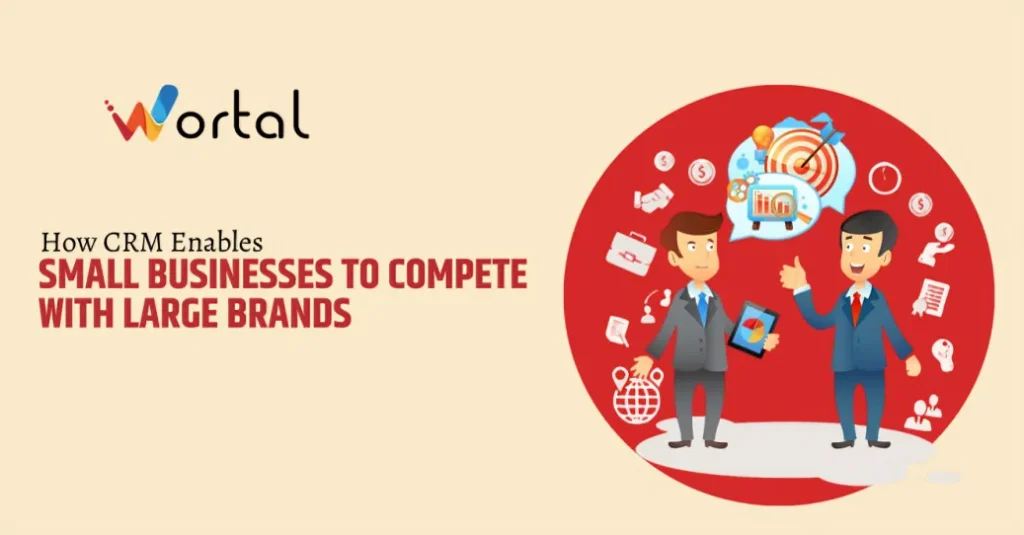

It is difficult for a Small business to compete with bigger companies or corporations that have more resources and brand names. But it does not look as lopsided. One of the biggest weapons that can assist is the Customer Relationship Management (CRM) system.
CRM technology, which was accessible to large enterprises alone, now extends to small enterprises. These applications are vital to small enterprises that are ready to achieve some edge over their competitors. Proper CRM can help even the smallest enterprises build good customer relationships, enhance sales strategy, and develop to the level of large enterprises.
Understanding CRM
A CRM system is computer software used to manage and analyse customer interactions and data as they move along the customer journey with your business. A CRM system organises small businesses’ contacts, leads, sales, and customer service. This is how it can assist:
Centralised Customer Data: No more missing notes or separate spreadsheets. A CRM holds all the customer data in a single location. This would enable businesses to learn about customers’ needs and wants better.
Better Customer Relationships: Through monitoring interactions and likes, small businesses can tailor communication and provide personalised solutions. This enhances relationships and boosts loyalty.
Efficient Sales Procedures: CRM software automates standard procedures such as lead tracking, follow-ups, and sales reports. Salespeople are able to concentrate on closing sales.
Better Customer Service: CRM software avails customers’ history and details instantly. This enables faster problem-solving and superior service.
Informed Decisions: CRM software gives valuable information regarding customer behaviour and sales patterns. This enables small businesses to make intelligent decisions regarding their sales and marketing strategies.
Getting a Competitive Edge using CRM
Why does a CRM assist small businesses in competing with well-established brands? Here are the main points:
1. Personalised Customer Experiences:
Mass marketing, which is generally used by large brands, lacks a personal touch. Small businesses can use CRM data to create customised experiences. By tracking customers’ behaviour and purchasing habits, they can tailor communications and offers to individual needs. This strategy makes the customer feel special and enhances loyalty. For example, a small specialty store can provide customised recommendations based on customers’ past purchases – something large stores are not so easily able to do.
2. Successful Sales Strategy and Management:
A well-defined sales strategy is critical to any firm, particularly small firms with limited capital. CRM technology enables lead recording, sales pipeline tracking, and sales forecasting. This enables the small firm to concentrate on the most promising lead, refine their sales approaches, and optimise their return on investment. The analysis of the sales funnel through CRM enables the identification of bottlenecks and enhancing the customer experience.
3. Enhanced Customer Service and Retention:
Exceptional customer service is what distinguishes small businesses. CRM software enables timely and personalised service, resulting in enhanced customer satisfaction and retention. Companies can monitor customer interactions to see where they should get better and when problems might occur. For instance, a bakery in the local area can use CRM to check up on complaints and respond quickly, gaining a good reputation for quality service. To retain existing customers is typically less expensive than getting new customers, and a CRM can assist in creating loyalty.
4. Successful Marketing and Lead Generation:
CRM software could be integrated with marketing software to automate campaigns and monitor their performance. This enables small businesses to market better and create high-quality leads. They can find profitable customer segments and customise marketing messages based on analysing customer data. For example, a small web shop can segment customers based on browsing history and send targeted emails using CRM data.
5. Efficiency through Automation:
Automation is also one of the core features of today’s CRM systems. It makes work easier, saves time, and minimises errors. Small companies can automate follow-up mailings, report generation, and customer account alerts. This enables employees to concentrate on more valuable tasks, such as relationship building and selling. Automated workflows mean that no potential customer is left behind. Automated reports can also give managers important metrics without interference.
6. Scalability and Growth:
As small businesses expand, they are able to hold more data and customers. A CRM system offers an expandable solution that adjusts to evolving needs. CRM assists business companies in handling growth without being overwhelmed by centralised information and automated processes. It is a platform for growth, enabling small businesses to expand while remaining customer-focused.
7. Data-Driven Insights:
CRM software offers decision-making data. Small businesses examining customer data enable them to find trends and opportunities. They can improve strategies and remain competitive through the use of data. Finding purchasing trends using CRM enables improved control over inventory.
How to Choose a Right CRM System for Your Small Business
Having an effective CRM system is crucial when it comes to making your business function more efficiently and allowing for closer connections with your clients. Among some key considerations in selecting yours, some are presented below:
- Ease of Use: Select a CRM that is easy to use. A minimalist interface and uncomplicated navigation will have your employees learning it within minutes. Select features like drag-and-drop, customisable dashboards, and clear instructions to make it easier.
- Scalability: Your CRM must grow as your business expands. Select a CRM that will accommodate more users and information without losing any performance. It must allow you to add additional features when your business requires them.
- Integration: Your CRM should be easily integrated with the applications and software that you currently employ. They consist of email services, marketing software, online sales software, and accounting packages. The integration will make your operations smooth and minimise data silos.
- Features: Different companies require different things, so consider what features are most essential to you. Some of the most important features may be contact management, lead tracking, reporting, workflow automation, and customer support tools. List the required features and examine how each CRM addresses these requirements.
- Cost: Be mindful of your budget when choosing a CRM. Look at the overall cost, including monthly charges, setup fees, and any other expenses for additional functionality or integration. Choose a CRM that is within your budget but will still provide you with meaningful benefits such as increased sales and increased customer engagement.
By concentrating on these aspects, you might be able to select a CRM that suits your business requirements, improves productivity, and assists you in growing in the long run.
Conclusion
Small businesses have to make the most of their resources in the competitive market today. An essential tool for this is a Customer Relationship Management (CRM) system. Through the effective utilisation of CRM, small businesses are able to create more intimate relationships with customers. This results in increased loyalty from customers and allows businesses to know what their customers need.
Personalisation is a necessity in the modern market. Through the application of information from CRM systems, small businesses are able to tailor their marketing and communication to suit individual customer needs. This builds a more interactive experience, enhancing customer satisfaction and driving repeat business and referrals.
CRM software also enhances customer service. With the easy access to customer data, companies can respond promptly to questions and complaints, enhancing their image. Decision-making based on data enables small companies to identify trends and areas to improve and allocate resources effectively, keeping them competitive.
Wortal CRM gives you such competitive advantage. Want to learn more about Wortal CRM, and how it can help your brand or business grow? Sign up for a free trial today to explore more about Wortal CRM.