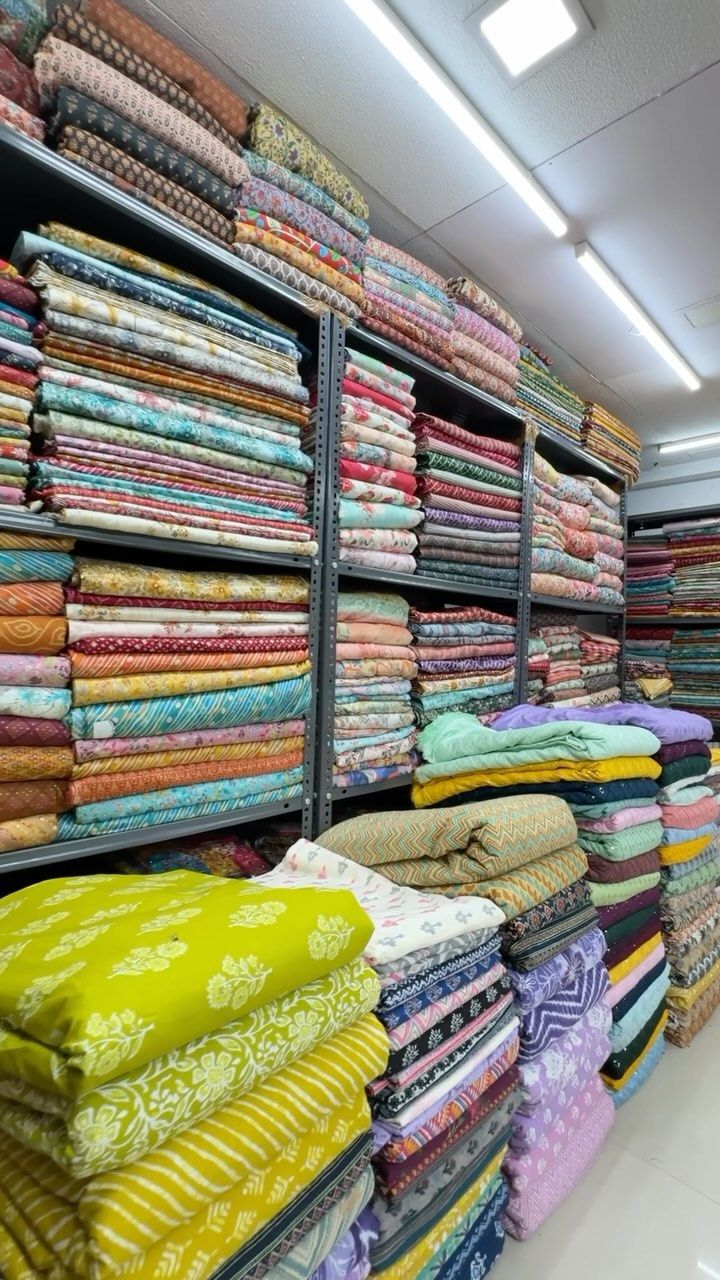



Walk into any fabric market in Surat, from Ring Road to Sahara Darwaja, and you’ll see the same scene. A trader on the phone, a register open on the counter, and three WhatsApp chats pinging at once. Someone’s shouting a lot number across the shop. Somebody else is double-checking whether the 500-meter georgette order for a Bhiwandi buyer already went out or not.
This is not a small-shop problem. I’ve seen traders doing 40 lakh a month in turnover still running orders on Excel sheets and memory. The business has scaled. The system behind it hasn’t.
That gap is exactly why textile order management software Surat businesses are switching to has become such a hot topic in trade groups and WhatsApp forums this year. It’s not a fancy upgrade. It’s damage control.
The real cost of manual order tracking
Here’s what actually matters: every order that gets mismanaged doesn’t just cost time. It costs trust.
A Surat saree wholesaler I know lost a repeat buyer in Kolkata over something embarrassingly small – the wrong lot number got dispatched because two orders with similar designs got mixed up in the register. The buyer wasn’t angry about the mistake. He was angry that it took four days to even figure out what went wrong.
That’s the pattern. Most people ignore this part of the business until it bites them:
- Orders booked verbally and written down later, often wrong
- No single place to check what’s confirmed, what’s pending, what’s dispatched
- Stock numbers that exist in three different registers, none matching
- Payment follow-ups that depend entirely on someone remembering to call
None of this shows up as a “loss” in the account books. It shows up as slower growth, buyers who quietly move to someone else, and owners who feel like they’re always firefighting instead of running a business.
Why saree and textile trading is uniquely hard to manage
Order management in textile isn’t like order management in, say, electronics or FMCG. A shirt supplier deals with SKUs that are identical, boxed, barcoded. A saree trader deals with:
- Lot numbers that change with every dyeing batch
- Shade variations within the same design, sometimes not visible to the naked eye
- Buyers who order by design number plus preferred shade and expect exact matching
- Seasonal spikes – wedding season, festival season – where order volume triples in weeks
- A mix of wholesale, semi-wholesale, and retail counter sales happening from the same stock
This is why a generic inventory tool built for a general store never really works for textile. An order management system for saree traders Surat businesses actually need has to understand lot-and-shade tracking as a core feature, not an afterthought. If your software can’t tell you which lot went to which buyer, you’re one complaint away from a returned consignment.
I’ve watched traders try to force generic billing software into this role. It works for a few weeks, then someone books an order against the wrong lot, and everyone’s back to double-checking manually anyway.
What a proper order management flow actually looks like
Here’s the flow that works, and it’s simpler than most traders expect once it’s set up right:

The diagram above shows it end to end – inquiry comes in over WhatsApp or a call, gets booked with the exact design and lot detail, checked against real stock in the godown, then either picked or sent for production if it’s a fresh order. From there it moves to dispatch and billing, and payment tracking runs alongside until the invoice is cleared.
The part traders usually skip is the stock-check step. In practical terms, that’s the step that prevents the Kolkata-lot-mixup problem I mentioned earlier. If your system checks real godown stock at the moment of booking – not stock as it was three days ago – you stop over-promising material you don’t actually have.
Book a Free Demo
See how Wortal can simplify your business and help you close more deals.


Where the time actually goes (and where it stops going)
I asked a few traders to track their week honestly – not what they thought they spent, but what they actually spent – before and after moving to proper software. The chart above tells the story better than I can in words. Order entry alone was eating 6 hours a week on paper and phone calls. Stock matching, another 5. Billing, another 4. Payment follow-up, a slow steady 5 hours of chasing.
Add it up and you get roughly 20 hours a week – half a working week – spent just moving information around, not actually selling. That’s the real issue. Traders think their bottleneck is sales. It’s usually operations.
What good textile wholesale order management software actually needs
If you’re evaluating options, don’t get distracted by flashy dashboards. Ask about these specifically:
Lot and shade level stock tracking – Every unit of stock should be traceable to its lot. Not just “500 meters georgette in stock” but “500 meters, lot 214, shade B, godown 2.”
WhatsApp-first order confirmation – Your buyers aren’t emailing you purchase orders. They’re sending a voice note or a text. Good textile wholesale order management software India vendors now build WhatsApp triggers directly into the order flow – confirmation, invoice, and dispatch update, all automated.
One-click billing with GST compliance – E-invoice and e-way bill generation shouldn’t be a separate task someone does at month-end. It should happen the moment an order is marked dispatched.
Outstanding and follow-up visibility – A dashboard that shows who owes what, and for how long, changes collection behavior almost overnight. Traders stop being embarrassed to ask for payment because the number is right there, not a guess.
Multi-branch and multi-business support – Many Surat traders run more than one firm, sometimes from the same godown. The software needs to separate books without separating operations.
This is exactly the gap Wortal was built to close for SMB traders – it isn’t trying to be a generic CRM with textile features bolted on. Lead capture, order booking, WhatsApp automation, and inventory visibility sit in one workflow, so the order desk and the sales side aren’t running on two different systems that never talk to each other.
A real example: how a Sahara Darwaja trader fixed his dispatch delays

A mid-sized saree wholesaler near Sahara Darwaja was running three counters and a small godown team. His biggest complaint wasn’t sales – he had steady repeat business from Nagpur and Indore buyers. His problem was dispatch delays. Orders confirmed on Monday were sometimes leaving the godown on Thursday, and buyers were noticing.
When we dug into it, the delay wasn’t in production. It was in the gap between “order booked” and “godown told to pick.” His salesmen were writing orders in a notebook, and the godown team found out only when someone physically walked over and told them – sometimes a full day later.
He moved his order booking to a shared system where a confirmed order instantly showed up on the godown side, tagged with the exact lot required. No more walking notes across the shop floor. Dispatch time dropped from an average of three days to same-day or next-day for in-stock orders. His Indore buyer, who’d started hinting about switching suppliers, became his most consistent repeat client again within two months.
Nothing about this fix was complicated. It was just closing the gap between “someone knows” and “the system knows.”
Key takeaways for traders thinking about switching
- Don’t buy generic billing software and expect it to handle lot-and-shade tracking – it won’t
- Your order management system for saree traders Surat market needs must include WhatsApp as a first-class channel, not a bolt-on
- Track your actual weekly hours on order tasks before deciding – most traders underestimate the drain
- Multi-branch support matters more than people think, especially with family-run firms splitting operations
- Payment follow-up automation pays for the software within the first quarter for most mid-sized traders
Frequently Asked Questions
Straight, honest answers to the questions traders ask most before getting started.
Honestly, smaller traders benefit more, not less. Big firms often already have a person dedicated to tracking orders. A small trader is usually doing it themselves between customer calls, which is exactly when mistakes happen.
Yes, and you should. The point isn’t to replace WhatsApp — your buyers won’t change how they communicate just because you got new software. The point is to connect WhatsApp to your booking and billing so nothing falls through the gap between the two.
In my experience, about two to three weeks for the sales side, a bit longer for godown staff who aren’t used to typing things in. The trick is starting with just order booking and stock check first, then adding billing and follow-up once that habit sticks.
A rough starting inventory is fine. Most traders find that the software itself exposes the mess (duplicate lots, wrong quantities) within the first few weeks, and it gets cleaned up naturally as real orders move through it.