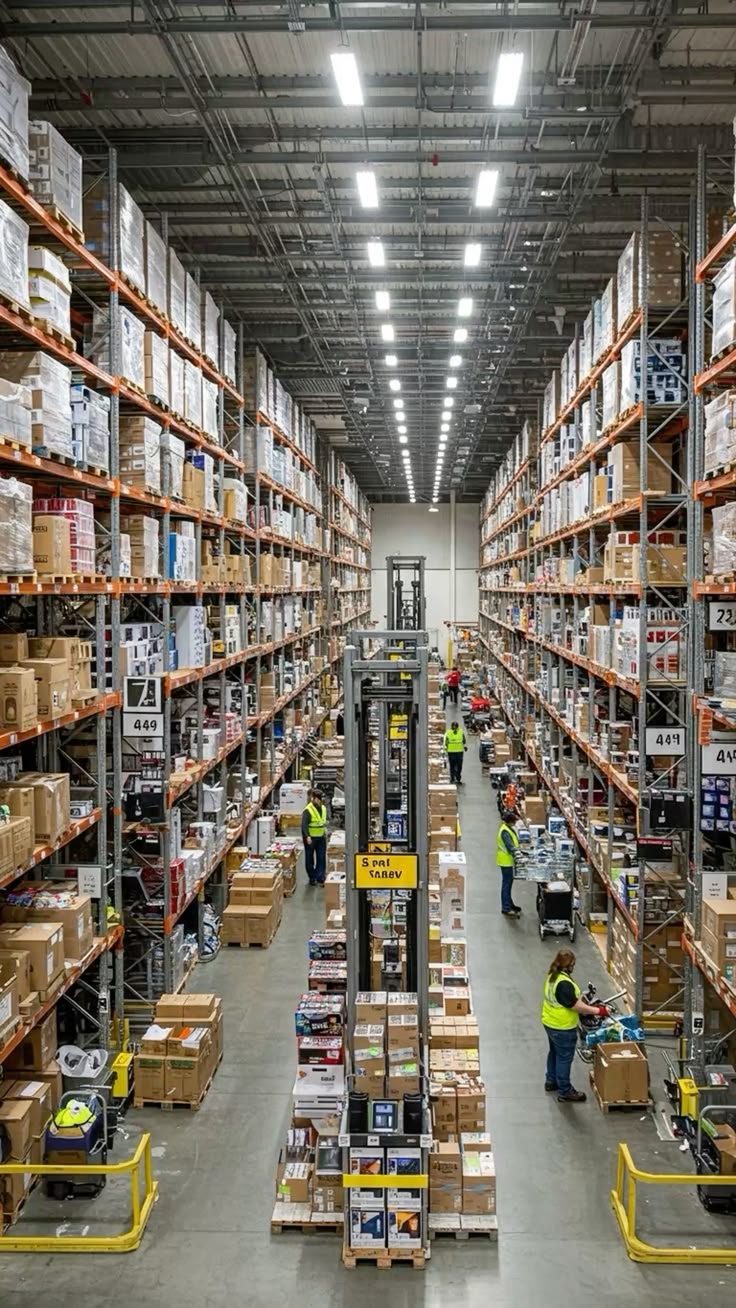


Running an ecommerce business in India is not as simple as listing products and waiting for orders. The real chaos starts when you’re selling on Meesho, Amazon, and your own website simultaneously – and you have no idea which warehouse has stock, which order is delayed, and why three customers just got a cancellation email.
That’s exactly where most small and mid-sized ecommerce businesses break down.
The good news? The right best ecommerce inventory management software India can fix most of this. Not all of it – but a lot. This guide is for business owners who are tired of managing stock on Excel sheets and WhatsApp forwards.
Why Indian Ecommerce Businesses Struggle With Inventory
Most businesses figure out inventory management the hard way – after a big festival sale goes wrong.
Think about a clothing brand in Surat that’s selling through Flipkart, their own Shopify store, and a local retailer. During Navratri, they oversell a trending ethnic set because their stock count on Flipkart didn’t sync with what was already committed to the retailer. Now they’re dealing with cancellations, bad reviews, and a return request.
This isn’t rare. It’s one of the most common problems for growing ecommerce brands in India, especially those using multi-channel inventory management systems without proper synchronisation.
The real issue is that most business owners delay investing in e-commerce stock management tools until the damage is already done. By then, they’ve lost customers they can’t win back.
What to Look for in Ecommerce Inventory Software
Before jumping to software names, understand what you actually need. Features that sound impressive in a demo often don’t matter in daily operations.
Here’s what actually matters:
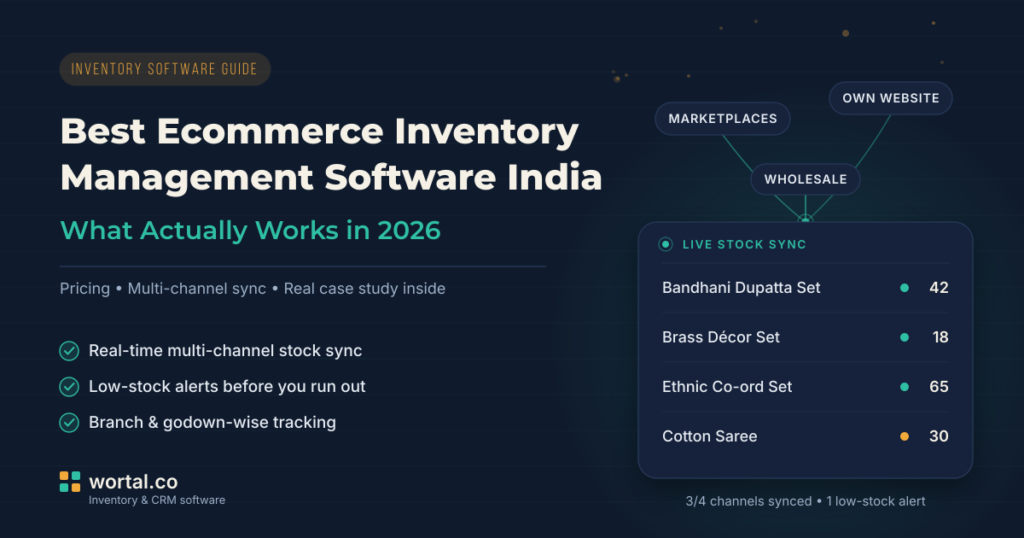
- Real-time stock sync across all sales channels
- Low stock alerts before you run out, not after
- Multi-location or multi-godown tracking
- Order and return management without manual entries
- Reports that are readable, not just downloadable
If a tool ticks these boxes and your team can figure it out without a three-day training session, you’re on the right track.
Best Inventory Management Software India: Honest Breakdown
1. Wortal Nexgen – Built for Indian SMBs
Wortal is one of the more practical choices for small and mid-sized ecommerce businesses in India, especially those managing multiple product lines or operating across different locations.
What makes it worth considering is that it isn’t built like a generic global SaaS tool. The best ecommerce inventory management software India buyers need should understand how Indian businesses actually operate – with godowns spread across cities, credit-heavy supplier relationships, and the need to track stock not just by quantity but by lot or batch.
Wortal covers:
- Multi-channel inventory management system that syncs across sales platforms
- E-commerce stock management tools that track low stock in real time
- Employee and task management bundled into the same system
- WhatsApp and email automation for order updates and follow-ups
For a textile accessories brand moving stock between Surat, Mumbai, and Delhi, having one system that shows exactly where each SKU is – without calling the warehouse manager at 11 PM – is genuinely useful.
Pricing starts at Rs.200/user/month (Standard) and Rs.350/user/month (Premium), which is reasonable for what you get.
2. Unicommerce
Unicommerce is probably the most well-known name in ecommerce inventory management software in India. It integrates well with Flipkart, Amazon, Myntra, and other major Indian marketplaces.
It works best for businesses that are already doing decent volume and need solid marketplace syncing. The learning curve is higher than most, and the interface isn’t the most intuitive – but if you’re moving thousands of orders a month, it handles that load well.
3. Zoho Inventory
Zoho Inventory is a decent starting point for businesses already using Zoho’s ecosystem. It’s a solid multi-channel inventory management system for small operations with moderate order volumes.
The limitation is that it’s built for a broad international audience. Some features feel generic for Indian businesses – particularly around GST-based invoicing and local compliance requirements. That said, it’s affordable and relatively easy to set up.
4. Increff
Increff targets mid-to-large ecommerce operations, particularly in fashion and apparel. It’s one of the more sophisticated e-commerce stock management tools available in India, with strong demand forecasting and warehouse management features.
Not ideal for very small businesses – the pricing and complexity reflect that it’s built for brands with real scale.
Quick Comparison: Best Ecommerce Inventory Management Software India
| Software | Best For | Key Highlight | Starting Price |
|---|---|---|---|
| Wortal | Indian SMBs, multi-location sellers | Multi-channel sync + WhatsApp automation + CRM in one | Rs.200/user/month |
| Unicommerce | Mid-to-large marketplace sellers | Deep Flipkart, Amazon, Myntra integration | Custom pricing |
| Zoho Inventory | Small Business, Zoho Users | Easy setup, GST friendly billing | Free tier available / Rs.1,799/month (paid) |
| Increff | Fashion and apparel brands with scale | Demand forecasting + advanced warehouse management | Custom pricing |
| Vyapar | Very small/offline first businesses | GST billing + basic stock tracking | Rs.1,999/year (approx) |
Book a Free Demo
See how Wortal can simplify your business and help you close more deals.


Multi-Channel Selling: The Part Most People Ignore
Here’s what most sellers underestimate: selling on multiple platforms isn’t the problem. Not syncing your inventory across them is.
A home décor brand in Jaipur was selling handmade brass items on Amazon, Etsy, and their own website. Because their multi-channel inventory management system wasn’t synced, they’d regularly oversell items that were one-of-a-kind. Every week there were customer complaints and manual refunds.
Once they shifted to a system where all channels pulled from the same live stock count, order cancellations dropped by nearly 60% in two months.
That’s not a product improvement. That’s just better ecommerce inventory management software doing its job.
⚠️ The Problem Nobody Talked About Out Loud
Every Monday, Deepak would manually update stock counts across all channels. By Wednesday, those numbers were already wrong, because warehouse dispatches, customer returns, and new supplier arrivals were happening in between, and nobody was updating the master sheet in real time.
During the Diwali season in October 2023, they listed 85 units of a fast-moving bandhani dupatta set on Amazon. The actual available stock at that point? Only 40 units. The rest were either committed to a wholesale buyer or stuck in transit from their fabric supplier in Bhiwandi.
What followed was exactly what you’d expect: 45 Amazon orders cancelled within 48 hours, a hit to their seller rating, two delayed wholesale shipments, and Deepak spending an entire week on damage control instead of his actual job.
🔄 What They Changed
After the Diwali incident, owner Meena Riya decided the Excel approach had to go. They moved to a proper multi-channel inventory management system that synced stock across Amazon, their Shopify store, and a separate wholesale order tracker.
A few things they specifically needed:
- Stock updates that happened automatically when an order was placed on any channel
- Low-stock alerts before they hit zero, not after
- A single dashboard showing what was available, what was reserved, and what was in transit
- WhatsApp notifications to buyers when their order shipped
They didn’t need the most advanced software in the market. They needed something that fit how their team already worked, without a steep learning curve.
📈 What Actually Improved
Within the first six weeks of switching systems, a few things changed noticeably. Overselling dropped to near zero, since stock was syncing in real time across channels and the gap between “listed quantity” and “actual available stock” closed almost entirely.
Deepak’s Monday ritual disappeared. No more manual sheet updates, the system handled sync automatically, freeing up roughly 8–10 hours a week previously spent on reconciliation.
Wholesale coordination also got cleaner. When a buyer from Ahmedabad called asking about stock availability for a particular design, Deepak could give a live answer instead of saying “let me check and call you back.”
🎯 What This Actually Tells Us
Riya Garments isn’t a tech company. Meena didn’t have a background in operations or supply chain. She ran a garment business the way most people do, on instinct, relationships, and a lot of hard work.
The shift wasn’t about buying expensive software. It was about accepting that a growing business with multiple sales channels can’t survive on manual tracking. The best ecommerce inventory management software Indian businesses like hers need isn’t necessarily the most feature-heavy one. It’s the one that gets used consistently by the actual team on the ground.
That’s the part most articles skip over: the software matters less than whether the team actually uses it, every single day, without going back to the old habit of a shared Excel sheet.
Key Takeaways Before You Decide
- Don’t choose the best ecommerce inventory management software India based on feature lists alone. Choose based on how your team will actually use it daily.
- If you’re selling across more than two platforms, a multi-channel inventory management system isn’t optional – it’s essential.
- E-commerce stock management tools should ideally integrate with your billing and CRM so data doesn’t live in silos.
- Start with a free trial. Most decent platforms offer one. Run it during a busy week, not a slow one.
- Budget matters, but so does time. A cheaper tool that takes three hours of manual work daily isn’t actually cheaper.
Frequently Asked Questions
Is there good ecommerce inventory software for small Indian businesses with tight budgets?
Yes, there are a few. Wortal’s Standard plan at Rs.200/user/month covers most essentials for small operations. Zoho Inventory also has a free tier, though it’s limited. The key is not going for the cheapest option blindly – figure out which features you’ll actually use every week.
Can these tools handle GST-compliant billing too?
Some do, some don’t. Wortal and Zoho both have billing features that work within India’s GST framework. Unicommerce focuses more on marketplace syncing than billing. Worth checking before you commit.
How long does it usually take to set up inventory software?
Honestly, it depends on how messy your current data is. If your SKUs are clean and your supplier list is organized, setup can take a few days. If you’re importing data from five different Excel sheets – expect a week or two of cleanup work first.
Do I need separate software for CRM and inventory, or can one tool do both?
Separate tools are more common, but some platforms like Wortal are moving toward combining CRM, inventory, and sales management in one place. For small businesses, that kind of consolidation actually reduces confusion and cost.
What’s the biggest mistake people make when choosing inventory software?
Choosing based on the demo rather than a real test run. Software always looks great in demos. Ask for a trial, load your actual product data, and see how it handles your specific workflow. That’s the only real test.