

A real estate CRM is a system that pulls in enquiries from property portals like 99acres and MagicBricks, assigns them to the right agent, and tracks every call, site visit, and follow up until the deal closes or dies. It exists because portal leads move fast, a buyer who enquired about a 2BHK in Andheri at 11 AM is usually calling three other agencies by noon. Without a system tracking who owns that lead and what happened last, agencies lose deals not because their inventory was wrong, but because nobody called back in time.
That’s the real problem Mumbai’s brokerage market is dealing with right now. Portal leads are expensive, competitive, and short-lived. A real estate CRM isn’t a nice-to-have here, it’s what decides whether the money spent on 99acres and MagicBricks subscriptions actually turns into closed deals or just sits in someone’s WhatsApp inbox.
Quick Summary
This guide is for brokerage owners, sales heads, and independent agents in Mumbai who buy leads from 99acres and MagicBricks and are tired of losing them to slow follow up or messy spreadsheets. You’ll learn how a real estate CRM captures portal leads automatically, how agencies assign and track them, common mistakes that kill conversion, and a practical framework for choosing a system. There’s also a real-world style case study showing what changes when a Mumbai agency moves from manual tracking to a structured CRM setup.
Why Portal Leads Behave Differently From Referral Leads
Most agents in Mumbai grew up on referrals and walk-ins. Those leads are patient – a relative’s friend looking for a flat in Thane will wait a week for a callback.
Portal leads don’t work that way. Someone browsing 99acres at midnight is often comparing five listings across five different agencies in the same session. Industry data from property portals has repeatedly shown that leads contacted within the first five minutes convert at dramatically higher rates than leads contacted after thirty minutes. The gap only widens after an hour.
That’s where things usually go wrong. A lead comes in from MagicBricks, sits in an inbox or a shared Excel sheet, and by the time someone picks it up, the buyer has already spoken to a competing agency and mentally moved on.
What a Real Estate CRM Actually Does With Portal Leads
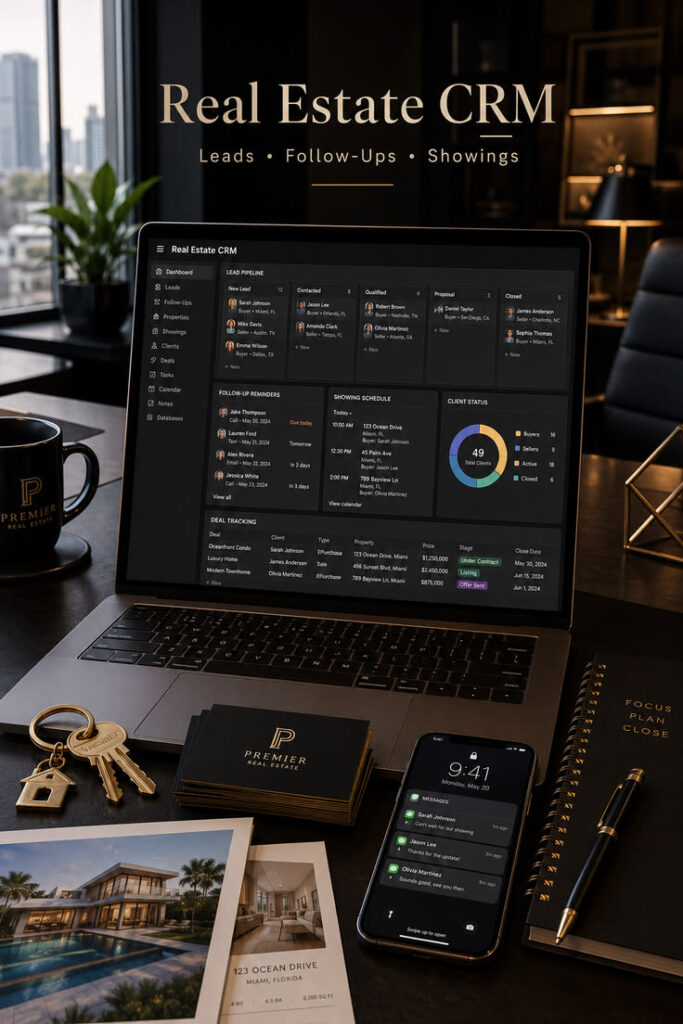
In practical terms, a real estate CRM does four things that a spreadsheet or a shared inbox cannot do reliably.
- Auto-captures lead the moment someone enquires on 99acres or MagicBricks, instead of relying on someone checking the portal dashboard manually.
- Assigns leads automatically to an available agent based on rules – locality, budget range, or round-robin so no lead sits unclaimed.
- Logs every interaction – call, WhatsApp message, site visit, offer made against that specific lead, so any agent picking it up later knows the full history.
- Flags stale leads that haven’t been followed up in a set number of hours, so managers can catch drops before the lead goes cold.
Pro Tip: If your current setup requires someone to manually copy paste lead details from a portal email into a tracker, you’re already losing minutes that matter. That manual gap is usually the single biggest reason portal lead conversion looks worse than it should.
Common Mistakes Mumbai Agencies Make With Portal Leads
One mistake many companies make is treating 99acres and MagicBricks leads exactly like walk-in leads, same follow-up cadence, same priority. Portal leads need faster first contact and more frequent nudges in the first 48 hours, because that’s the window competing agencies are also working.
Here are the mistakes that show up again and again across brokerages in the city:
- No single owner for a lead. Multiple agents call the same buyer, the buyer gets annoyed, and the agency looks disorganized.
- Leads tracked in personal notebooks or phones. When an agent leaves or takes a day off, that lead’s history leaves with them.
- No follow-up reminders. A promising lead from last Tuesday quietly disappears because nobody scheduled the next call.
- Mixing 99acres and MagicBricks leads with cold data. Portal leads are already warm, they need a different, faster approach than cold outreach.
- No visibility for the owner or sales head. Without a shared pipeline, management only finds out a deal was lost after the buyer books elsewhere.
| Factor | Spreadsheet / WhatsApp Tracking | Real Estate CRM |
|---|---|---|
| Lead capture from portals | Manual entry, delayed | Automatic, near-instant |
| First response time | Depends on who checks the inbox | Alerts agent immediately |
| Lead ownership | Often unclear, duplication risk | Assigned automatically, one owner |
| Follow-up tracking | Relies on memory or notes | System reminders and stage tracking |
| Visibility for management | Limited, after the fact | Real time pipeline view |
| Data on lost deals | Rarely recorded | Reason for loss captured, useful for review |
Expert Insight: The biggest difference isn’t the software itself – it’s that a CRM forces a process to exist. Even agencies that don’t use every feature see conversion improve simply because leads stop falling through cracks.
A Decision-Making Framework for Choosing a Real Estate CRM
When should you invest in a real estate CRM? Here’s a simple way to decide.
Ask these three questions:
- Are you buying leads from more than one portal (99acres, MagicBricks, Housing.com)? If yes, manual consolidation is already costing you time.
- Do you have more than two or three agents working leads? If yes, ownership and duplication problems are likely already happening.
- Can you currently tell, without asking anyone, how many leads from last week are still uncontacted? If the answer is no, that’s a visibility gap a CRM closes.
If you answered yes to two or more of these, the manual approach is probably costing more in lost deals than a CRM subscription would cost in fees.
Practical Tips for Getting the Most Out of Portal Lead Management
Business Tip: Set a hard internal rule- every 99acres or MagicBricks lead gets a first call attempt within 15 minutes during working hours. This single habit, backed by CRM alerts, fixes a large share of conversion problems on its own.
- Tag leads by portal source, so you can see whether 99acres leads or MagicBricks leads convert better for your specific inventory type.
- Record the reason when a deal is lost – budget mismatch, location, timing. Over a few months, this data tells you which listings attract weak-fit enquiries.
- Use WhatsApp integration where available. Mumbai buyers respond faster to WhatsApp than to calls during work hours.
- Review stale leads weekly as a team, not just individually, sometimes a colleague’s approach revives a lead that seemed dead.
A brokerage with eight agents working residential resale in the western suburbs was spending a fixed monthly budget on 99acres and MagicBricks leads. Leads landed in a shared email inbox, and agents picked them up when they had time. The owner noticed the enquiry volume was healthy, but closings hadn’t grown in over a year.
The agency moved to a CRM setup with automatic lead capture from both portals, round-robin assignment among available agents, and mandatory follow-up logging after every call.
It took about two weeks to get agents comfortable logging calls instead of relying on memory. The owner set a rule that leads unclaimed for more than 20 minutes would auto-reassign to the next available agent.
Within the first two months, average first response time dropped from over two hours to under fifteen minutes. The agency didn’t spend more on portal subscriptions, the same leads simply stopped going cold before anyone acted on them. Site visit bookings from portal leads rose noticeably, and the owner finally had a clear number for cost per closed deal by source.
The technology mattered less than the discipline it enforced. The CRM didn’t generate new leads, it stopped good leads from being wasted, which is where most of the agency’s losses were actually happening.
Agencies working across multiple portals and needing this kind of lead assignment, WhatsApp follow-up, and pipeline visibility often look at platforms like Wortal, which was built with lead management and sales pipeline tracking for exactly this kind of multi-agent, multi-source workflow in Indian SMB and real estate businesses.
Key Takeaways
- A real estate CRM captures 99acres and MagicBricks leads automatically instead of relying on manual checking.
- Portal leads convert best when contacted within minutes, not hours.
- Lack of a single lead owner is one of the most common reasons Mumbai agencies lose winnable deals.
- Manual tracking works for small teams but breaks down once more than two or three agents are involved.
- Tagging leads by source (99acres vs MagicBricks) reveals which portal actually performs for your inventory.
- Recording loss reasons builds data that improves targeting over time.
- A weekly team review of stale leads catches drops that individual agents miss.
- The value of a CRM is less about the software and more about the process it forces the team to follow.
Agencies that consistently convert portal leads well usually aren’t spending more on 99acres and MagicBricks, they’re just making sure every inquiry gets a fast, tracked, accountable follow-up.
It’s used to capture, assign, and track property leads including those from 99acres and MagicBricks so agents follow up on time and management can see the full pipeline instead of relying on individual memory or notebooks.
Most CRMs offer lead integration through the portal’s lead API or email parsing, so new enquiries flow into the CRM automatically instead of needing manual entry from a portal dashboard or email.
Yes, if leads come from multiple portals. Even small teams lose deals to slow follow-up. A CRM becomes essential once you cross three or four agents working the same lead pool.
Within the first 15-30 minutes during working hours. Buyers browsing 99acres or MagicBricks are often comparing several agencies at once, and early responders usually win the conversation.
It varies by locality and property type. Tracking source wise conversion in your CRM over a few months gives a far more reliable answer than general assumptions.
Yes, though the benefit is smaller. A single agent still gains from automated reminders and lead history, but the biggest gains show up once multiple people are handling leads together.
Yes. Automatic lead assignment gives each enquiry one clear owner, which stops the common problem of two agents calling the same person and confusing them.
Because buyers are usually enquiring on multiple listings and multiple agencies simultaneously. Once another agency responds first, attention shifts, and the delayed agency often gets ignored.
Basic setup with portal integration and assignment rules can be running within a few days. Getting the full team comfortable with consistent logging usually takes two to three weeks.
Leads get missed, followed up late, or duplicated across agents. Agencies typically don’t notice the loss directly, it just shows up as lower closings despite steady enquiry volume.