


If you’ve spent even a single season working in a textile hub like Surat, Tirupur, or Ludhiana, you know that moving fabric isn’t just about loading a truck. The real movement happens on paper-or increasingly, on a screen. I’ve seen seasoned businessmen lose sleep over a mismatched delivery note or a missing GST detail during a routine check. That’s why getting your textile challan format rules right is more than just compliance; it’s about keeping your sanity intact while your business scales.
A delivery challan is essentially the “permission slip” for your goods to travel without an immediate invoice. Whether you are sending grey fabric for dyeing or moving finished suits to a wholesaler, the challan is your primary defense against transit delays and legal headaches.
Book a Free Demo
See how Wortal can simplify your business and help you close more deals.


What Exactly is a Textile Delivery Challan?
In practical terms, a delivery challan is a document issued when goods are transported from one place to another but a sale hasn’t necessarily occurred yet. Think about job work. You send 500 meters of cotton to a printer. You aren’t “selling” it to them; you’re just moving it for processing.
Most people ignore this part: a challan isn’t a substitute for an invoice forever, but for that specific journey, it is the king of documents. If you aren’t using the Best Textile Challan Software, you’re probably manually typing these out, which is where the errors creep in.
Why You Can’t Just Use Any Random Slip
The textile industry is unique. We deal in meters, kilograms, “than” (rolls), and pieces-often all in the same shipment. A generic challan format usually fails here because it doesn’t account for the shrinkage or weight loss that happens during processing. Following specific textile challan format rules ensures that when your goods come back from the processor, the math actually adds up.
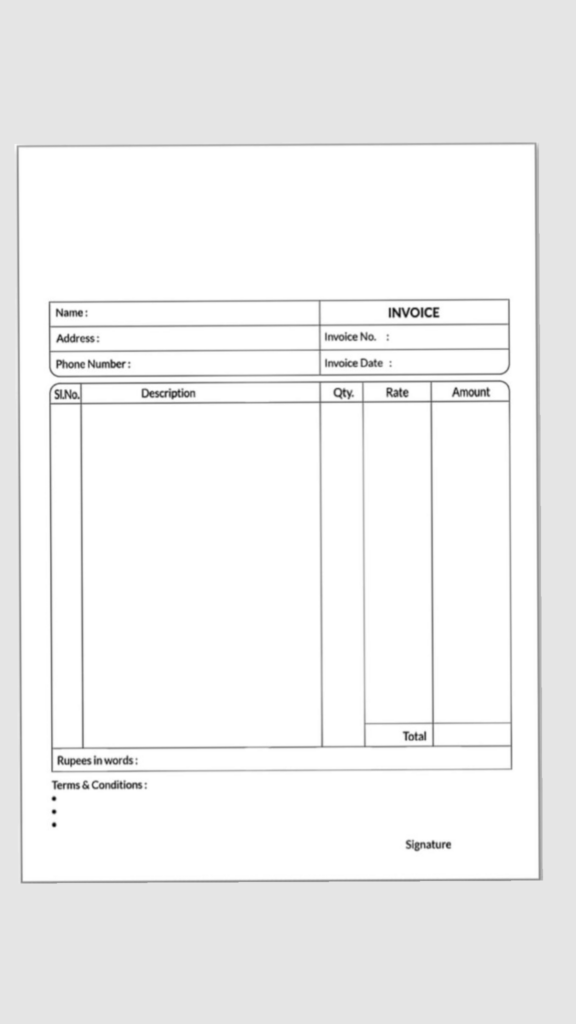
Essential Components of a Textile Challan Format
When you’re setting up your Textile Gst Billing Software, you need to ensure certain fields are non-negotiable. Here’s what actually matters:
- Consecutive Serial Numbering: Every challan must have a unique number. If you skip a number, an auditor will eventually ask why.
- Date of Dispatch: Not the date you printed it, but the day the truck actually leaves the gate.
- GSTIN of Both Parties: Your GST number and the receiver’s. This is the first thing a transit official looks for.
- HSN Code: This is where most things usually go wrong. Using the wrong HSN for “Grey Fabric” vs. “Processed Fabric” can lead to unnecessary fines.
- Description of Goods: Be specific. Instead of just “Fabric,” use “Cotton Cambric 60×60” or “Poly-Silk Scarf.”
The Ground Rules: Textile Challan Format Rules under GST
The real issue is that many small units think a “kacha” (informal) chit will work. It might-until it doesn’t. Under GST Rule 55, there are very clear mandates for moving goods via a challan.
When Can You Use a Challan?
- Supply of Liquid Gas: (Not usually relevant for us, unless you have a specialized boiler setup).
- Job Work: This is the big one. Sending yarn to a weaver or fabric to a dyer.
- Transport for Reasons Other Than Supply: Moving stock between your own warehouses.
- Goods Sent on Approval: Sending samples to a big retail buyer.
If you are using Cloud Challan Software For Textile Business, these rules are usually baked into the system. For instance, Wortal is designed to prompt you for a job-work declaration if the destination GSTIN is a registered job-worker.
The Three-Copy Rule
In the textile world, one copy is never enough. You need:
- Original for Consignee: The person receiving the goods.
- Duplicate for Transporter: To keep in the truck/tempo.
- Triplicate for Consignor: Your own record.
Moving to Digital: Why Manual Books are Dying
I remember walking into a processing house office and seeing stacks of carbon-copy books covered in blue ink and dust. It looked traditional, sure, but it was a nightmare to search through. When a client called to ask where their “Lycra Jersey” shipment was from three weeks ago, someone had to manually flip through pages for twenty minutes.
That’s why the Best Textile Challan Software has shifted the landscape. Here is why making the switch to Cloud Challan Software For Textile Business like Wortal is a necessity today:
- Real-time Stock Tracking: The moment you generate a challan for 200 rolls, your “Current Stock” should automatically reflect that those rolls are “In Transit.”
- Automated GST Compliance: Good Textile Gst Billing Software will validate the GSTIN of your customer instantly. No more “I think I typed the number wrong” excuses.
- Accessibility: If you are at a yarn market and need to check if a shipment reached the weaver, you can just check your phone.
Best Practices for Textile Business Owners
In practical terms, a document is only as good as the person filling it. Here are some “street-smart” tips I’ve gathered over the years:
1. Document the “Taka” or Roll Detail
Don’t just write “1000 meters.” Write “20 Rolls – Approx 50m each.” If one roll falls off the truck or gets “misplaced” at the processing house, you need to know exactly which one is missing. The Best Textile Challan Software allows you to scan barcodes for each roll, making this effortless.
2. Mention the “Process Type”
If you’re sending fabric for “Reactive Printing,” write it down. If it was supposed to be printed but the dyer mistakenly dyed it a solid color, your challan is your proof of instruction.
3. Track Returnable vs. Non-Returnable
Most textile challans are “Returnable” (Job work). But sometimes you send packing material or pallets that don’t come back. Use Textile Gst Billing Software that lets you flag the “Type of Movement” so you don’t have “ghost stock” sitting in your books.
Practical Example: A Day in the Life of a Fabric Merchant
Let’s look at “Mehta Textiles.” They buy 5,000 meters of grey cloth from a mill. They need to send it to a dyer, then to a printer, and finally back to their warehouse.
- Step 1: They generate a challan using Cloud Challan Software For Textile Business for 5,000 meters of grey cloth.
- Step 2: The dyer receives it. After dyeing, the weight might change. The dyer sends it to the printer with a new challan, referencing Mehta’s original challan number.
- Step 3: The printer finishes the job. Mehta Textiles now converts that final challan into a GST Invoice for their end customer.
Without following strict textile challan format rules, this chain of custody would break. Mehta would lose track of how much fabric is at the dyer vs. the printer. By using a robust Textile Gst Billing Software, Mehta sees the entire flow on a single dashboard.
Common Mistakes to Avoid
Even with the Best Textile Challan Software, human error can bite you.
- Incorrect Value: Even though a challan isn’t a bill, you must mention the “Approximate Value” for E-way bill purposes. If the value is over Rs.50,000 (in most states), you need an E-way bill along with that challan.
- Missing Signature: A challan without a “Received By” signature is just a piece of paper. Always ensure your driver brings back a signed and stamped copy.
- Fading Ink: If you’re still using old-school thermal printers for challans, the ink can fade in a hot truck. This is another reason why Cloud Challan Software For Textile Business is better-you can always re-print or share a PDF.
Key Takeaways for Your Business
Outward Movement
Day 1
Generate challan for raw materials/grey fabric. Ensure HSN and GSTIN are 100% accurate.
Processing Phase
Day 2-10
Goods stay at the job-worker’s site. Use your software to track ‘Stock with Others.’
Return/Conversion
Day 11
Goods return via a return-challan. Match quantities against the original dispatch.
Summary of Must-Have Features in Your Software
If you’re evaluating Wortal or any other Textile Gst Billing Software, check for these:
| Feature | Importance | Why? |
|---|---|---|
| Multi-Unit Support | Critical | Textile needs meters, Kgs, and Rolls simultaneously. |
| Job work Tracking | High | To keep track of “stock lying with third parties.” |
| Cloud Access | High | So you can check shipments from market or home. |
| E-way bill Integration | Medium | Saves time by generating both together. |
Frequently Asked Questions
Dashboard
Lead By Status
-
New (6%) 900
-
Assigned (8%) 1,200
-
Contact in Future (9%) 1,350
-
In Process (15%) 2,250
-
Converted (33%) 4,950
-
Dead (10%) 1,500

Wortal App
Manage Your Business. On the Go.
Create quotations, manage leads, follow-ups and more anytime, anywhere.
Download App Now
Continue reading

How to Follow Up with Textile Buyers Without Being Annoying
You sent a quote. They said they’d get back to you. That was two weeks...

How Does CRM Software Help in Customer Retention?
Customer retention is a critical factor for any business aiming for long-term success. While acquiring...

DPIIT Registration for Startups: Eligibility, Benefits, Documents & Step-by-Step Guide
DPIIT registration, more accurately called DPIIT startup recognition, is an official recognition given by the...
Wortal CRM Bot
⚡ Powered by Meta APIStart your business automation journey with Wortal CRM
Book a free demo and discover how Wortal CRM simplifies your business