

What Are Startup India Schemes?
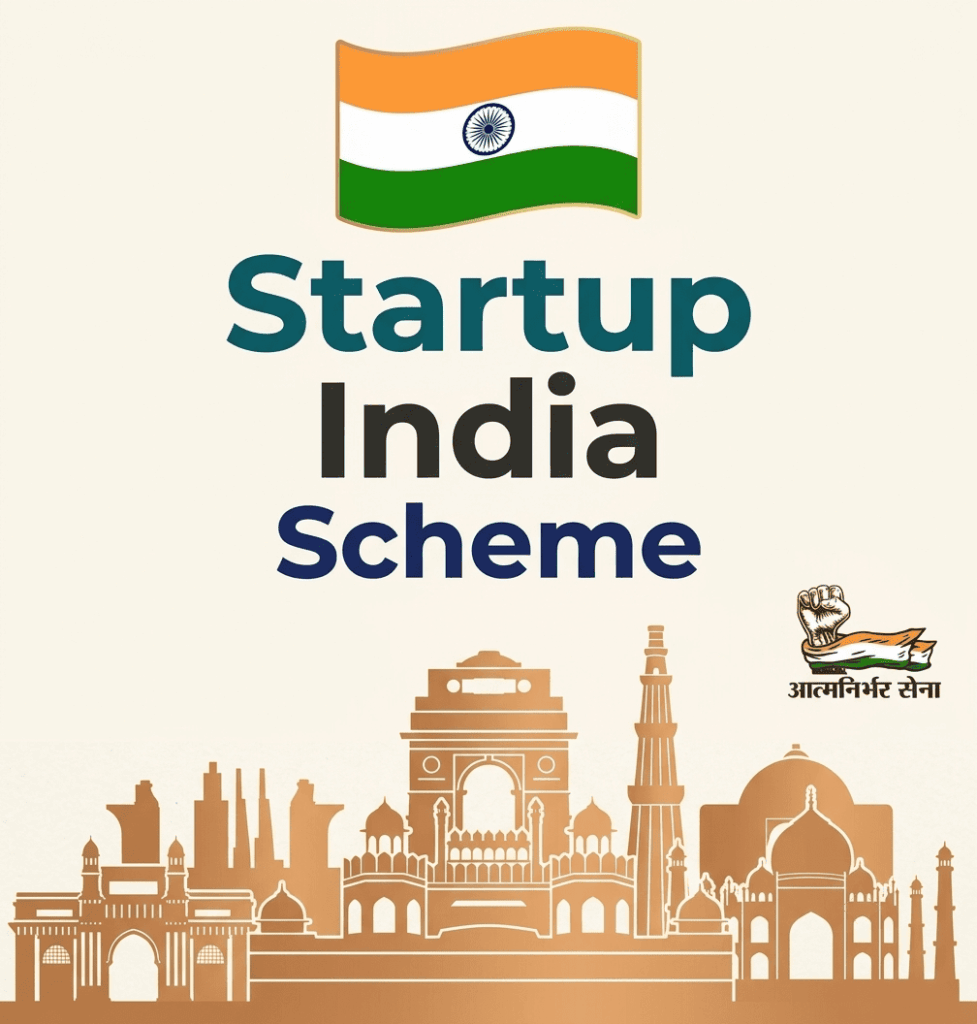
Startup India Schemes are government backed programs designed to support eligible Indian startups with funding, credit, intellectual property support, incubation, market access, tax related benefits and other forms of assistance. Startup India is a Government of India initiative launched in 2016 and is administered through the Department for Promotion of Industry and Internal Trade (DPIIT).
The key point is that there is no single “Startup India loan” or one universal grant that every new business receives. Different Government Schemes For Startups are designed for different stages, sectors and requirements.
For example, an early stage technology startup may look for seed funding, while a startup that already has customers may need working capital or venture debt. A textile-tech startup may have access to sector specific programs that are not relevant to a fintech company.
That is why understanding the Startup India Government Schemes ecosystem is more useful than simply looking for “government funding for startups”.
Quick Summary
This guide explains:
- What Startup India is and who qualifies as a startup
- Current DPIIT recognition eligibility
- Major Startup India Schemes for grants, equity and credit
- How the Startup India Seed Fund Scheme works
- How the Credit Guarantee Scheme for Startups works
- How Fund of Funds support reaches startups
- Tax, IP and government procurement benefits
- How to apply for DPIIT recognition
- Which scheme may fit different startup stages
- Common mistakes founders make while applying
This guide is mainly useful for founders, entrepreneurs, technology startups, manufacturers, SaaS companies, D2C brands, B2B businesses and other growing companies in India.
What Is DPIIT Startup Recognition?
DPIIT recognition is an official recognition given to eligible startups under the Startup India framework.
It matters because several benefits and programs are available specifically to DPIIT recognised startups. However, getting recognition does not mean that the government automatically gives the startup funding.
Think of DPIIT recognition as an important eligibility gateway.
Once recognised, a startup can explore relevant Government Schemes For Startups, tax related benefits, IP support, public procurement opportunities and funding programs for which it separately meets the conditions.
As of 2026, the Startup India portal states that a normal startup can generally qualify for recognition if it has existed for up to 10 years and its turnover has not exceeded Rs.200 crore in any financial year. DeepTech startups have separate limits of up to 20 years and Rs.300 crore turnover, subject to the applicable criteria.
Who Is Eligible for Startup India Recognition?
The current recognition framework is broader than simply being a newly incorporated company.
Generally, the entity must satisfy conditions relating to:
| Eligibility Area | Current Position |
|---|---|
| Entity type | Private Limited Company, LLP, registered partnership firm or cooperative society |
| Age | Up to 10 years for normal startups |
| DeepTech | Up to 20 years, subject to DeepTech criteria |
| Turnover | Up to Rs.200 crore for normal startups |
| DeepTech turnover | Up to Rs.300 crore |
| Innovation | Innovation, development or improvement of products, processes or services |
| Scalability | Potential for employment generation or wealth creation |
| Existing business | Cannot simply be formed by splitting/reconstructing an existing business |
The recognition application is submitted online through the National Single Window System (NSWS). Startup India specifically states that the government has not appointed private agencies or franchises to issue DPIIT recognition certificates and does not charge a fee for the certificate.
Expert Insight:
Don’t apply just because someone tells you, “Every new company is a startup.” The recognition criteria are based on the nature, structure and activities of the entity.
Major Startup India Schemes You Should Know
There are many Startup India Government Schemes, and not all of them provide direct cash to founders.
The June 2026 Startup India government schemes playbook covers more than 65 schemes and programs across funding, incubation, credit, intellectual property, market access and sector specific support.
Here are the schemes founders should understand first:
| Scheme / Program | Main Support | Best Suited For |
|---|---|---|
| Startup India Seed Fund Scheme | Grant + debt/convertible support | Very early stage startups |
| Credit Guarantee Scheme for Startups | Credit guarantee | Startups seeking debt |
| Startup India Fund of Funds 2.0 | Indirect equity funding | Growing/scaling startups |
| Fund of Funds for Startups | Indirect VC funding | Startups raising equity |
| SIPP | IP support | Patent/trademark-focused startups |
| GeM Startup Runway | Government market access | Startups selling to government |
| NIDHI programs | Grants/incubation | Technology-led startups |
| BIRAC programs | Grants/equity/incubation | Biotech startups |
| MeitY programs | Funding/incubation | Technology and digital startups |
| iDEX/ADITI | Defence innovation support | Defence-tech startups |
The right approach is not to apply to everything. First identify what the business actually needs.
Startup India Seed Fund Scheme
The Startup India Seed Fund Scheme, or SISFS, is one of the most relevant programs for early stage startups.
It is designed to help startups move through stages such as:
Idea
Proof of Concept
Prototype
Product Testing
Market Entry
Commercialisation
Eligible startups can receive:
- Up to Rs.20 lakh as a grant for proof of concept, prototype development or product trials
- Up to Rs.50 lakh as investment through convertible debentures, debt or debt linked instruments for market entry, commercialisation or scaling
The funding is provided through eligible incubators rather than simply being deposited into every applicant’s bank account.
Who Can Apply?
A startup generally needs to:
- Be DPIIT recognised.
- Have been incorporated not more than two years before applying.
- Have a business idea with market potential and scope for commercialisation and scaling.
- Use technology in its core product, service, business model, distribution model or methodology.
- Meet the scheme’s other eligibility conditions.
SISFS is sector agnostic, although the scheme gives preference to certain innovative sectors such as healthcare, agriculture, energy, textiles, financial inclusion and others.
Common Mistake:
A founder may have a good business idea but still fail to fit the scheme because the application does not clearly demonstrate the problem, technology, market opportunity and proposed milestones.
Credit Guarantee Scheme for Startups
Not every startup wants equity funding.
Sometimes the founder wants debt because they don’t want to dilute ownership.
That’s where the Credit Guarantee Scheme for Startups (CGSS) becomes relevant.
Under CGSS, the government provides credit guarantee support for loans extended to eligible DPIIT recognised startups through participating financial institutions. The revised framework has increased the maximum guarantee coverage limit from Rs.10 crore to Rs.20 crore per eligible borrower.
The scheme can cover forms of assistance such as:
- Venture debt
- Working capital
- Subordinated or mezzanine debt
- Debentures
- Optionally convertible debt
- Other eligible fund based and non fund based facilities
But here’s the part founders often misunderstand:
CGSS is not a direct government loan.
The guarantee supports eligible lenders. The lender still evaluates the startup under applicable lending and scheme requirements.
A startup should therefore prepare:
- Financial statements
- Business plan
- Cash flow projections
- Existing debt details
- Revenue information
- Repayment plan
- Details of the proposed use of funds
Fund of Funds: How Government Capital Reaches Startups
The Fund of Funds model works differently from a grant.
The government does not generally invest directly into your startup under the Fund of Funds structure.
Instead, government capital is committed to selected investment funds, and those funds invest in startups.
The newer Startup India Fund of Funds 2.0 has a Rs.10,000 crore corpus. It is implemented through SIDBI and provides capital to eligible SEBI registered Category I and Category II Alternative Investment Funds, which then invest in startups.
This distinction is important:
Government → AIF/VC Fund → Startup
not:
Government → Startup bank account
So if you’re a founder raising equity, the practical step is usually to identify suitable investors or funds participating in the ecosystem rather than looking for a direct government application for the Fund of Funds.
Tax Benefits Under Startup India
Tax benefits are another reason founders look at DPIIT recognition.
One well known provision is Section 80-IAC, under which eligible startups can potentially claim a 100% deduction of eligible profits for three consecutive financial years within the applicable period, subject to the statutory conditions and approval requirements.
Startup India states that 80-IAC is available to eligible DPIIT recognised startups meeting the applicable conditions, including requirements around entity type and incorporation.
Don’t treat this as an automatic “three-year tax holiday”.
The startup needs to qualify for the specific tax benefit and complete the required process.
Business Tip:
If your startup is approaching profitability, discuss the timing and eligibility of 80-IAC with your CA or tax advisor before assuming the benefit will automatically apply.
Intellectual Property Benefits
For technology, manufacturing, SaaS, biotech and product companies, intellectual property can become a major asset.
Startup India provides support under its intellectual property framework, including:
- Facilitators for IP applications
- Government bearing facilitator fees
- Fast tracking of patent applications
- 80% rebate in patent filing fees
- 50% rebate in trademark filing fees, subject to applicable rules
The startup generally remains responsible for statutory fees while the government bears the facilitator cost under the stated framework.
For example, a textile tech startup developing a new production technology should not wait until the business becomes large before thinking about IP protection.
Expert Insight:
If your competitive advantage depends on technology, product design, a process or a proprietary method, discuss IP protection early. Funding conversations are often easier when the founder can clearly explain what is actually proprietary.
Government Procurement Benefits
The government can also become a customer.
DPIIT recognised startups can participate in government procurement through platforms such as Government e Marketplace (GeM).
Startup India highlights GeM Startup Runway as a route for startups to reach government buyers. Recognised startups can receive exemptions from certain requirements such as prior experience, prior turnover and earnest money deposits, subject to applicable procurement conditions.
This can matter significantly for a B2B startup.
For example:
A SaaS company has only three years of operating history and cannot compete with a large vendor on historical turnover. A procurement relaxation may remove one barrier, but the startup still needs to meet the tender’s technical and quality requirements.
So recognition helps open the door. It does not guarantee the order.
Other Government Schemes Worth Exploring
The Government Schemes For Startups ecosystem goes well beyond the three major funding routes.
The June 2026 official Startup India playbook lists programs covering areas such as:
Technology Startups
Programs include MeitY’s SAMRIDH, GENESIS and TIDE 2.0.
Biotechnology
BIRAC programs such as BIG, SEED and other initiatives support different stages of biotech innovation.
Agriculture
Programs such as AgriSURE and RKVY’s Innovation and Agri Entrepreneurship Program are relevant to agritech and rural innovation.
Defence
iDEX, ADITI and the Technology Development Fund support different defence innovation requirements.
Space
IN-SPACe Seed Fund and other space related programs target eligible space technology ventures.
Textiles
The GREAT program is specifically listed for innovation and entrepreneurship in technical textiles.
Semiconductor and Electronics
Programs such as Chips to Startup (C2S) and the Design Linked Incentive scheme are relevant to eligible businesses in this ecosystem.
This is why searching only for “Startup India loan” can give founders an incomplete picture.
How to Choose the Right Startup Scheme
Use this simple decision framework:
The current Startup India playbook itself recommends selecting schemes based on the startup’s stage and type of support needed-such as grant, equity, loan, incubation or market access.
How to Apply for Startup India Recognition
The basic process is straightforward.
Step 1: Check eligibility
Confirm your entity type, age, turnover and innovation/scalability criteria.
Step 2: Prepare documents
Keep your incorporation or registration certificate and supporting information ready.
You may also need information about:
- Founders/directors/partners
- Business activity
- Product or service
- Innovation
- Scalability
- Funding received
- Website or pitch material
- Intellectual property
Step 3: Apply through NSWS
Create an account on the National Single Window System and add the “Registration as a Startup” approval under Central Approvals.
Step 4: Submit the application
The application requires the startup to explain the problem it is solving, its solution, uniqueness, revenue model and innovation/scalability.
Step 5: Use recognition strategically
After recognition, check which Startup India Government Schemes actually fit your business.
Don’t stop at downloading the certificate.
Real-Life Style Case Study: A Growing B2B Startup
Consider a fictional startup called FlowStock Technologies, which develops inventory and order management software for wholesalers and distributors.
Problem
The founders had built an MVP but needed money for product development, testing and early market expansion.
At the same time, they wanted to avoid taking a large commercial loan before proving demand.
Solution
They first worked on DPIIT recognition and prepared a clear explanation of:
- The business problem
- Product functionality
- Technology used
- Target market
- Revenue model
- Scalability
- Development milestones
They then evaluated early stage funding options, including SISFS and relevant incubator programs.
As the company acquired customers and developed predictable revenue, its financing requirement changed.
Instead of continuing to search for a grant, the founders began evaluating equity and debt options appropriate for a growth-stage business.
Result
The important result wasn’t simply “getting government money”.
The company created a structured funding roadmap:
Prototype → Validation → Customers → Revenue → Growth Capital
Lesson
This is how founders should think about Startup India Schemes.
The scheme should fit the business stage-not the other way around.
Common Mistakes Founders Make
1. Assuming recognition means guaranteed funding
DPIIT recognition is not a funding approval.
2. Applying without checking the exact scheme
A startup can be eligible for Startup India recognition but still be ineligible for a particular funding scheme.
3. Treating every government scheme as a grant
Some programs provide grants. Others provide debt, credit guarantees, equity or incubation.
4. Ignoring sector specific programs
A biotech or defence startup should not limit its research to general Government Schemes For Startups.
5. Poor documentation
A good idea presented poorly can create unnecessary problems.
6. Not maintaining financial records
Once funding, debt or tax benefits become relevant, clean accounts matter.
For a growing startup, accounting software and a proper business management system can help maintain invoices, receivables, expenses, inventory and financial records in an organised way.
This is also where a platform such as Wortal can become useful for operational control. A startup that is growing from a handful of customers to hundreds of customers needs more than spreadsheets and WhatsApp messages to track enquiries, sales activities and customer follow-ups.
For startups evaluating CRM software, Wortal’s startup CRM offering can help centralise leads, sales activities, follow-ups and customer information instead of keeping everything across separate spreadsheets and chats.
Practical Checklist Before Applying
Before submitting an application, ask:
- Is my entity eligible for DPIIT recognition?
- Is my incorporation date within the required limit?
- Is my turnover within the applicable threshold?
- Can I clearly explain the problem I solve?
- What makes my product or process different?
- Do I have evidence of technology or innovation?
- What stage is my startup currently in?
- Do I need a grant, loan, equity or market access?
- Do I have a realistic use-of-funds plan?
- Are my financial records updated?
- Have I checked sector specific schemes?
- Have I verified the latest scheme guidelines before applying?
Key Takeaways
- Startup India Schemes cover much more than startup loans.
- DPIIT recognition is an important gateway to several startup benefits.
- Current normal startup recognition criteria generally allow up to 10 years and Rs.200 crore turnover.
- DeepTech startups have separate recognition thresholds.
- SISFS is designed mainly for eligible early stage startups.
- SISFS can provide up to Rs.20 lakh in grant support and up to Rs.50 lakh through eligible debt/convertible instruments, subject to scheme conditions.
- CGSS supports access to credit through eligible lenders; it is not a direct government loan.
- Startup India Fund of Funds 2.0 has a Rs.10,000 crore corpus and operates through eligible AIFs.
- IP support can reduce some patent and trademark filing costs.
- DPIIT recognised startups can access certain public procurement relaxations.
- Sector specific programs can be more relevant than general startup schemes.
- Recognition does not guarantee funding.
- The best starting point is to identify your business stage and actual funding or operational requirement.
Frequently Asked Questions
Startup India Schemes are government backed programs that support eligible startups through funding, credit, incubation, intellectual property assistance, market access and other benefits. Different schemes have different eligibility conditions, so a startup must evaluate each program separately.
Generally, eligible entities include private limited companies, LLPs, registered partnership firms and cooperative societies that satisfy the applicable age, turnover, innovation and scalability conditions. Current recognition rules also have separate provisions for DeepTech startups.
No. DPIIT recognition does not automatically provide funding. It can make a startup eligible to explore certain Government Schemes For Startups, but each scheme has its own eligibility, selection and application process.
Under the current SISFS FAQ, an eligible startup can receive up to Rs.20 lakh as a grant for proof of concept, prototype development or product trials and up to Rs.50 lakh through eligible investment instruments for market entry, commercialisation or scaling.
No. The Credit Guarantee Scheme for Startups provides guarantee support to eligible lenders financing DPIIT-recognised startups. The lender still evaluates the startup and the proposed borrowing.
Yes, potentially. A SaaS startup that meets DPIIT recognition conditions can explore relevant Startup India Government Schemes, IP benefits, procurement opportunities, funding programs and other support. The exact benefit depends on its stage and eligibility.
Potentially, yes, but it depends on the individual scheme rules. Some programs restrict overlapping government financial assistance. Founders should check the specific guidelines before accepting or applying for multiple forms of support.
Startup India states that the government does not charge a fee for the DPIIT Certificate of Recognition. Applications should be submitted using the startup’s own details rather than through an unauthorised agency claiming to issue the certificate.
Yes. The Startup India ecosystem includes sector specific programs, including initiatives related to technical textiles, agriculture, manufacturing, biotechnology, defence, space, semiconductors and other areas.
Start with the official Startup India portal and the website of the relevant ministry or implementing agency. Scheme conditions, application windows and eligibility requirements can change, so founders should verify the current guidelines before making financial or business decisions.
Final Thoughts
The biggest mistake founders make with government support is searching for one scheme that will solve everything.
That usually isn’t how the system works.
A startup may use one program to develop its prototype, another route to raise equity, a credit facility for working capital and a separate IP benefit to protect its technology.
The smarter approach is to first understand where your startup stands today and what it actually needs next.
Then match that requirement with the relevant Startup India Schemes, Government Schemes For Startups and Startup India Government Schemes available for your stage and sector.
And remember: government support can reduce some of the barriers to building a business, but the fundamentals still matter-customers, revenue, cash flow, product-market fit and disciplined execution.
For a growing startup, having those fundamentals organised operationally is just as important as finding the right funding program.