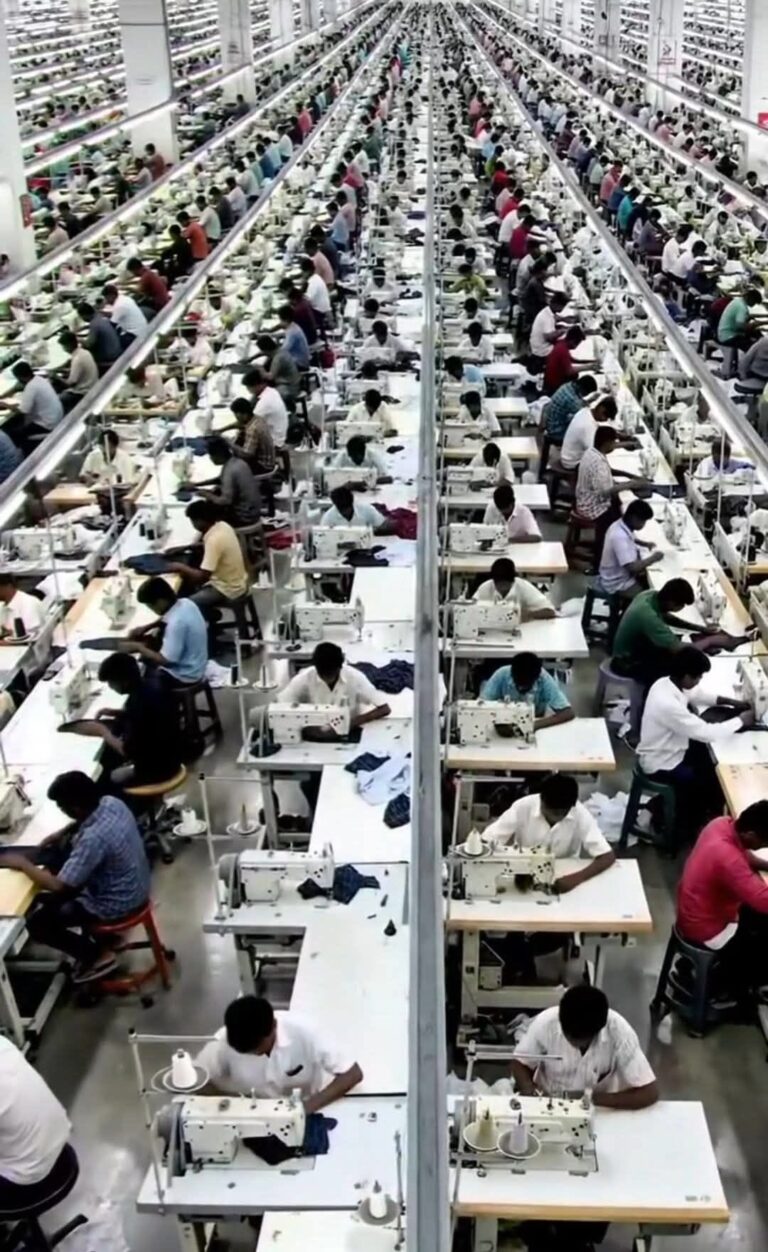


Textile billing software is a business software that helps textile traders, wholesalers, manufacturers and garment businesses create invoices, calculate GST, manage stock, track orders and maintain customer and payment records. Unlike a basic billing app, good textile billing software should also handle the way textile businesses actually sell and store products through different fabrics, shades, lots, qualities, sizes, units and godowns.
This matters because billing is rarely the only problem in a textile business. A sales order may be sitting in WhatsApp, stock may be in another Excel sheet, the invoice may be created separately and the accountant may be maintaining another set of records. Once these systems stop matching, mistakes become expensive.
The right textile billing software in India should therefore connect billing with inventory, sales, orders and accounting instead of treating the invoice as an isolated document.
Quick Summary
This guide compares 10 software options that textile businesses can consider in 2026:
- Wortal
- TallyPrime
- BUSY
- Marg ERP
- Vyapar
- myBillBook
- Zoho Books
- ERPNext
- Odoo
- Wizix Textile ERP
The list includes both textile focused platforms and general business software that can work for textile companies.
If you are a small fabric trader, you may only need billing, GST and basic stock management. A manufacturer with multiple godowns, production stages and job workers will need much more.
What Should Textile Billing Software Actually Do?
The short answer: it should connect the sale, stock and invoice.
For example, imagine a fabric wholesaler sells 500 metres of printed fabric.
A good system should allow the team to:
Buyer inquiry → Quotation → Sales Order → Stock Check → Dispatch → GST Invoice →
Payment Tracking
The software should ideally record details such as:
- Fabric/product
- Shade
- Lot or batch
- Quality
- Quantity
- Unit such as metres, kg or pieces
- Rate
- GST/HSN
- Customer
- Godown
- Payment status
This is where generic billing software can become limiting.
A textile trader may not simply sell “Fabric A”. They may sell Fabric A, Blue Shade, Lot 24, A-Grade, 2,000 metres at a particular rate.
That extra operational information is what separates ordinary invoicing from useful textile billing software.
10 Best Textile Billing Software in India for 2026
1. Wortal
Best for: Textile traders, wholesalers, manufacturers and growing Indian textile businesses
Pricing: Wortal’s published pricing information lists Standard at Rs.200/user/month and Premium at Rs.350/user/month; businesses should confirm the current plan and inclusions before purchase.
Wortal is one of the more textile-focused options in this list. Its textile platform connects sales enquiries, quotations, inventory, orders, billing and team tasks.
The biggest advantage is that the software is designed around textile workflows rather than simply adding a “textile” label to generic accounting software.
Key features
- Buyer enquiry and lead management
- Sales pipeline
- Quotations
- GST billing and invoices
- Textile specific invoice details
- Shade, lot and quality tracking
- Multi godown inventory
- Warehouse transfers
- Order and dispatch tracking
- Low stock alerts
- WhatsApp integration
- Follow-up automation
- Team task management
Wortal’s textile solution specifically positions billing around shade, quality and lot information, along with GST compliant invoicing and WhatsApp delivery.
Why textile businesses may prefer it
The useful part is the connection between customer activity and operations.
A sales employee can manage an enquiry, create a quotation and follow the order while the operations team manages stock and dispatch.
Best suited for: Businesses that want CRM + inventory + orders + billing in one system.
Limitation: Very large textile manufacturers with highly specialised production requirements may need a heavier manufacturing ERP.
2. TallyPrime
Best for: Businesses where accounting and GST are the primary requirements
Pricing: TallyPrime Silver currently starts at Rs.750/month plus 18% GST. Annual and lifetime options are also available.
TallyPrime remains a familiar choice for Indian businesses and accountants.
Its strength is not textile specific workflow. Its strengths are accounting, invoicing, GST, inventory and financial reporting.
Key features
- GST invoicing
- Inventory management
- Sales and purchase
- Accounting
- Receivables and payables
- P&L
- Balance Sheet
- E-invoice
- E-way bill
- Stock reports
- Multi-user options
- Banking and cash-flow features
TallyPrime can update inventory with transactions and provides billing and stock management within the same system.
Best for
A textile trader whose accountant already works comfortably with Tally and who primarily needs dependable accounting and billing.
Watch out for: If your business requires detailed textile CRM, buyer follow-ups, shade/lot workflows or specialised production processes, you may need additional configuration or another system alongside Tally.
3. BUSY
Best for: Indian MSMEs needing billing, GST, accounting and inventory
Pricing: BUSY currently lists subscription plans from Rs.5,000/360 days, while perpetual editions start at Rs.11,000. GST is additional where applicable.
BUSY is another established Indian accounting and business management platform.
For textile businesses, its inventory capabilities can be particularly useful because the software supports multiple units, multiple godowns, batch-wise inventory and GST workflows.
Key features
- GST billing
- E-invoice and e-way bill
- Multiple godowns
- Multiple units
- Batch inventory
- Stock reports
- Sales and purchase
- Accounting
- Outstanding reports
- P&L and Balance Sheet
- Barcode/POS capabilities on applicable plans
- Multi-GSTIN support
Its SMART plan also includes tracking around brand, size, colour and parameterised items, which can be useful for businesses dealing with product variations.
Best for: Textile traders and MSMEs that want accounting-first software with strong inventory capabilities.
4. Marg ERP
Best for: Established Indian businesses needing billing, accounting and inventory
Pricing: Marg currently lists Nano at Rs.5,550, Basic at Rs.10,300, Silver at Rs.13,900 and Gold at Rs.26,000, with 18% GST extra. Additional users and companies can cost extra depending on the edition.
Marg is widely used across Indian business segments and combines billing, inventory, accounting, GST and business management.
Key features
- GST billing
- Inventory
- Accounting
- E-invoicing
- E-way bills
- Purchase management
- Sales management
- Outstanding tracking
- Business reports
- Mobile applications
- Banking integrations
Best for
Textile traders and wholesalers who want a traditional Indian business management system and need accounting and inventory together.
Common consideration: Always check the exact edition and add-on costs because functionality and user limits vary by plan.
5. Vyapar
Best for: Small textile shops, traders and businesses starting with digital billing
Pricing: Vyapar currently advertises its small-business plan at Rs.242/month on its pricing page, with a 15 day free trial.
Vyapar is aimed at smaller businesses that want billing and inventory without a complicated ERP implementation.
Key features
- GST invoices
- Quotations
- Sales and purchase orders
- Inventory
- Low stock alerts
- Payment tracking
- Expense management
- P&L
- Cash-flow reporting
- GSTR reports
- Barcode support
- Invoice sharing
Vyapar says inventory quantities update automatically when purchases and sales are recorded.
Not ideal for: Larger textile companies with several branches, detailed production or extensive workflow automation.
6. myBillBook
Best for: Small and growing textile businesses looking for simple billing
Pricing: Current yearly pricing shown by myBillBook includes Plus at Rs.291/month, Pro at Rs.333/month and Pro Max at Rs.570/month, although the displayed prices depend on billing duration and plan.
myBillBook focuses heavily on billing and small-business operations
.
Key features
- GST billing
- Invoice creation
- Barcode printing/scanning
- Inventory
- Godown management
- WhatsApp/SMS marketing
- E-way bills
- E-invoicing
- POS billing
- Recurring billing
- Multiple businesses on higher plans
The Pro Max plan includes multiple businesses, additional users, e-way bills, e-invoicing and POS capabilities.
Best for: Smaller textile shops and wholesalers that want straightforward billing and stock management.
7. Zoho Books
Best for: Growing businesses wanting cloud accounting with inventory
Pricing: Zoho Books currently lists plans from Free, with Standard at Rs.749/month billed annually, Professional at Rs.1,499, Premium at Rs.2,999, Elite at Rs.4,999 and Ultimate at Rs.7,999. Taxes are extra.
Zoho Books is broader than billing software. It combines accounting, invoicing, inventory, banking, GST and reporting.
Key features
- GST accounting
- Invoicing
- Inventory tracking
- Purchase orders
- Sales orders
- Payment reminders
- Banking
- P&L
- Cash-flow reports
- Customer portal
- Multi-location support on applicable plans
- E-invoicing
- Automation
Zoho Books can automatically update inventory when purchases and sales are recorded, and supports reorder points and preferred vendors.
Trade-off: It is a general business platform, so highly textile-specific workflows may require configuration or additional Zoho products.
8. ERPNext
Best for: Textile manufacturers and businesses needing deeper ERP functionality
Pricing: ERPNext itself is free and open source. Businesses pay for hosting and may also incur implementation/customisation costs. Frappe Cloud hosting currently starts from Rs.410/month for a shared site.
ERPNext is much more than billing software.
Its textile and garment manufacturing capabilities cover production planning, inventory, purchasing, sales, quality and costing.
Textile-relevant features
- Sales orders
- Sales invoices
- Inventory
- Item variants
- Batch tracking
- Manufacturing
- Multi-level BOM
- Production planning
- Quality inspection
- Job cards
- Auto-reorder
- Barcode support
- Costing
- Accounting
ERPNext specifically provides workflows for textile product manufacturing and garment manufacturing, including variants, batches, production planning and detailed costing.
Trade-off: It requires more setup than simple billing software.
9. Odoo
Best for: Mid-sized and larger textile companies needing an integrated ERP
Pricing: Odoo currently lists its Standard plan at US$
24.90/user/monthwhenbilledannuallyandCustomatUS$49/user/month; the exact commercial cost for an Indian implementation can increase with configuration, localisation and services.
Odoo has dedicated textile manufacturing functionality and connects CRM, sales, inventory, purchasing, manufacturing and invoicing.
Key features
- CRM
- Quotations
- Sales orders
- Inventory
- Manufacturing
- Purchase management
- Lot and package tracking
- Quality
- Invoicing
- Product variants
- Multi-location inventory
- Reordering
- Subcontracting
Odoo’s textile manufacturing workflow includes production, stock, purchasing, subcontracting and invoicing.
Its clothing features also support product variants such as size and colour and inventory across locations.
Trade-off: Implementation can be considerably more involved than adopting a simple textile billing software package.
10. Wizix Textile ERP
Best for: Textile traders and manufacturers wanting a textile-specific ERP
Pricing: Wizix currently advertises its textile ERP at an introductory one time price of Rs.49,999, including setup and training. It notes that final pricing can depend on users and modules.
This is one of the more textile-specific products in the comparison.
Key features
- Grey and finished stock
- Lot-wise inventory
- Quality-wise stock
- Godown management
- Weaving and production tracking
- Job work
- Dyeing/printing workflows
- Party ledgers
- Broker management
- GST billing
- E-invoicing
- E-way bills
- Sales and purchase
- Textile specific reporting
Textile Billing Software Comparison
| Software | Best For | Textile Fit | Billing | Inventory | Manufacturing | Starting/Published Price |
|---|---|---|---|---|---|---|
| Wortal | Textile traders & growing businesses | High | ✓ | ✓ | Limited/Workflow based | Rs.200/user/month* |
| TallyPrime | Accounting-focused firms | Medium | ✓ | ✓ | Via setup/add-ons | Rs.750/month |
| BUSY | Indian MSMEs | Medium-High | ✓ | ✓ | Basic/plan dependent | Rs.5,000/year |
| Marg ERP | Traders & wholesalers | Medium-High | ✓ | ✓ | Available depending on setup | Rs.5,550+ |
| Vyapar | Small businesses | Medium | ✓ | ✓ | Limited | Rs.242/month* |
| myBillBook | Small traders & shops | Medium | ✓ | ✓ | Limited | Rs.291/month* |
| Zoho Books | Growing cloud businesses | Medium | ✓ | ✓ | Limited | Rs.749/month annually |
| ERPNext | Manufacturers | High | ✓ | ✓ | ✓ | Hosting from Rs.410/month |
| Odoo | Mid/large manufacturers | High | ✓ | ✓ | ✓ | US$24.90/user/month annually |
| Wizix | Textile-specific operations | High | ✓ | ✓ | ✓ | Rs.49,999 one-time* |
*Pricing should be reconfirmed with the vendor because plans, taxes, offers and inclusions can change.
How to Choose the Right Textile Billing Software
Don’t start by asking, “Which software has the most features?”
Start with your workflow.
If you are a small textile trader
Prioritise:
- Fast GST billing
- Stock tracking
- Customer ledger
- Payment follow-up
- Easy invoice sharing
Vyapar, myBillBook, TallyPrime and BUSY can be considered.
If you are a growing textile wholesaler
Look for:
- Multi-godown inventory
- Buyer management
- Quotations
- Sales orders
- Stock transfers
- Outstanding tracking
- WhatsApp communication
Wortal, BUSY, Marg, Zoho Books and textile-focused ERP products become more relevant.
If you are a manufacturer
Your checklist should become much longer:
- Raw material inventory
- Finished goods
- Product variants
- BOM
- Production planning
- Job work
- Quality control
- Batch/lot tracking
- Costing
- Purchase planning
- Dispatch
- Accounting
ERPNext, Odoo and specialised textile ERP systems deserve closer evaluation.
A Simple Decision Framework
Use this before booking demos:
The important part is not the software name. It is whether the software matches your process.
Real-Life Case Study: A Textile Wholesaler Moving Away From Excel
Consider a Surat based fabric wholesaler handling multiple product categories across two godowns.
The business had a familiar problem.
Salespeople received buyer enquiries through WhatsApp. Orders were entered into Excel. The godown team maintained another stock file. Invoices were generated separately.
The result was predictable:
- Salespeople sometimes promised stock that had already been allocated.
- Pending orders were difficult to track.
- Owners had to call employees for updates.
- Month-end reconciliation took unnecessary time.
- Customer follow-ups depended heavily on individual employees.
The solution
The company evaluated textile billing software based on the complete workflow rather than billing alone.
The chosen system needed to connect:
Buyer → Quotation → Order → Stock → Dispatch → Invoice → Payment
For textile operations, it also needed product attributes such as shade, quality and lot.
Implementation
Instead of moving the entire company overnight, the business started with:
- One product category
- Two godowns
- Sales team
- Customer master
- Opening stock
- Billing workflow
Once employees were comfortable, the remaining products and processes were added.
The lesson
The biggest improvement was not simply faster invoice creation.
It was visibility.
The owner could see what was sold, what was available, what was pending and which customers required attention without collecting information from four different employees.
That’s the real value of textile billing software in India: fewer disconnected records.
Common Mistakes When Buying Textile Billing Software
1. Buying only because the price is low
A Rs.200/month system can become expensive if your employees still maintain Excel because the software doesn’t fit their workflow.
2. Ignoring inventory
Billing and inventory should ideally talk to each other.
If an invoice does not update stock properly, your billing system is only solving half the problem.
3. Not testing real textile products
Never evaluate software using generic demo products.
Ask the vendor to create an invoice using your actual:
- Fabric
- Shade
- Lot
- Quality
- Quantity
- Unit
- GST rate
That’s when limitations become visible.
4. Forgetting data migration
Ask:
“Can you migrate my existing Excel/Tally customer and stock data?”
Also ask whether migration costs extra.
5. Buying too much software
A 10-person trading company may not need a complex enterprise ERP.
The best textile billing software is usually the one employees will actually use every day.
What Should You Check During the Demo?
Use this checklist:
- Create a textile invoice
- Add multiple GST rates
- Add HSN details
- Track shade
- Track lot/batch
- Track quality
- Check stock by godown
- Transfer stock between godowns
- Convert quotation to order
- Convert order to invoice
- Share invoice through WhatsApp
- Check customer outstanding
- Check sales reports
- Check purchase reports
- Check user permissions
- Import Excel data
- Understand backup process
- Ask about implementation charges
- Ask about support charges
- Ask about annual renewal
Pro Tip: Ask the salesperson to demonstrate your workflow instead of their standard demo. A generic demo can make almost any ERP look impressive.
Key Takeaways
- Textile billing software should do more than create GST invoices.
- Textile businesses often need shade, lot, quality and godown-level stock tracking.
- Small businesses may be better served by simple billing and accounting software.
- Growing textile traders need billing connected with inventory and orders.
- Manufacturers should evaluate production, BOM, job work and costing.
- TallyPrime and BUSY are strong accounting-first options.
- Vyapar and myBillBook suit smaller businesses looking for simple billing.
- Zoho Books is useful for businesses moving towards cloud accounting.
- ERPNext and Odoo are better suited to deeper ERP requirements.
- Textile-specific platforms can reduce the amount of customisation required.
- Always compare total cost, including implementation, migration, users and support.
- Test the software using your actual textile workflow before purchasing.
Conclusion
There is no single best textile billing software in India for every business.
A fabric retailer selling a few hundred invoices a month has very different requirements from a textile manufacturer managing raw materials, production, job work, multiple godowns and hundreds of buyers.
So don’t select software because it has the longest feature list.
Select it because it solves your actual daily problems.
For a small business, that may simply mean faster GST billing and stock control. For a growing textile company, it may mean connecting enquiries, quotations, orders, inventory, dispatch and invoicing in one workflow.
And if your business is still using WhatsApp for orders, Excel for stock and separate software for billing, that’s probably the first problem worth fixing.
The businesses that manage textile operations well are not necessarily the ones with the most expensive ERP. They are the ones where sales, stock, billing and operations work from the same information.
Textile billing software is software designed to help textile businesses create invoices, calculate GST, manage stock and track sales. Textile-focused systems may also handle details such as shade, lot, quality, fabric type, godown and order status.
There is no single best option for every business. Wortal and specialised textile ERPs are worth considering when textile-specific workflows matter. TallyPrime, BUSY, Vyapar and Zoho Books can work well when accounting, billing and inventory are the main requirements.
Yes. Most modern options include inventory management. However, the depth varies. Basic software may only track quantity, while textile-focused systems can support multiple godowns and attributes such as shade, lot and quality.
Yes. GST invoicing is available in the major platforms discussed above. However, businesses should verify HSN, tax configuration and e-invoice requirements with their accountant and confirm that the selected software supports their exact workflow.
Yes, especially when accounting is the main requirement. TallyPrime supports invoicing, GST, inventory and financial reporting. Businesses needing specialised textile CRM, production or shade/lot workflows may require additional configuration.
Not automatically. Cloud software is useful when owners and teams need access from different locations, while desktop systems can still work well for businesses operating from one location. The right choice depends on your team, connectivity, security requirements and workflow.
Pricing varies significantly. Simple billing software may cost a few hundred rupees per month, while ERP systems can cost much more once users, implementation, customisation and support are included. Some products also offer one-time licensing.
A wholesaler should prioritise GST billing, multi-godown inventory, quotations, sales orders, customer outstanding, stock transfers, order tracking and easy invoice sharing. Shade, lot and quality tracking become particularly useful for fabric businesses.
Usually, yes, once manufacturing becomes complex. A manufacturer may need production planning, BOM, raw material tracking, job work, quality control, costing and finished goods inventory. A basic billing application may not cover these processes properly.
If your business has frequent billing, multiple employees, multiple godowns or growing inventory, moving away from Excel can make operations easier to control. Start with one workflow, migrate clean data and train the team before expanding the system across the business.